Introduction
A Pottery Barn–inspired bedroom is known for its calm, inviting, and layered aesthetic. Unlike trend-driven interiors that rely on bold colours or statement pieces, this style focuses on comfort, balance, and subtle sophistication. It blends modern design with classic warmth, creating a space that feels both elegant and lovable.
People searching for pottery barn bedroom ideas are usually not just looking for inspiration—they want to replicate a specific look. That look is built through careful choices: soft neutral colour palettes, natural materials, layered bedding, and warm lighting. Every element is intentional, and nothing feels out of place.
This guide goes beyond surface-level ideas. It explains how to build the look step by step, so your bedroom feels cohesive rather than randomly styled.
1. Build the Bed With Layered Neutral Bedding
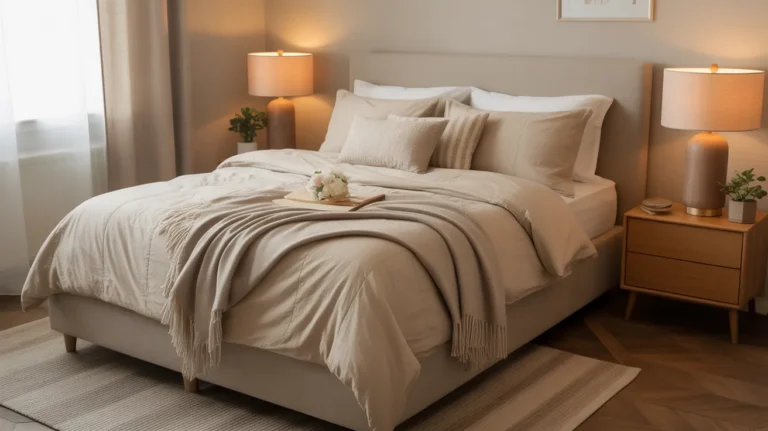
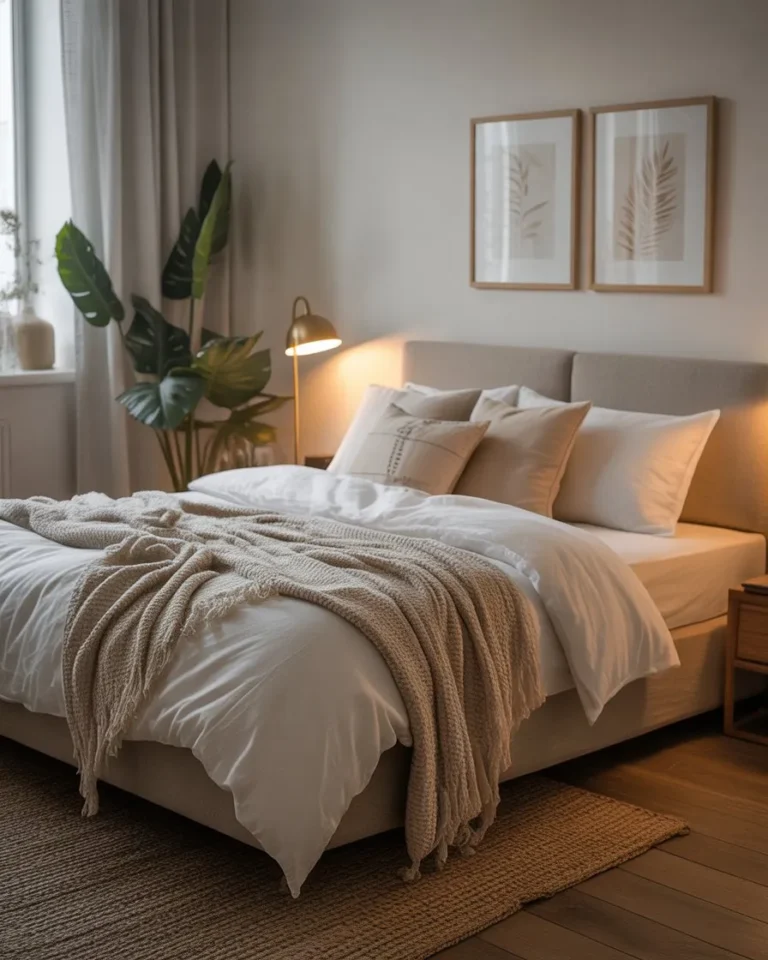
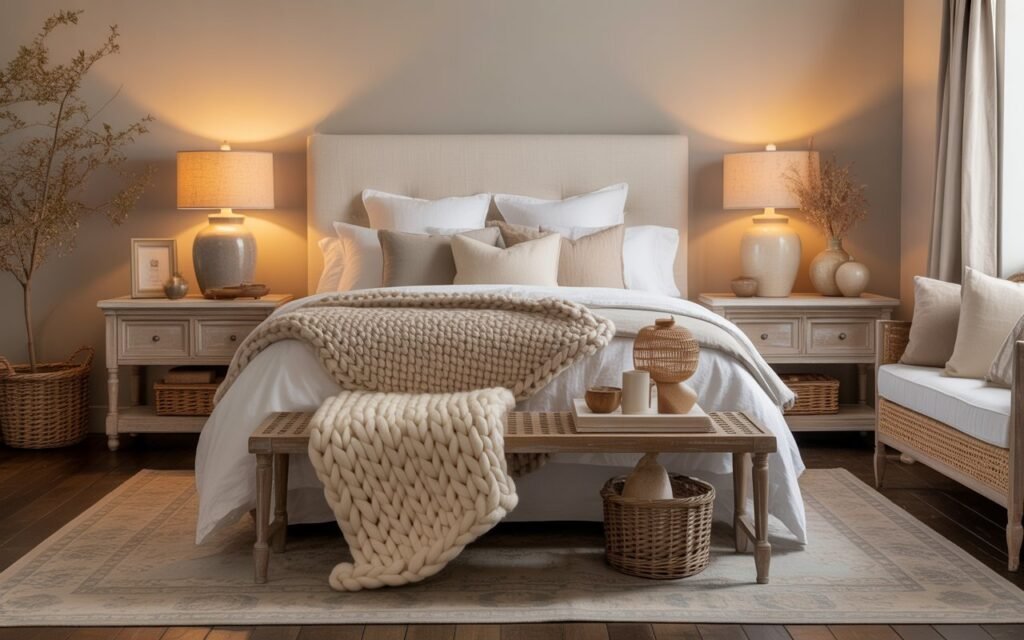
The bed is the centerpiece of any Pottery Barn–style bedroom. Start with high-quality white sheets as a base. Add a quilt or duvet in soft beige or taupe, then layer with textured throws and multiple pillows.
The key is variation within the same color family. Instead of mixing bold colors, you create depth through different fabrics—cotton, linen, and knit textures. This gives the bed a plush, inviting look that feels both relaxed and luxurious.

2. Use Warm Wood Furniture to Anchor the Space
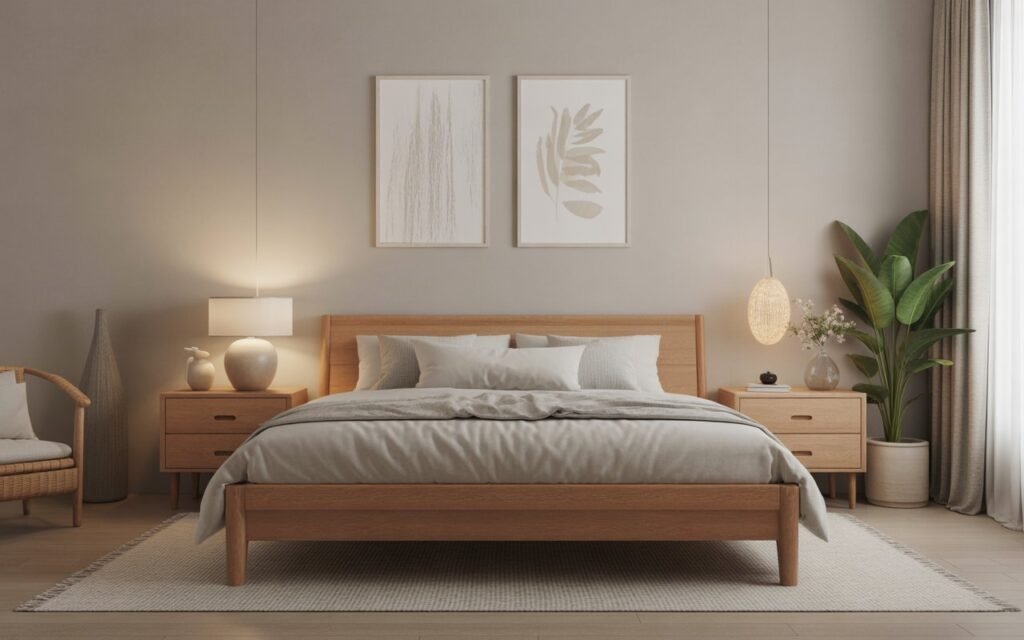
Wood brings warmth and prevents the room from feeling flat. Choose pieces like oak or walnut bed frames, nightstands, or benches.
Lighter woods create an airy, modern look, while darker woods add richness. The goal is not to fill the room with furniture but to choose a few well-balanced pieces that feel substantial and grounded.
3. Stick to a Soft, Cohesive Neutral Palette
A defining feature of pottery barn style bedroom design is its color palette. Whites, creams, soft greys, and warm beiges dominate the space.
Instead of contrast, focus on tone layering. For example, combine off-white bedding with beige curtains and a slightly darker rug. This keeps the room visually calm while still adding dimension.
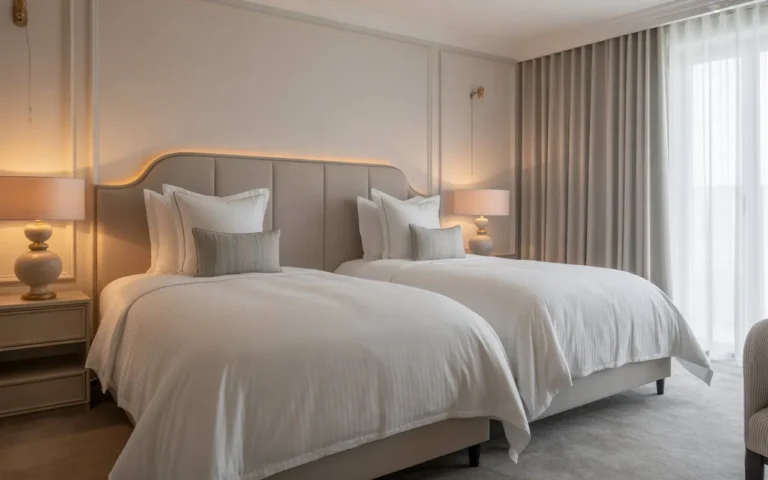
4. Add an Upholstered Headboard for Softness
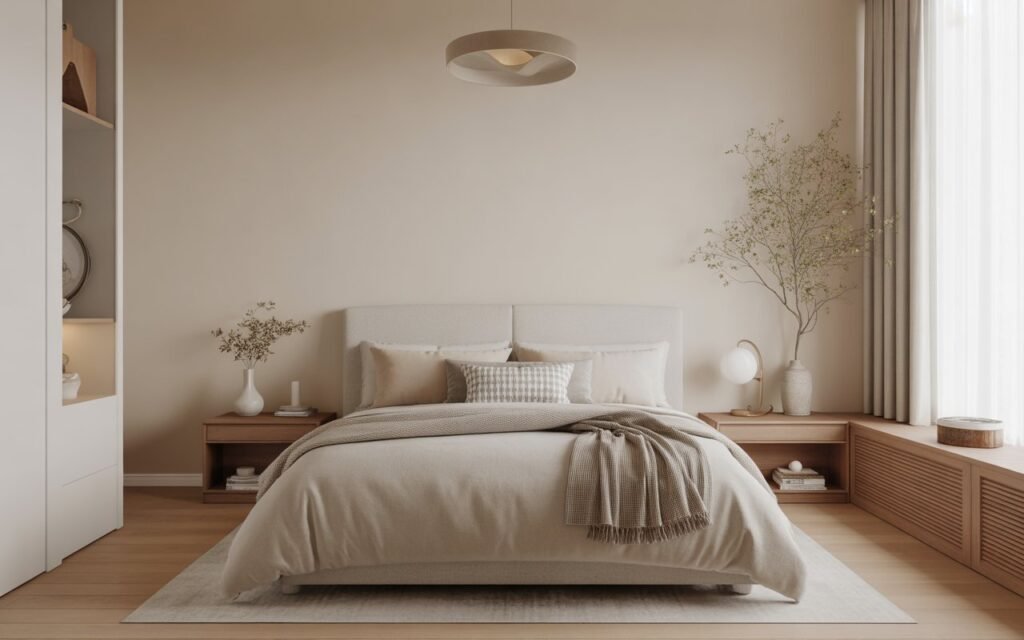
An upholstered headboard introduces comfort and elegance. Linen or fabric headboards are preferred because they soften the visual structure of the bed.
They also act as a focal point without being overpowering, which aligns perfectly with the calm and balanced aesthetic.
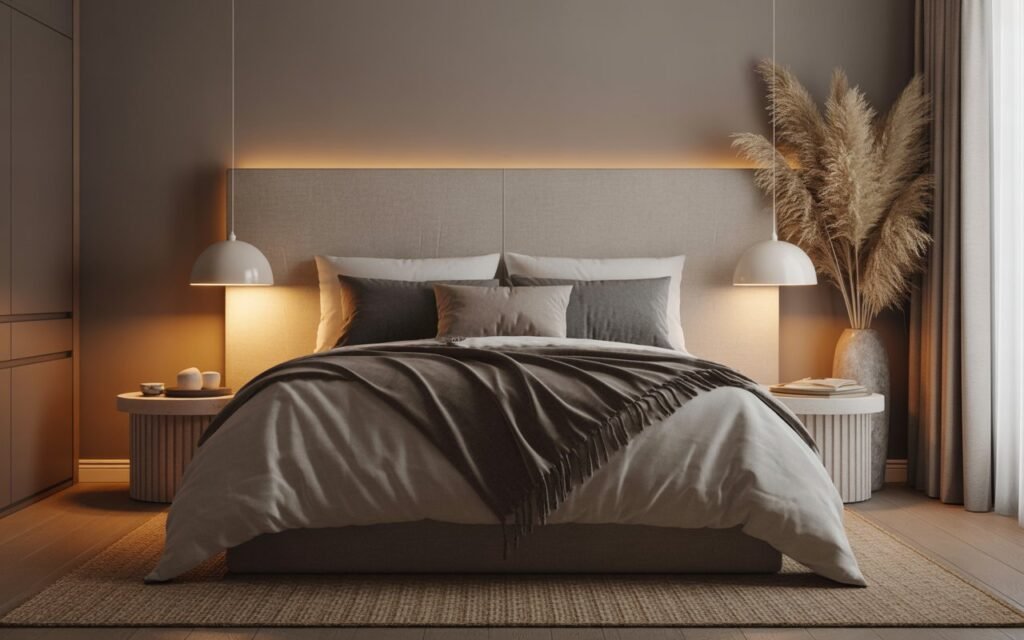
5. Create Symmetry With Matching Nightstands
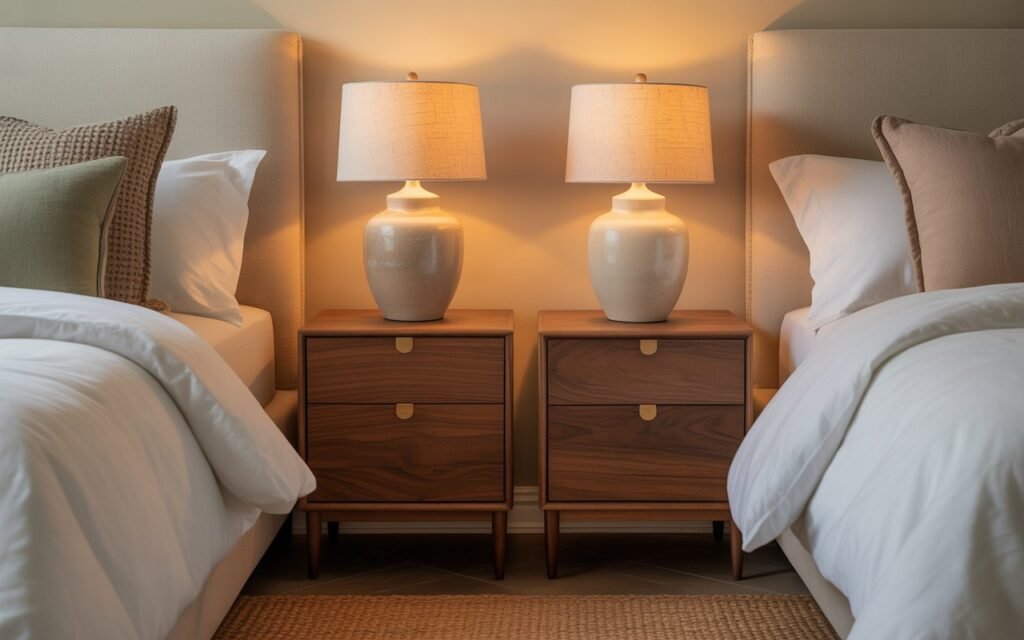
Symmetry is a subtle but powerful design principle. Matching nightstands on both sides of the bed create balance and structure.
Top them with identical lamps and minimal decor. This arrangement makes the room feel organized and intentionally designed.
6. Use Warm, Layered Lighting Instead of Harsh Overhead Lights
Lighting defines how the room feels. Avoid harsh white lights. Instead, use warm-toned bulbs, table lamps, and soft ambient lighting.
Layering light sources—bedside lamps, wall sconces, and natural light—creates a cozy and relaxing atmosphere, especially in the evening.
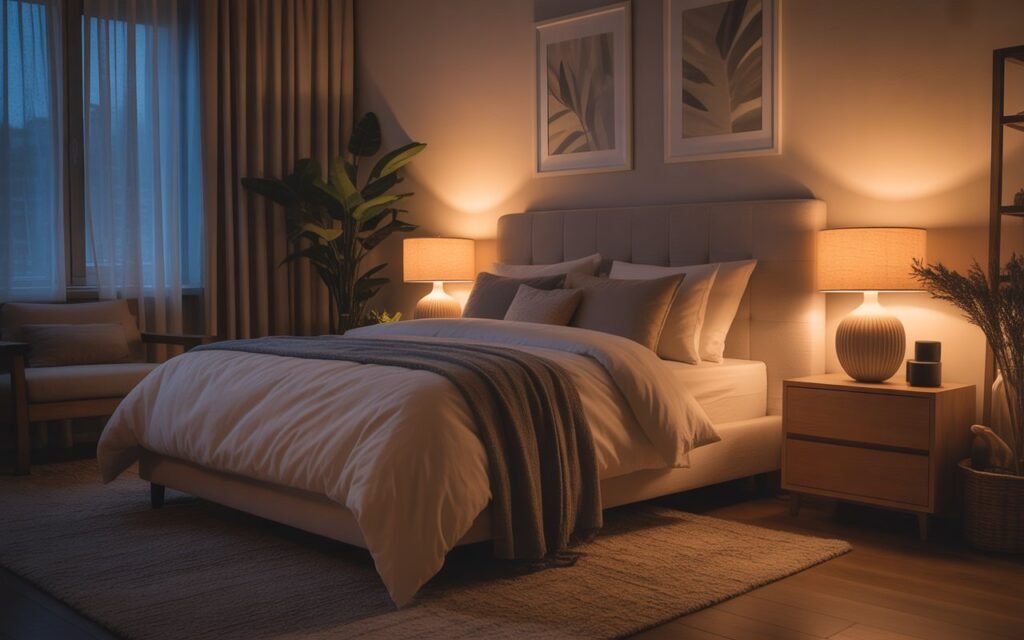
7. Add Throw Blankets for Texture and Comfort
A casually draped throw blanket adds depth and makes the bed feel lived-in. Choose chunky knits or soft woven fabrics.
This is a small detail, but it plays a big role in achieving that cozy bedroom ideas aesthetic.

8. Ground the Room With a Neutral Area Rug
A large area rug under the bed ties everything together. It adds warmth underfoot and visually anchors the furniture.
Neutral rugs with subtle patterns or textures work best, as they support the design without competing for attention.

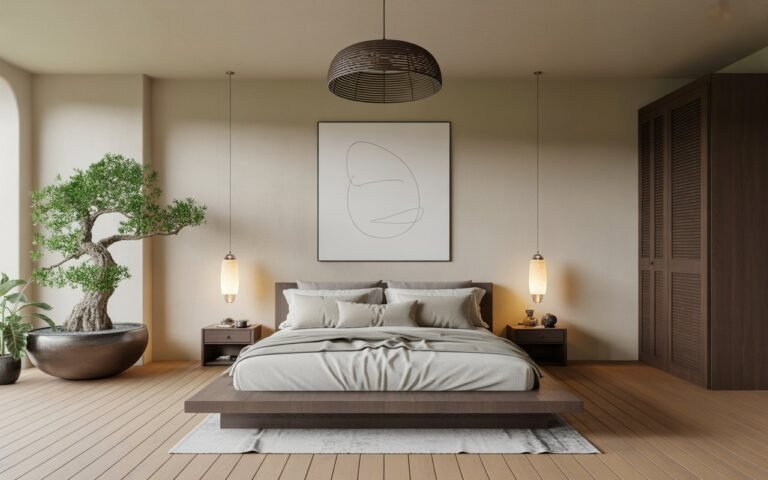
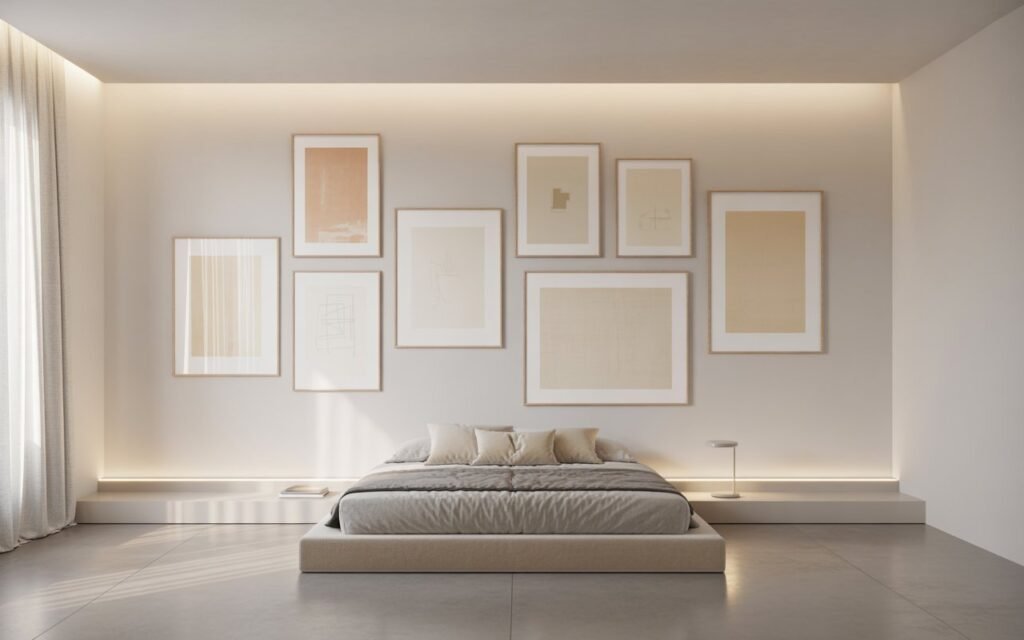
9. Keep Wall Art Minimal and Soft
Avoid cluttered walls. Choose one or two pieces of artwork in neutral tones.
The goal is to enhance the room without distracting from the overall calm atmosphere.
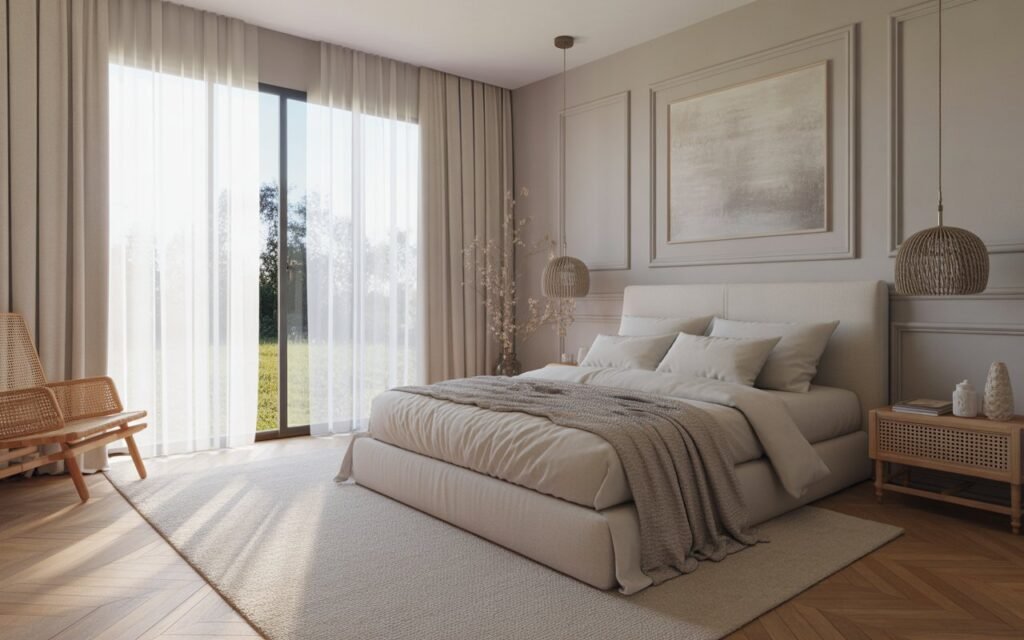
10. Use Curtains That Enhance Light and Texture
Curtains should feel soft and natural. Linen or sheer fabrics allow light to filter through, creating a gentle glow.
Floor-to-ceiling curtains also add height and elegance to the room.
11. Add a Bench at the Foot of the Bed
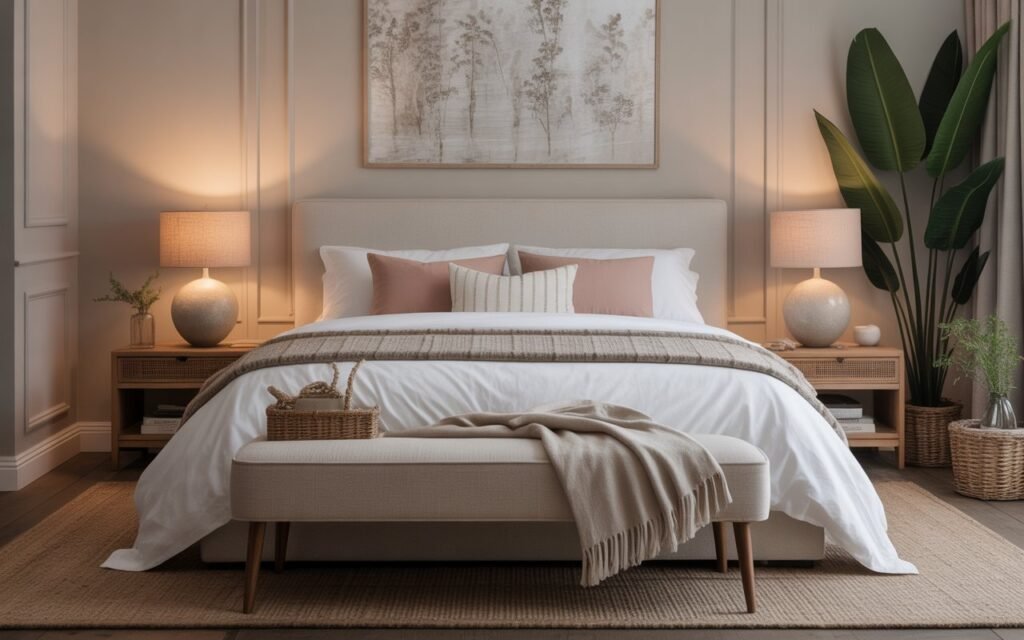
A bench adds both function and style. It visually completes the bed and provides a place to sit or place items.
Choose upholstered or wooden designs to match the rest of the room.
12. Incorporate Natural Decor Elements
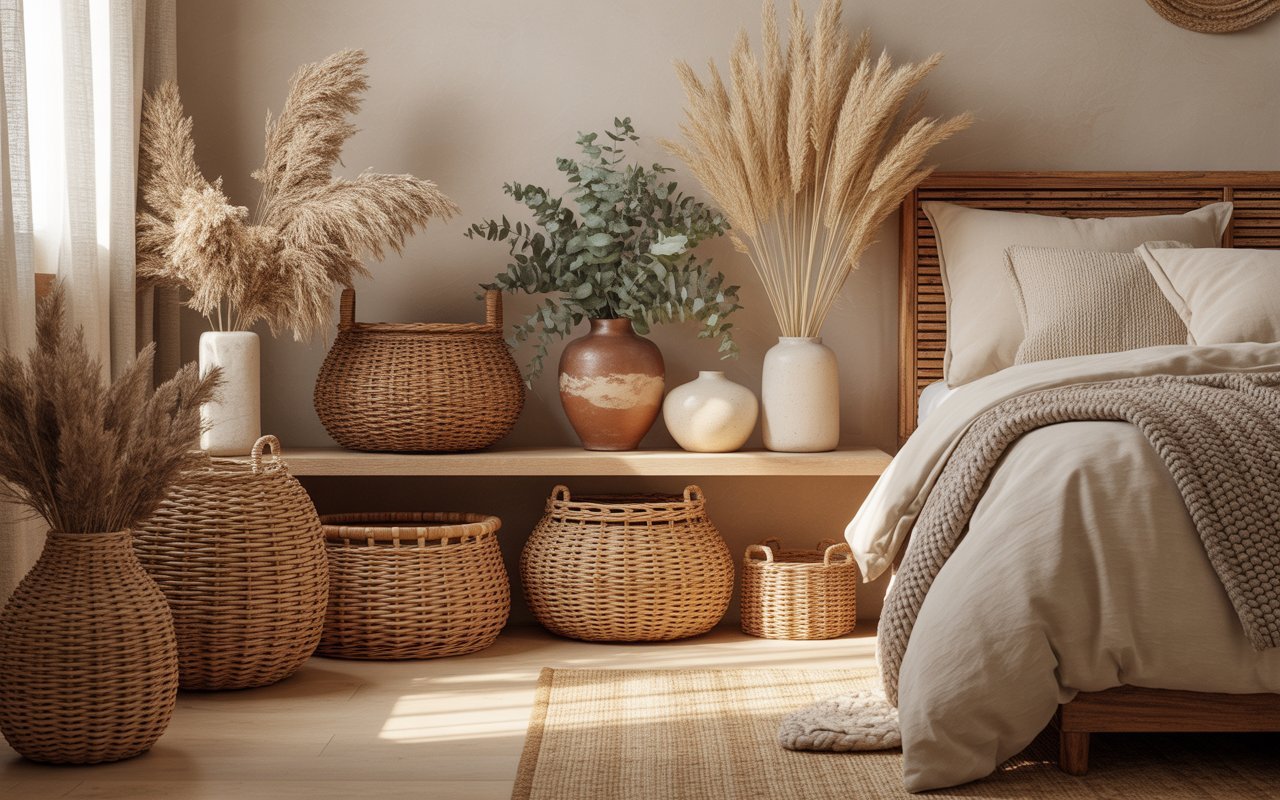
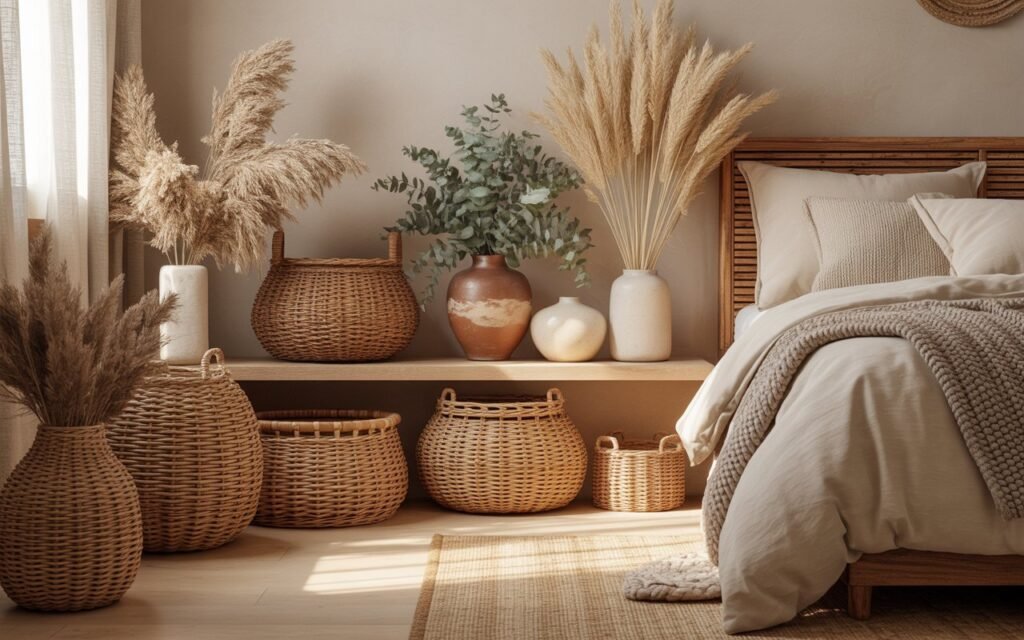
Natural materials like woven baskets, ceramic vases, and dried plants add an organic feel.
These elements bring texture and warmth without overwhelming the space.
13. Keep Surfaces Clean and Intentional
Clutter disrupts the calm aesthetic. Keep nightstands and dressers simple—just a lamp, a book, or a small decor piece.
This creates a sense of order and relaxation.
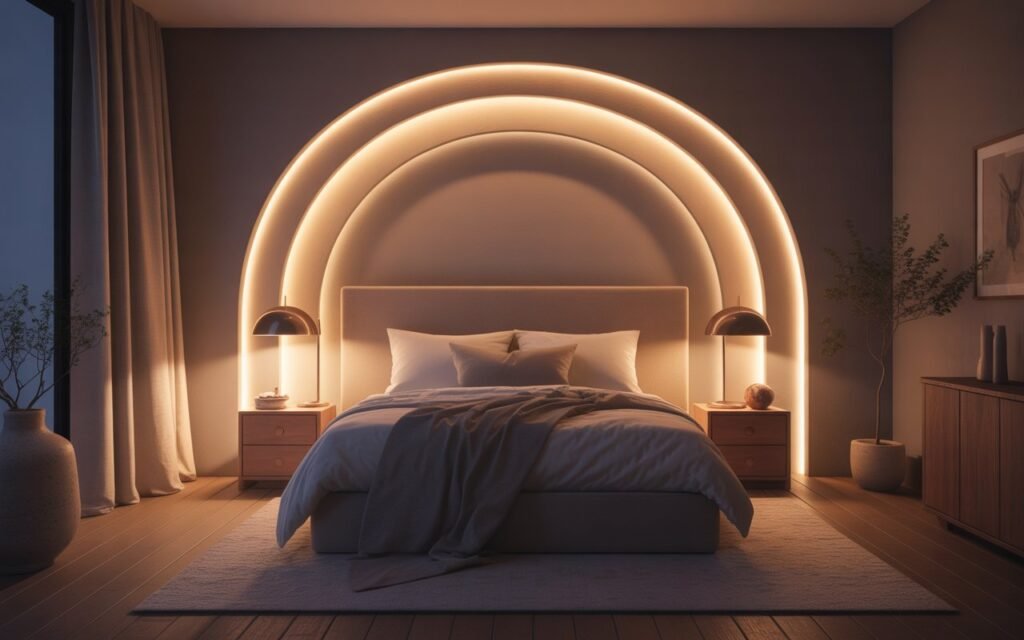
14. Layer Lighting for Evening Ambience
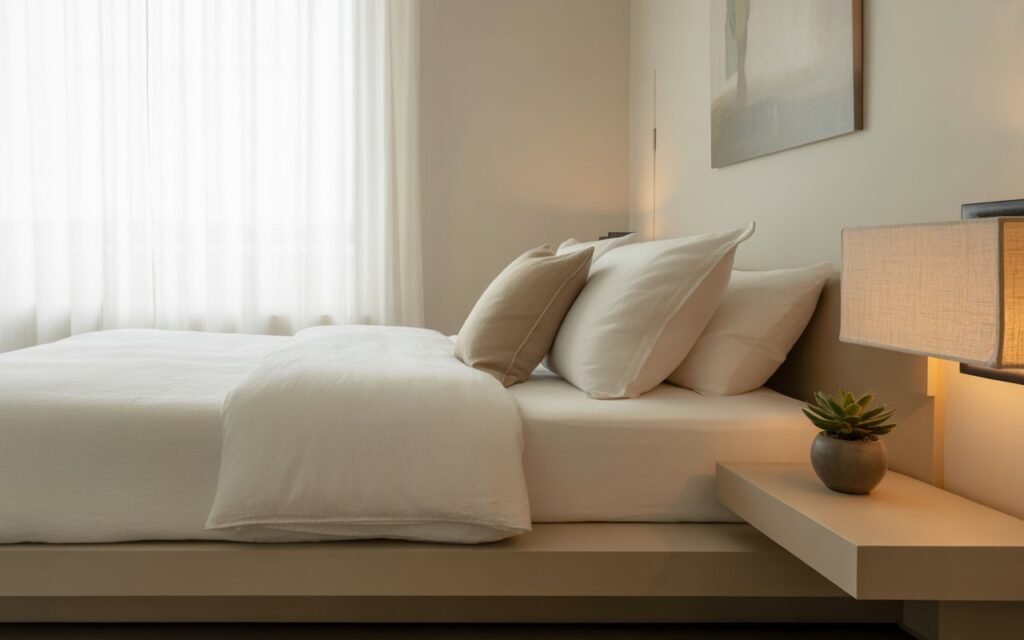
Evening lighting should feel soft and warm. Use multiple light sources to create depth and avoid harsh shadows.
This transforms the bedroom into a cozy retreat at night.
15. Maintain Consistency in Style and Materials
Consistency is what makes the room feel professionally designed. Avoid mixing too many styles or colors.
Stick to one direction—neutral, warm, and textured—and repeat those elements throughout the space.
Practical “Get the Look” Breakdown
To recreate pottery barn bedroom ideas successfully:
- Choose a neutral base palette
- Add layered bedding and textures
- Use warm lighting instead of bright white light
- Keep decor minimal but meaningful
This approach ensures the room feels cohesive and not overdesigned.
EEAT: Why This Approach Works in Real Homes
This style is not just visually appealing—it’s practical. Neutral colors are easy to maintain, layered bedding adapts to seasons, and natural materials age well over time.
Interior designers often use these principles because they create long-lasting, flexible spaces. Instead of following trends, this method builds a foundation that remains relevant for years.
Conclusion
A Pottery Barn–inspired bedroom is a perfect example of how simplicity, when done right, can feel luxurious. It does not rely on bold statements or excessive decoration. Instead, it focuses on balance, comfort, and thoughtful layering.
The success of this design lies in the details—how fabrics interact, how light falls across the room, and how each piece contributes to the overall atmosphere. When these elements are aligned, the result is a space that feels calm, cohesive, and inviting.
By applying these ideas carefully, you can create a bedroom that not only looks beautiful but also feels comfortable and functional every day.