Introduction
A master bedroom should function as more than a place to sleep—it should feel like a controlled, private environment designed for comfort, recovery, and visual calm. A well-executed luxury bedroom master design focuses on restraint, proportion, and material quality rather than excess.
The difference between a standard and a luxury bedroom lies in the details: how lighting is layered, how textures interact, and how every element supports a cohesive layout. Instead of filling the space, luxury design refines it—removing visual noise while enhancing depth and atmosphere.
The following ideas are structured to help you design a bedroom that feels intentional, balanced, and consistently high-end.
1. Full-Height Upholstered Feature Wall
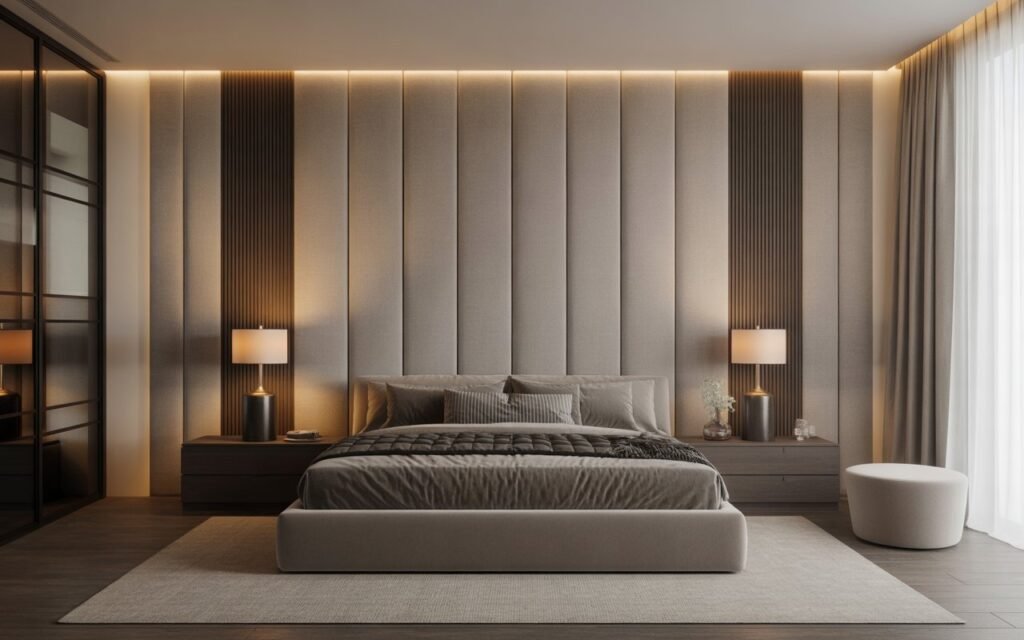
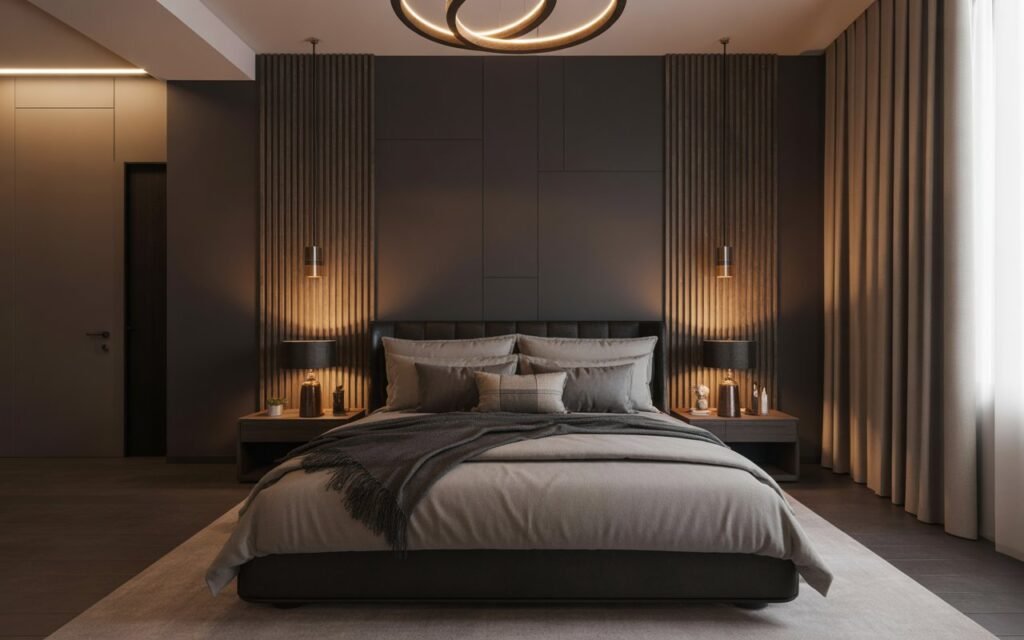
Extend upholstered panels from floor to ceiling behind the bed to establish a strong vertical focal point. This not only enhances visual height but also improves acoustic softness, making the space feel quieter and more controlled.
2. Layered Lighting with Zoning
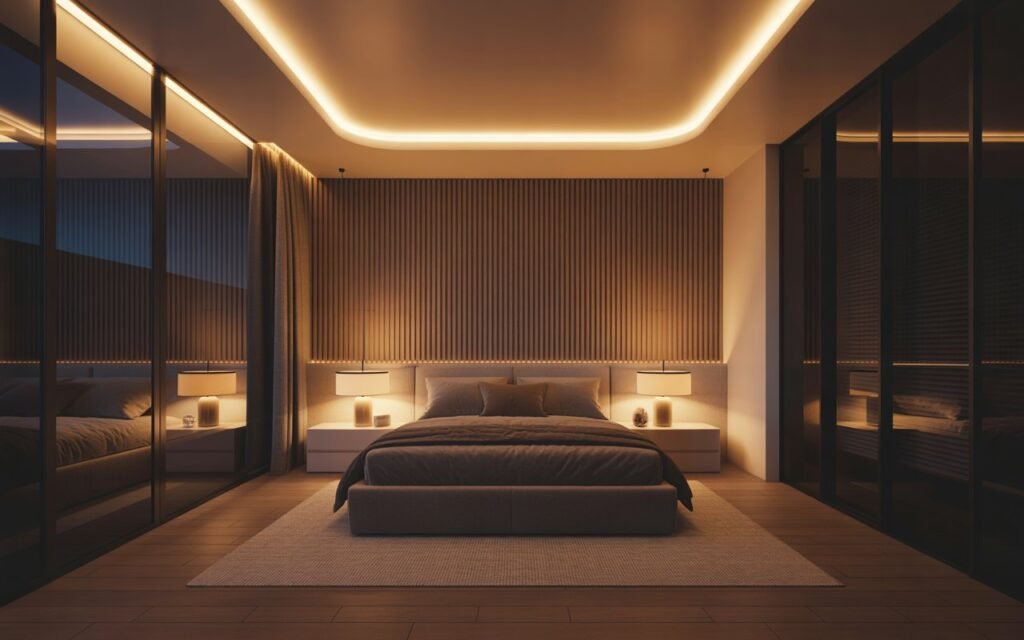
Divide lighting into zones: ambient (ceiling), task (bedside), and accent (LED strips or wall washes). This allows you to adjust the room’s mood depending on time of day without relying on a single harsh source.
3. Controlled Neutral Palette with Depth
Instead of flat neutral colors, layer tones within the same palette—warm beige, soft taupe, muted ivory. This creates depth without introducing visual chaos.
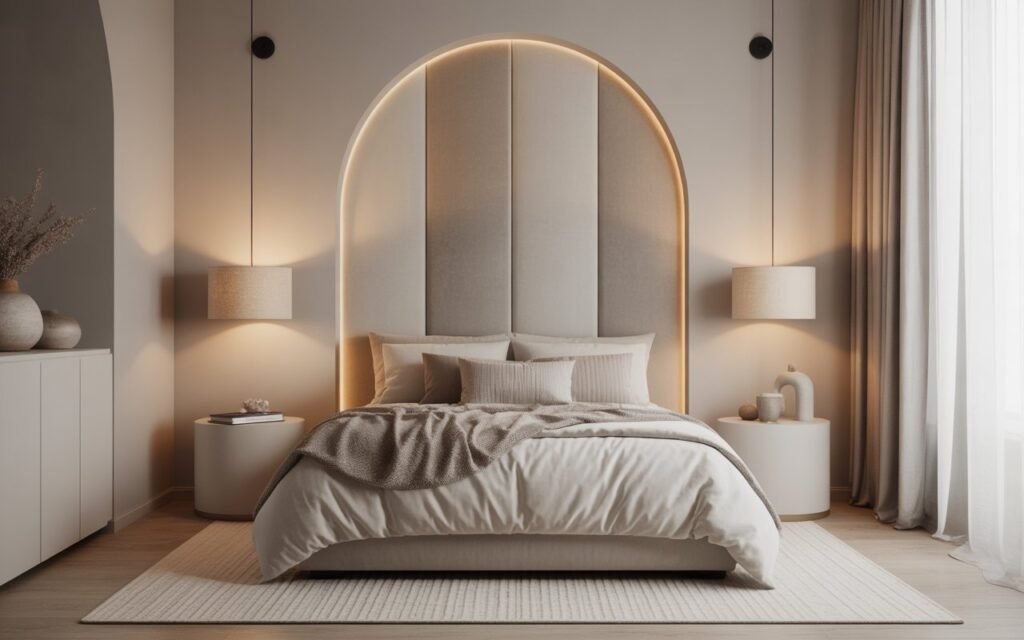
4. Ceiling-to-Floor Drapery System
Install curtains as close to the ceiling as possible and let them fall fully to the floor. This elongates the room visually and creates a continuous vertical flow.
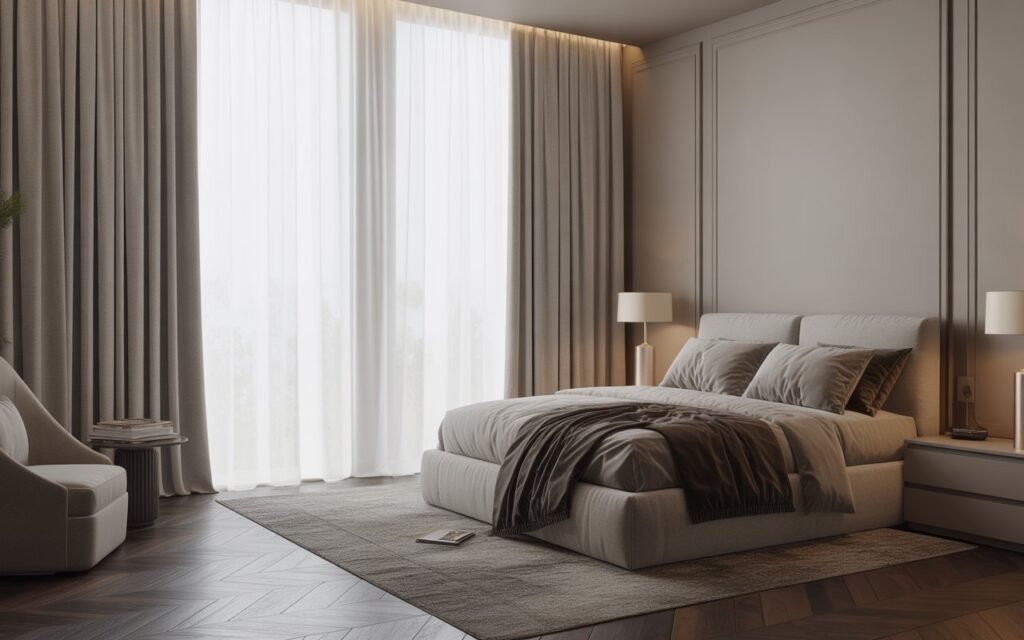
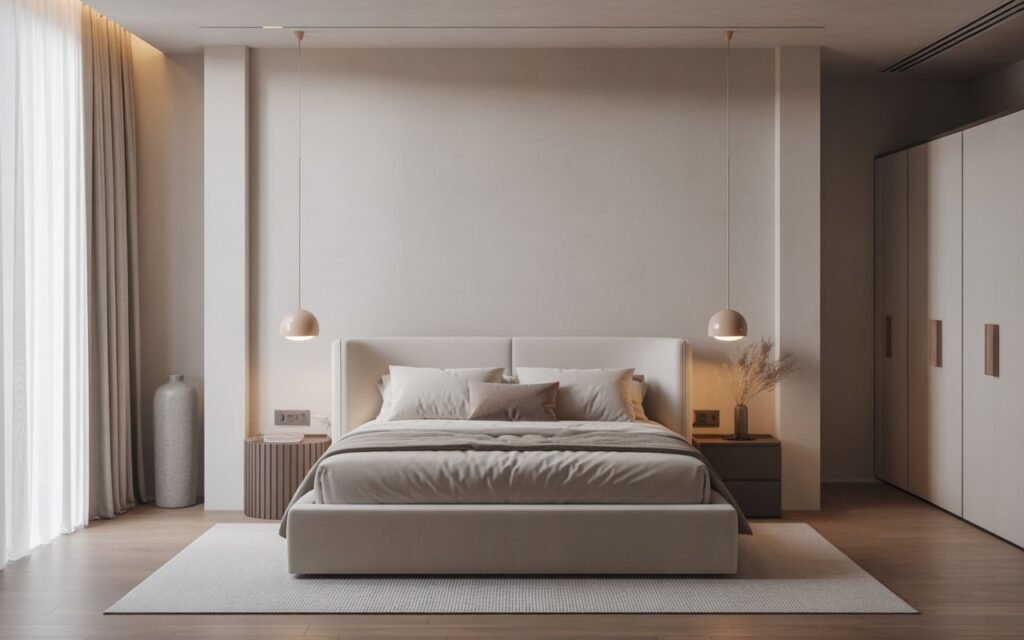
5. Perfect Symmetry Around the Bed
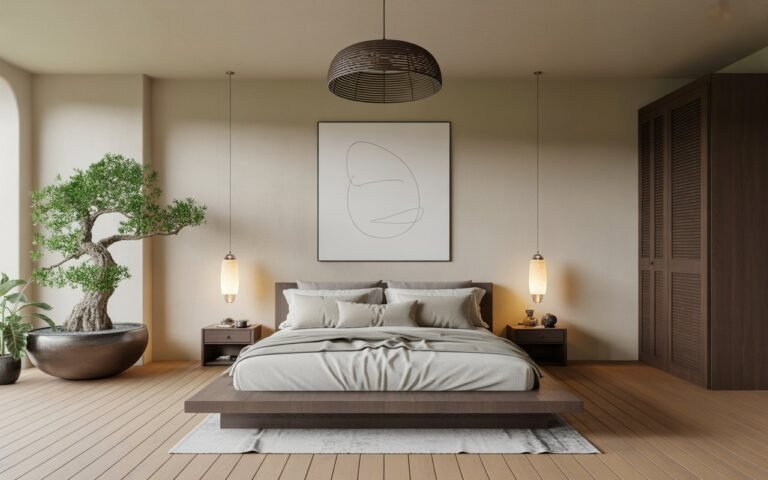
Luxury interiors rely heavily on balance. Align bedside tables, lamps, and wall elements symmetrically to create a structured, hotel-like composition.
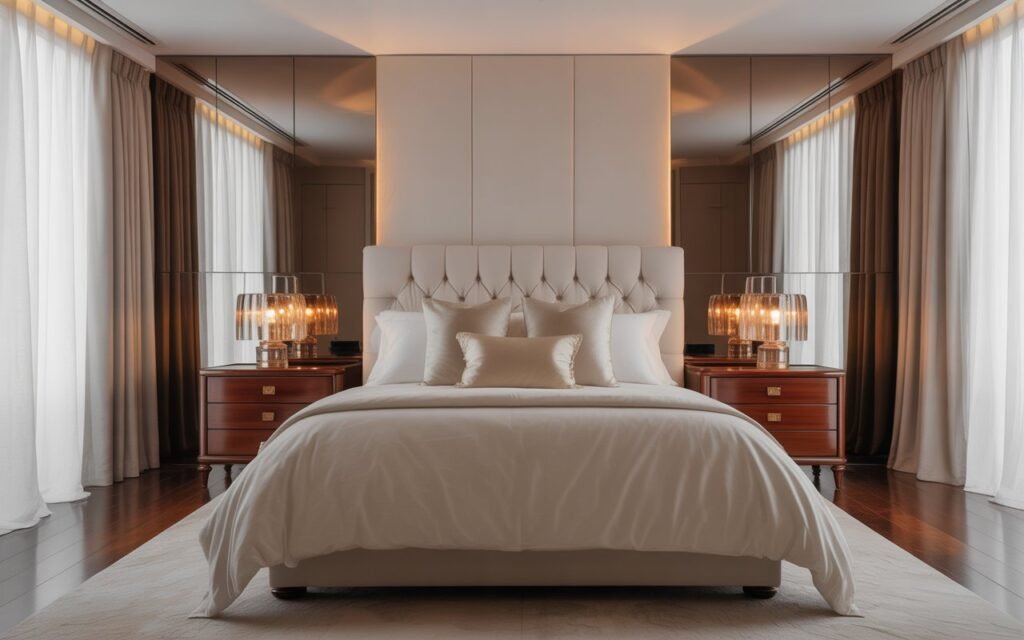
6. Indirect LED Integration
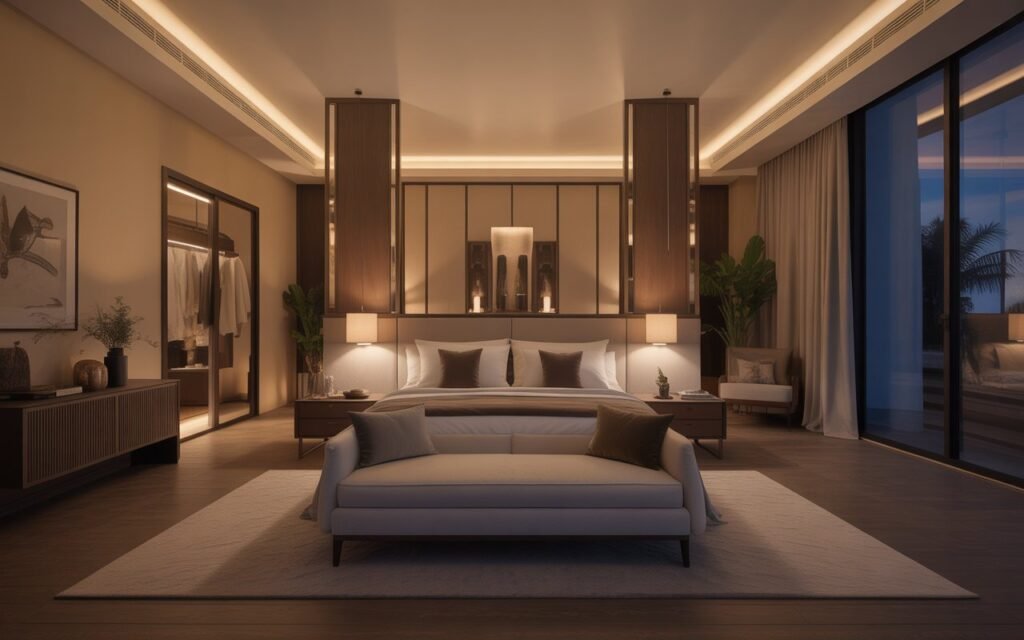
Use concealed LED lighting behind headboards, under beds, or within ceiling coves. Indirect light adds atmosphere without exposing the source, which is a key luxury detail.
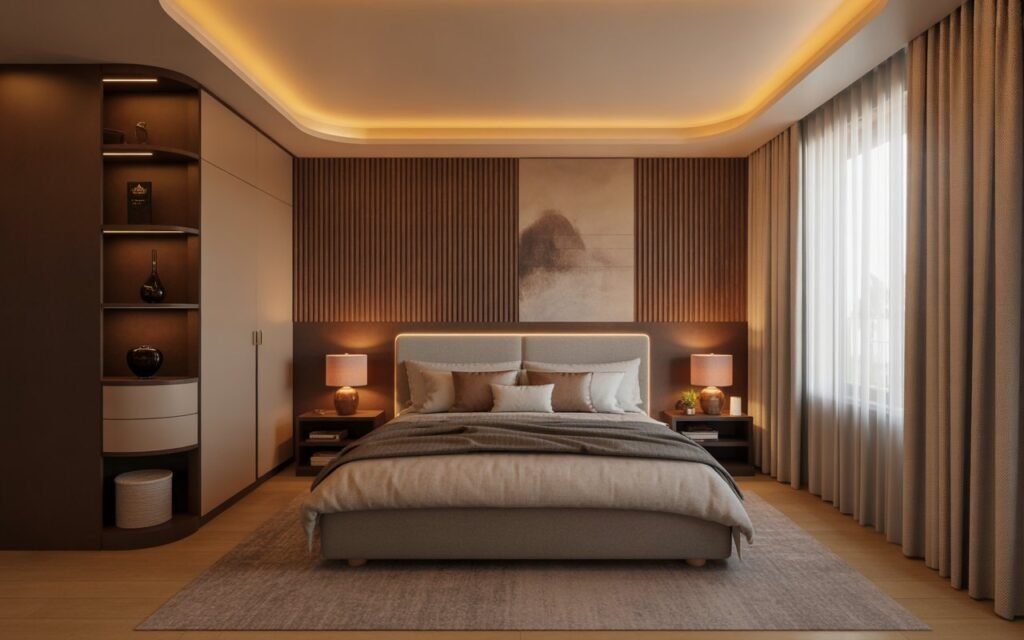
7. Reduced Furniture, Increased Quality
Limit furniture to essential pieces, but ensure each item has a strong presence—solid materials, clean edges, and refined finishes.
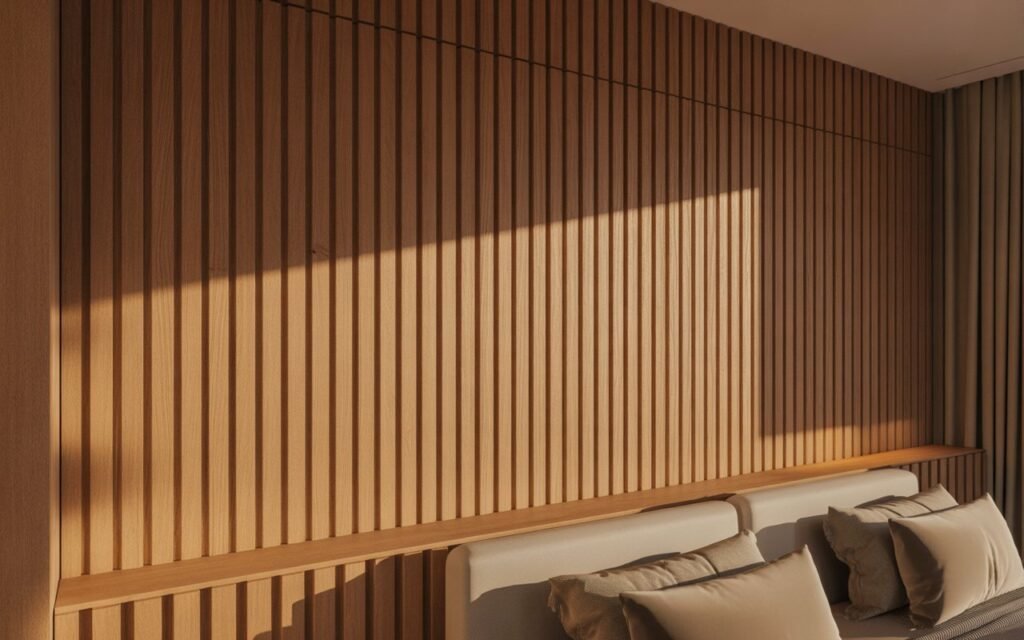
8. Architectural Wall Paneling
Introduce subtle architectural detailing such as fluted panels, grid molding, or vertical grooves. These elements add structure without overwhelming the space.
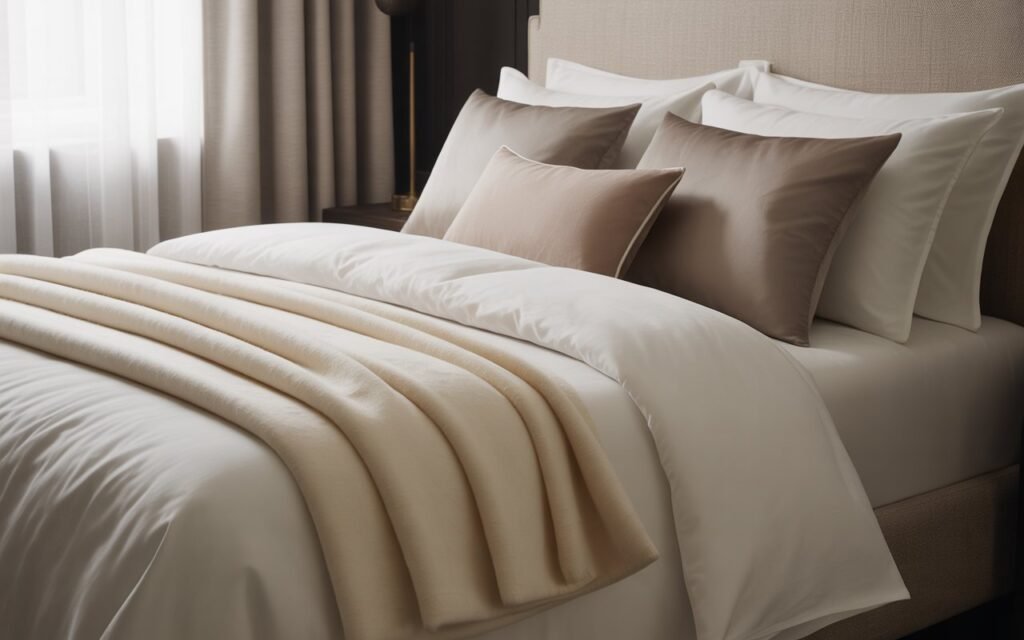
9. Structured Bedding Composition
Layer bedding intentionally: base sheet, duvet, throw, and cushions. Maintain a consistent color story and avoid over-layering to keep the look controlled.
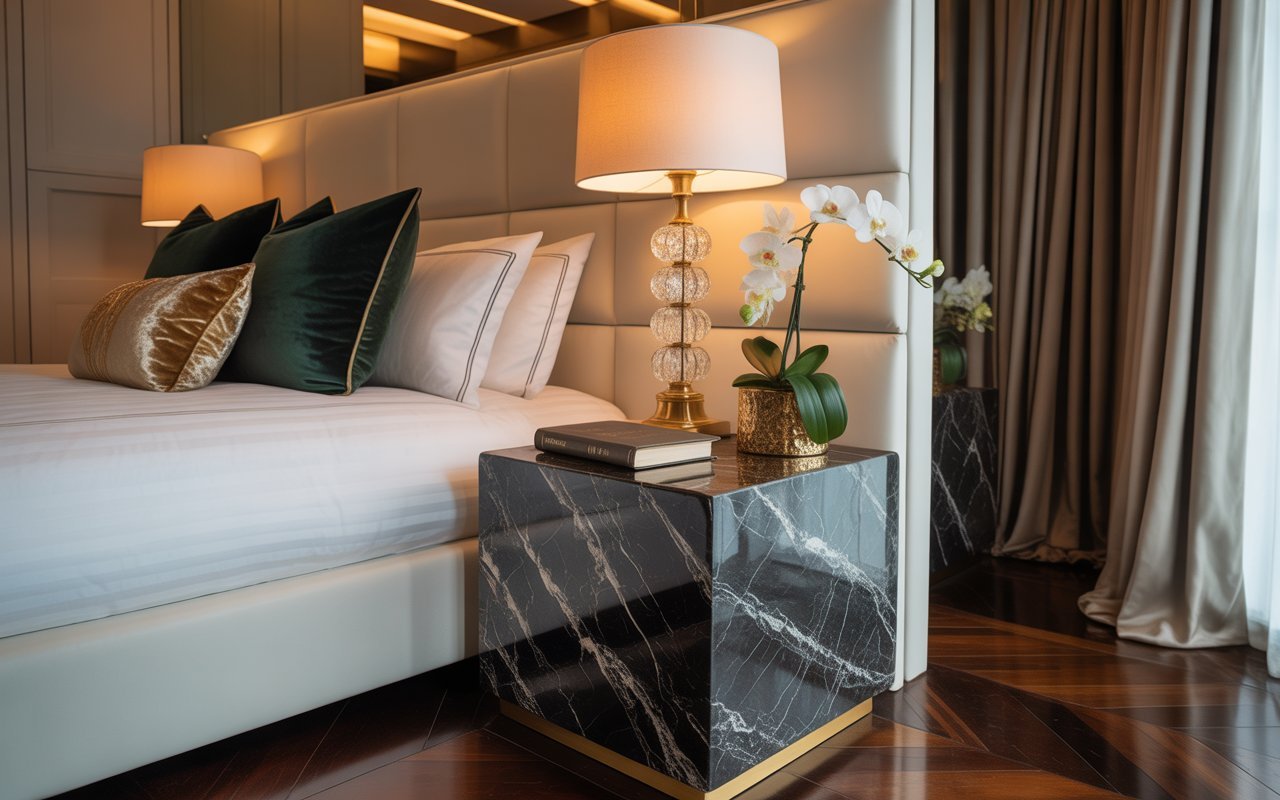
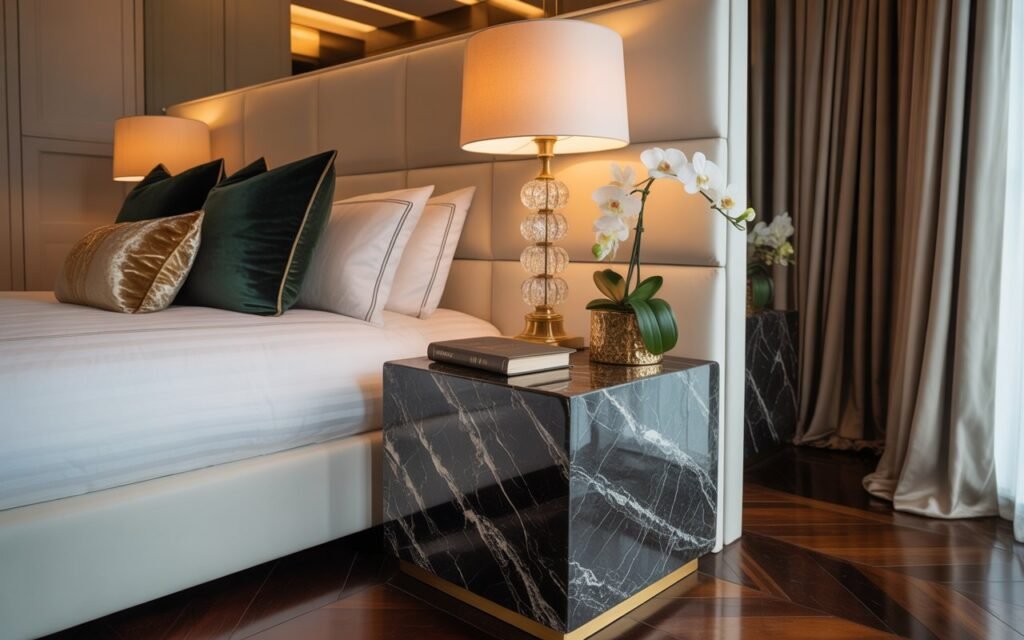
10. Stone and Marble Surfaces
Incorporate stone through side tables, accent walls, or decor pieces. Natural veining adds visual interest while maintaining a refined palette.
11. Warm Light Temperature Control
Keep lighting within a warm spectrum (around 2700K–3000K). This ensures the room feels relaxed rather than clinical.
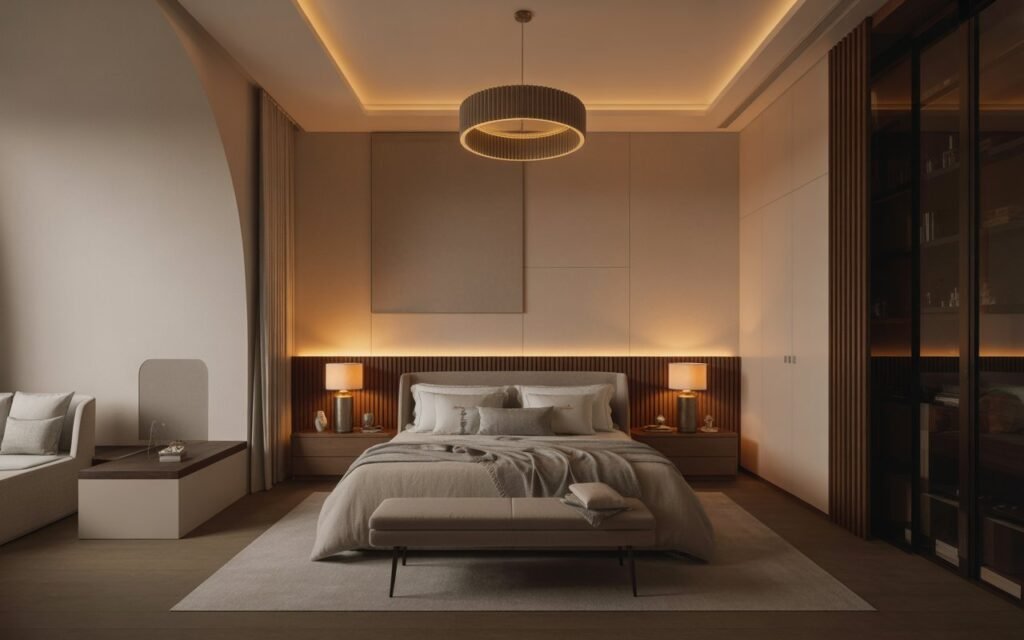
12. Seamless Built-In Wardrobes
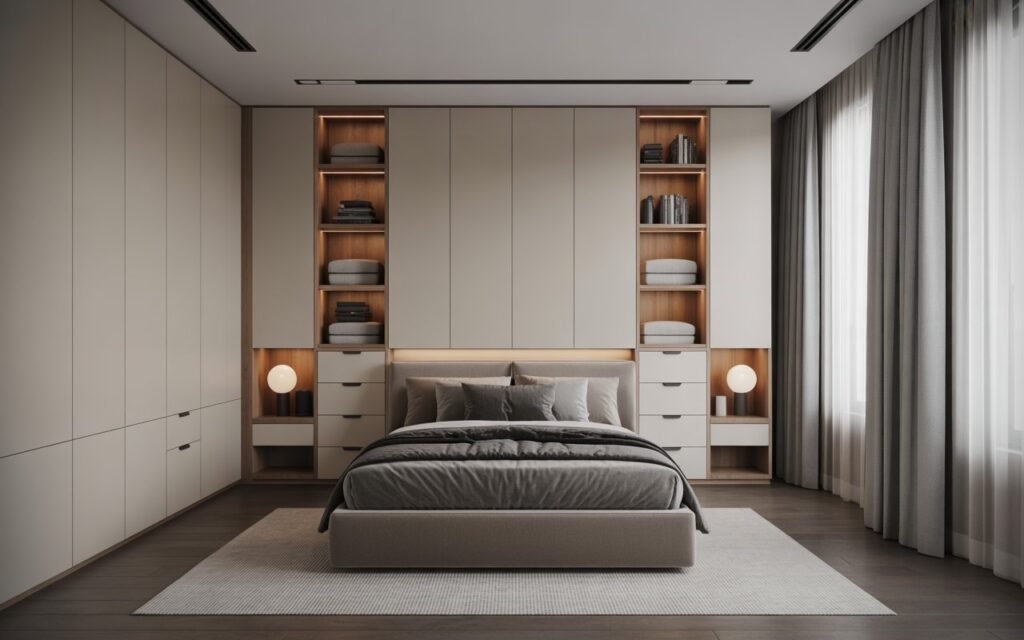
Design wardrobes that blend into the wall using flat panels or hidden handles. This reduces visual interruption and keeps the room cohesive.
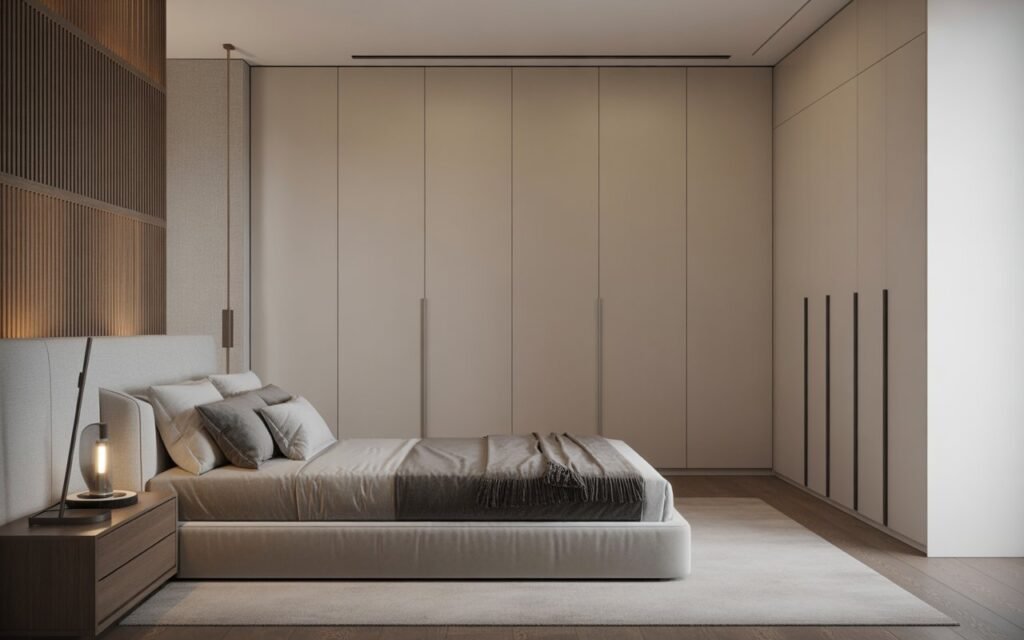
13. Large-Scale Area Rug Placement
Position a rug that extends beyond the bed on all sides. This anchors the furniture and softens the floor visually and physically.
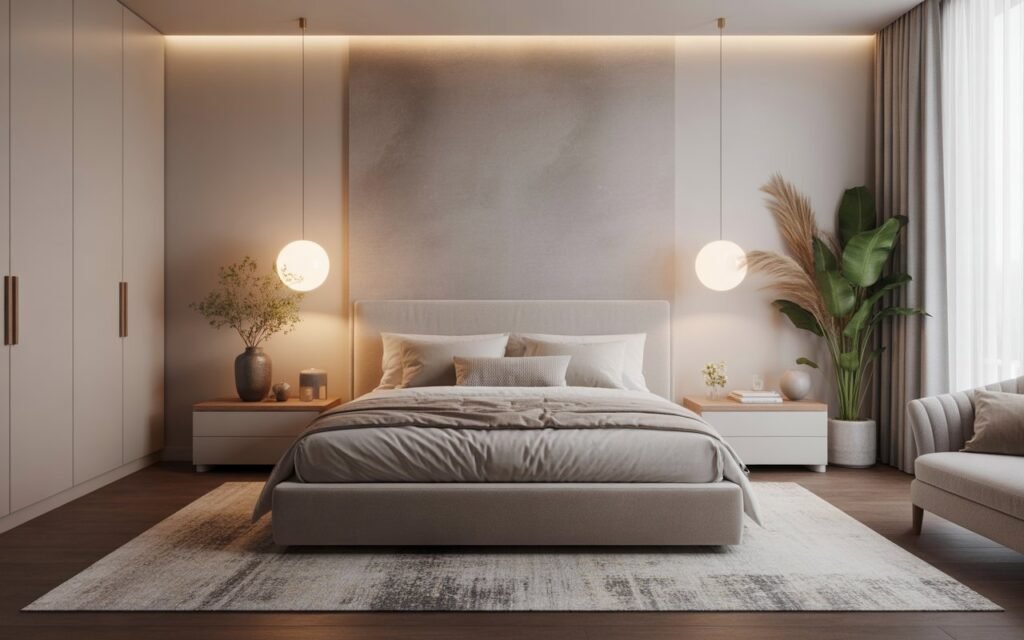
14. Subtle Ceiling Detailing
Avoid heavy designs. Instead, use recessed lighting lines or shallow ceiling frames to define the space without drawing too much attention upward.
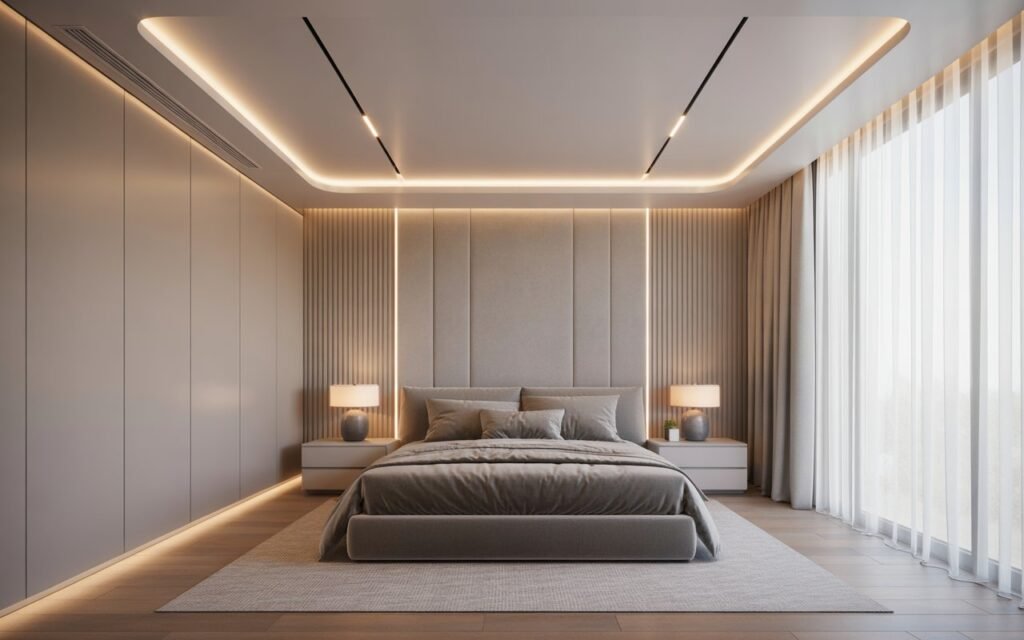
15. Reflective Accents with Restraint
Introduce reflective materials like brushed brass, smoked glass, or polished metal in small amounts to enhance light without overpowering the palette.
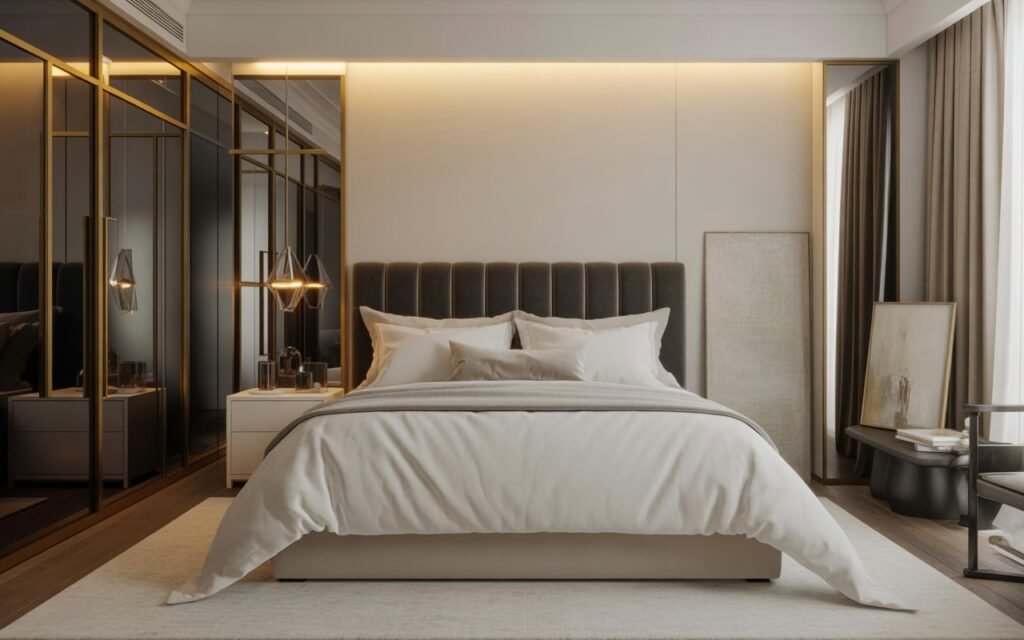
16. Defined Seating Zone
If space allows, create a secondary function area with a lounge chair or bench. Keep it aligned with the room’s overall symmetry and spacing.
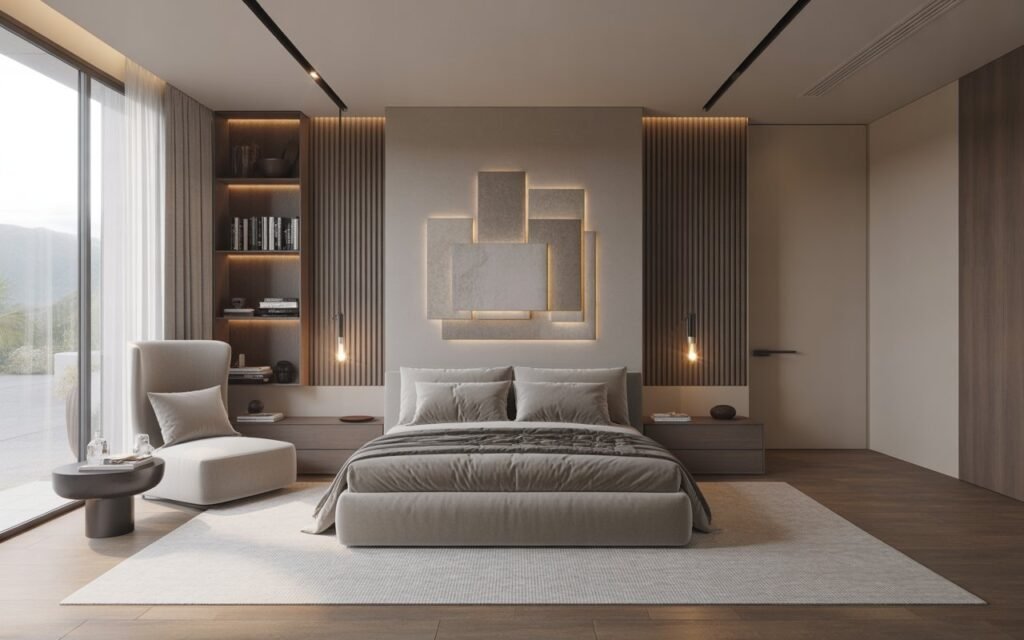
17. Direct Access to Walk-In Storage
A connected dressing area or walk-in closet improves flow and keeps storage separate from the main visual zone.
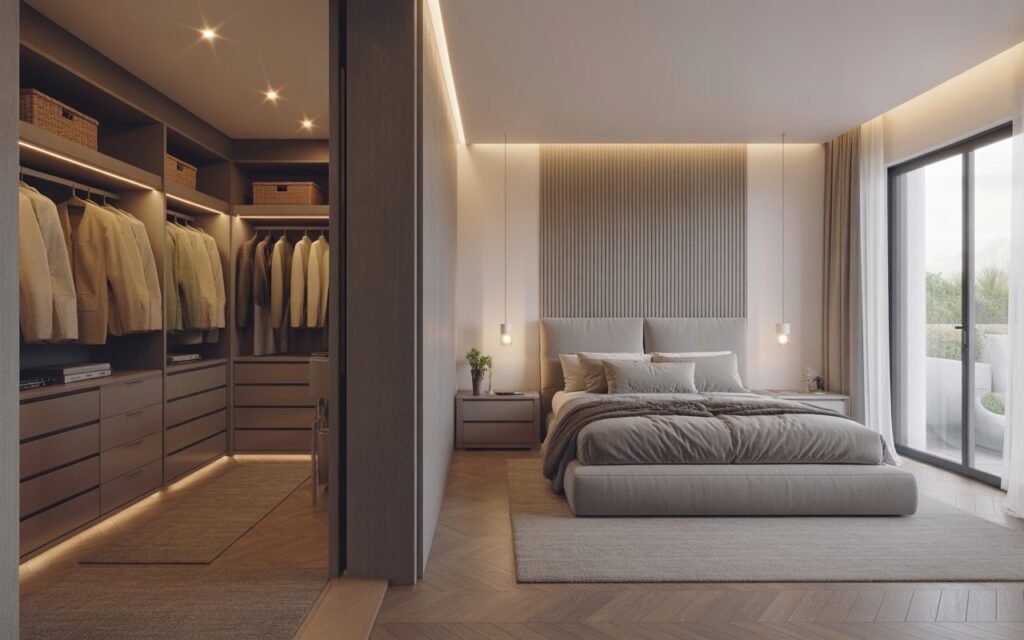
18. Intentional Negative Space
Leave certain areas empty. Negative space is a key component of luxury—it allows the design to breathe and prevents visual fatigue.
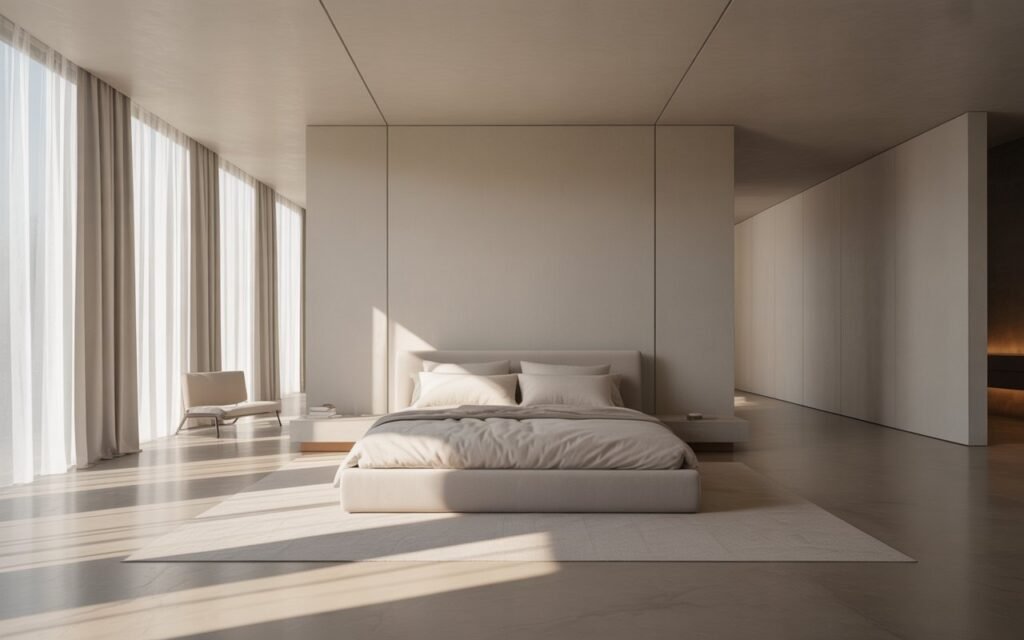
19. Controlled Contrast Elements
Introduce darker tones in limited areas—such as a feature wall or furniture base—to ground the design without making it heavy.
20. Hidden Functional Storage
Use concealed drawers, lift-up beds, or integrated compartments to maintain a clean surface appearance.
21. Hotel-Inspired Spatial Planning
Keep the bed as the central anchor. Maintain clear walking paths, balanced spacing, and an uncluttered perimeter—this is what defines high-end hotel layouts.
Conclusion
A refined luxury bedroom master design is achieved through control, not complexity. The most effective spaces are those where every element serves a purpose—visually and functionally—without competing for attention.
Focus on proportion, material consistency, and layered lighting rather than adding more features. When the layout is balanced and the palette is restrained, the room naturally feels elevated. Over time, small refinements—like improving lighting, simplifying decor, or upgrading textures—will have a greater impact than major changes.
The goal is not to create a space that looks expensive, but one that feels composed, calm, and intentionally designed for everyday use.