Introduction
Closet shelving is not just about adding storage—it’s about designing a system that supports your daily routine. Most closets become messy not because they lack space, but because they lack structure. Without proper shelf planning, even a large closet can feel cluttered and inefficient.
A well-designed shelving system considers three critical factors: accessibility, visibility, and flexibility. Items you use daily should be easy to reach, everything should be visible at a glance, and the system should adapt as your needs change over time.
People searching for closet shelving ideas are usually facing real problems—limited space, disorganization, or inefficient layouts. This guide solves those problems with practical strategies, realistic measurements, and design principles used in professional interior planning.
1. Floor-to-Ceiling Shelving to Unlock Vertical Space
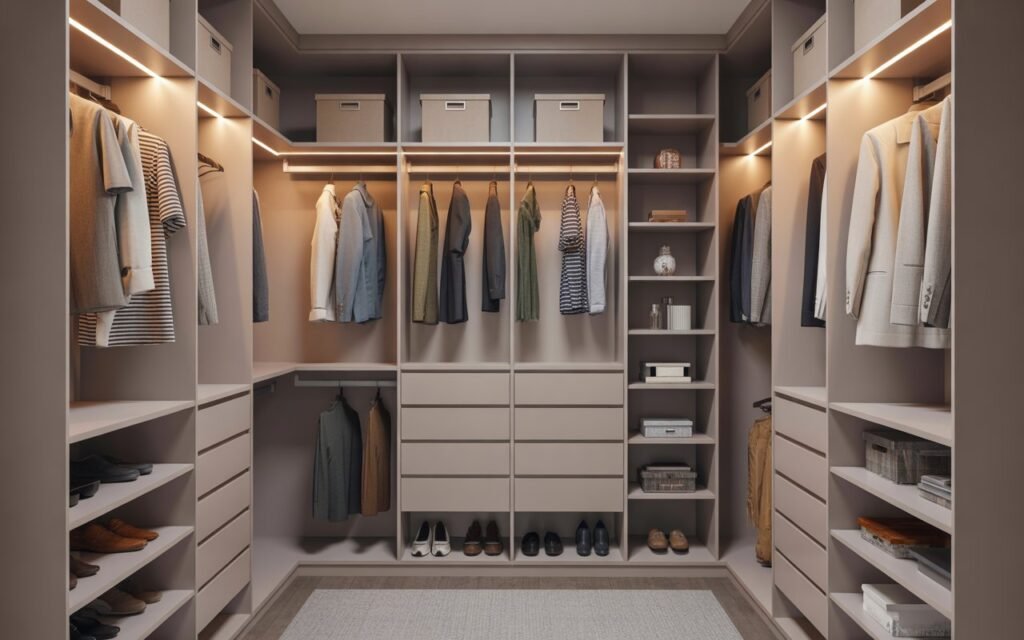
One of the biggest mistakes in closet design is ignoring vertical space. Most closets leave unused gaps above eye level.
Installing shelves up to the ceiling allows you to create three functional zones:
- Top zone → seasonal or rarely used items
- Middle zone → daily essentials
- Lower zone → shoes or bins
This approach instantly increases storage without expanding your closet footprint.
2. Adjustable Shelving Systems for Long-Term Flexibility
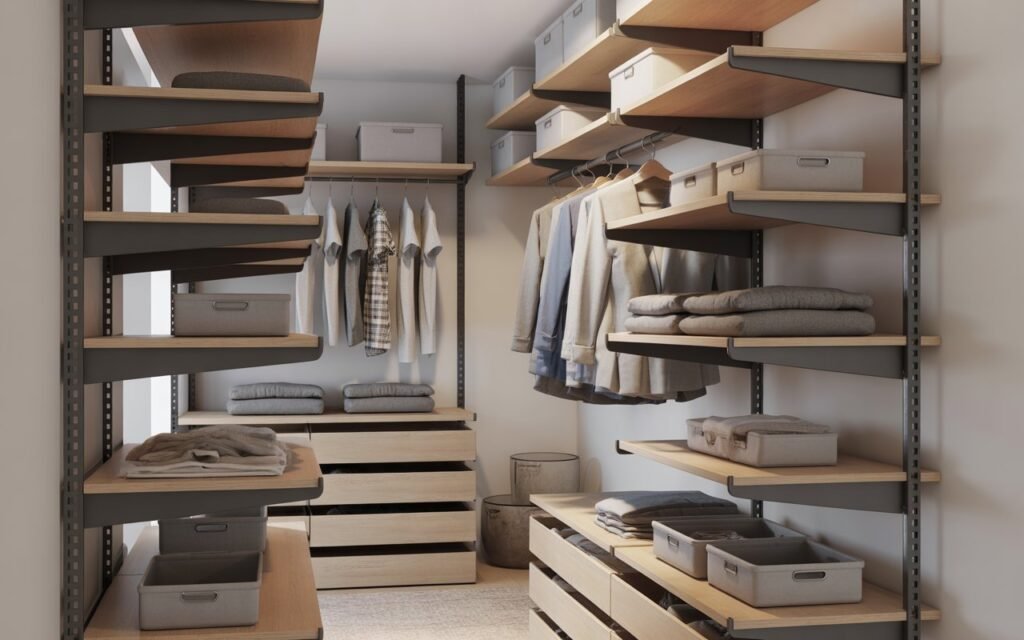
Closet needs change over time. Fixed shelves may work today but become limiting later.
Adjustable shelving systems allow you to modify heights as needed—perfect for adapting between folded clothes, shoes, or storage bins.
3. Optimize Shelf Depth Based on Item Type
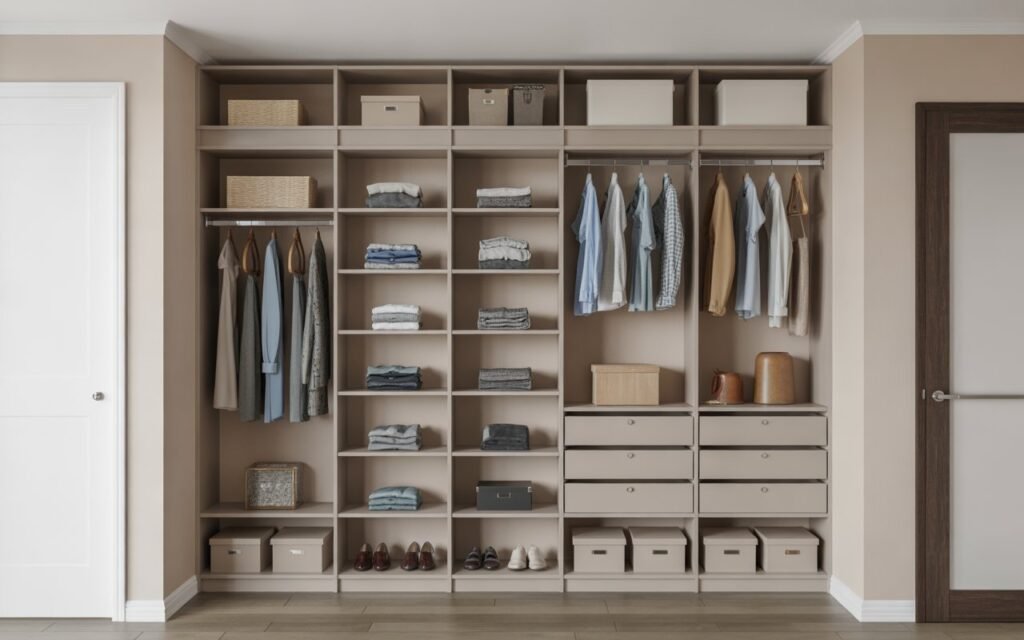
Shelf depth is often overlooked but critical.
- 10–12 inches → folded clothes
- 8–10 inches → shoes
- 14–16 inches → bulky items
Too-deep shelves create hidden clutter. Proper depth keeps everything visible and accessible.
4. Use Narrow Shelves for Efficient Shoe Storage
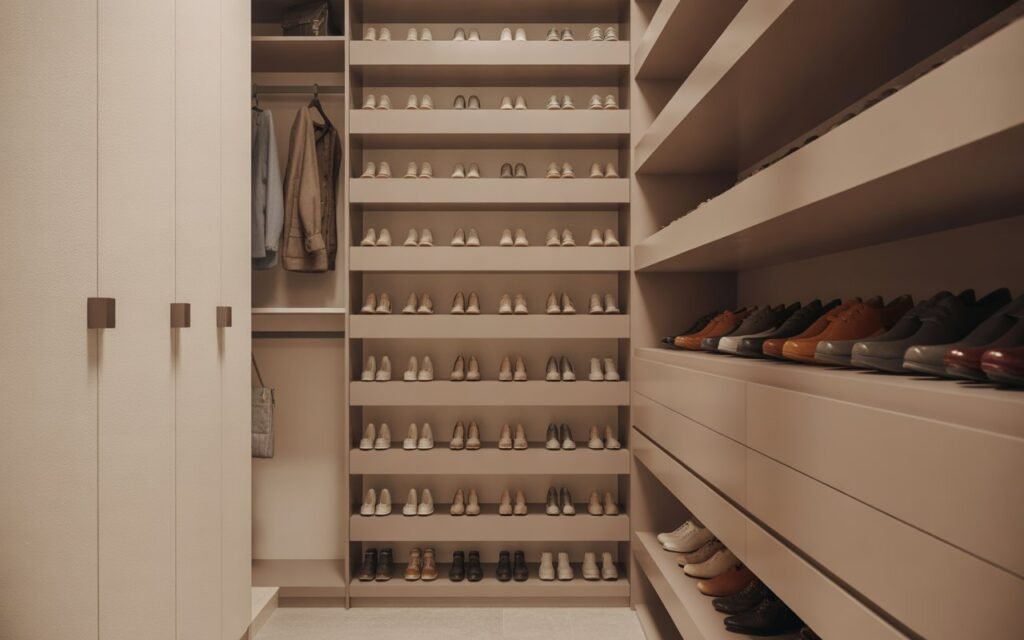
Shoes don’t require deep space. Narrow shelves keep them aligned, visible, and easy to access.
Angled shelves can further improve visibility in compact closets.
5. Combine Open Shelving With Baskets for Balance
Fully open shelving can look messy over time. Adding baskets or bins creates a balance between visibility and concealment.
Use baskets for:
- Accessories
- Small clothing items
- Seasonal storage
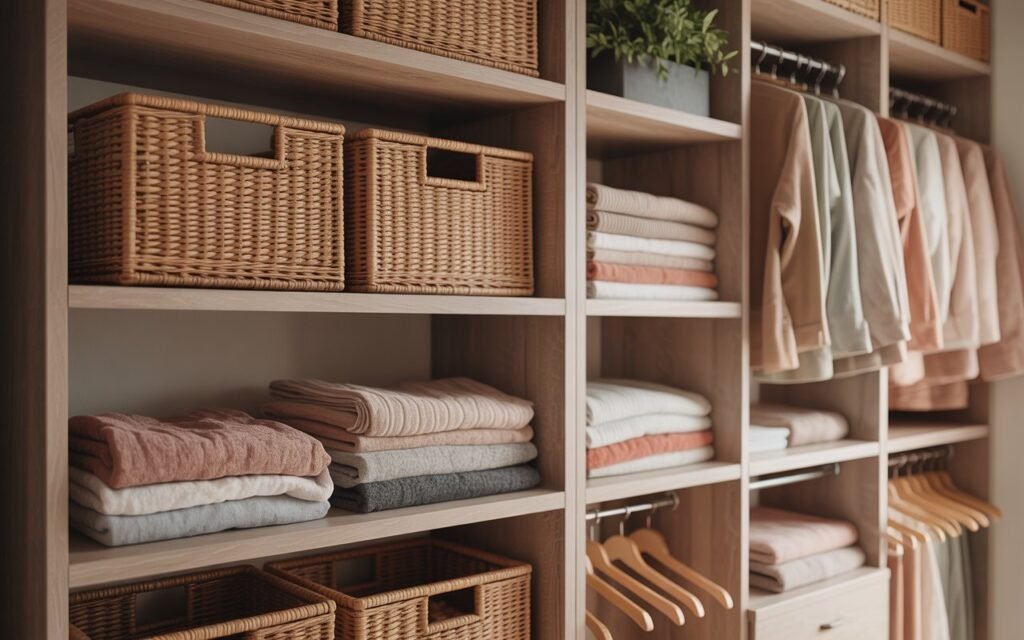
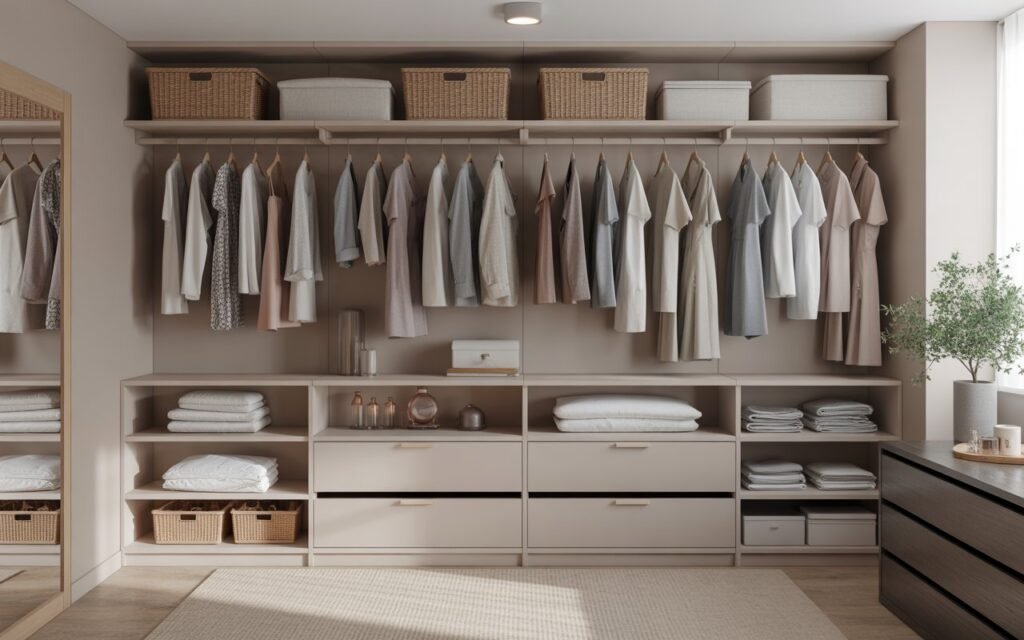
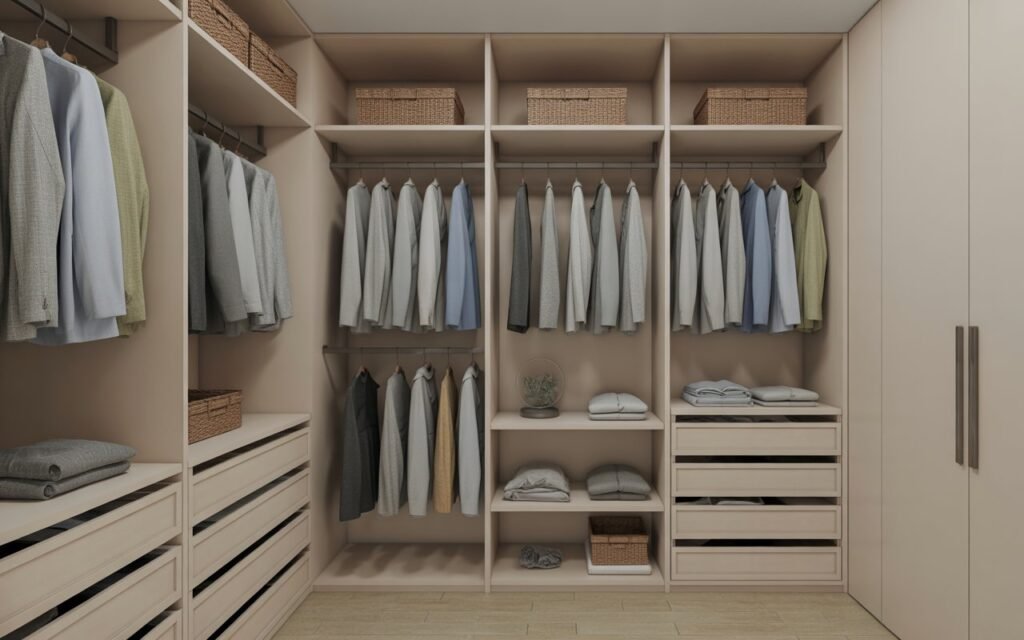
6. Double Hanging With Shelving Integration
A smart layout combines hanging rods with shelves.
Example layout:
- Top → shelf
- Middle → hanging rod
- Bottom → shelves
This hybrid system maximizes both vertical and horizontal space.
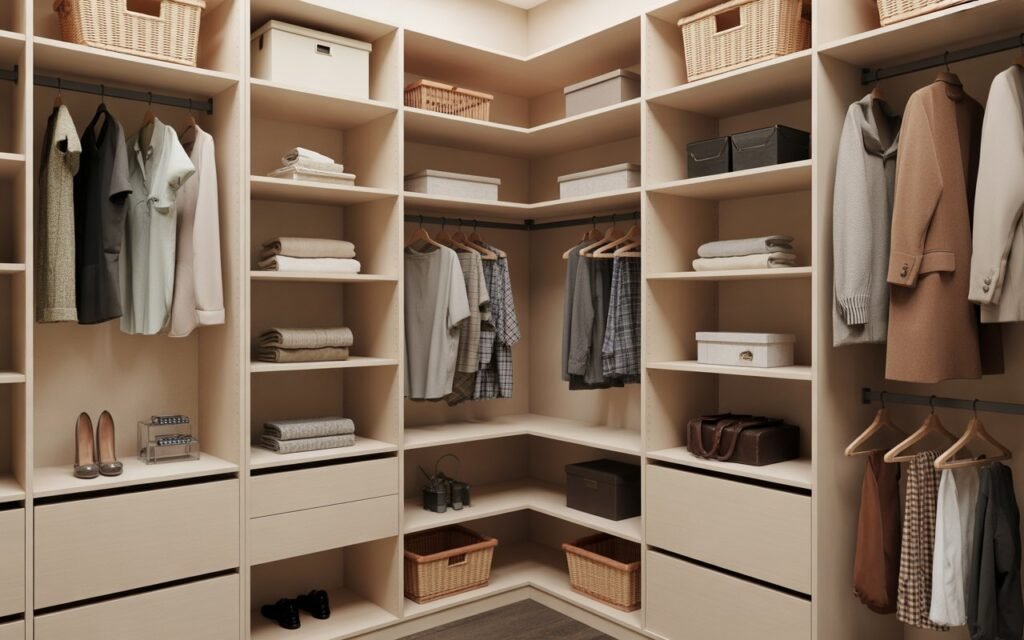
7. Corner Shelving to Utilize Dead Space
Closet corners often remain unused. Installing corner shelves turns these areas into functional storage zones.
This is especially useful in walk-in closets where corners can handle bulky or less-used items.
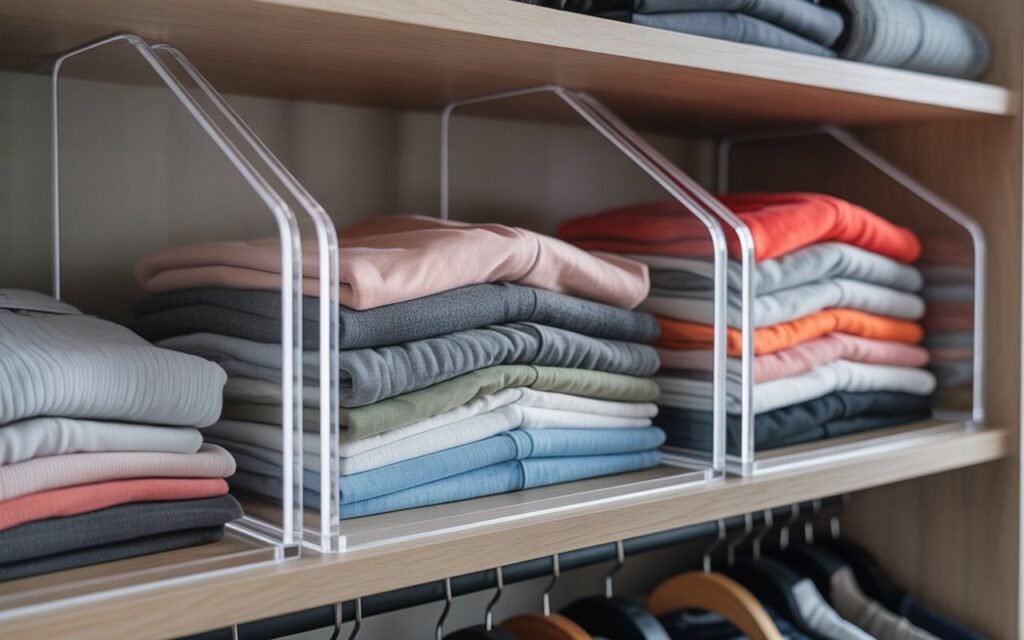
8. Shelf Dividers for Structured Organization
Stacked clothes often collapse without support. Shelf dividers maintain clean vertical stacks and prevent mess.
They also make it easier to separate categories like t-shirts, jeans, and sweaters.
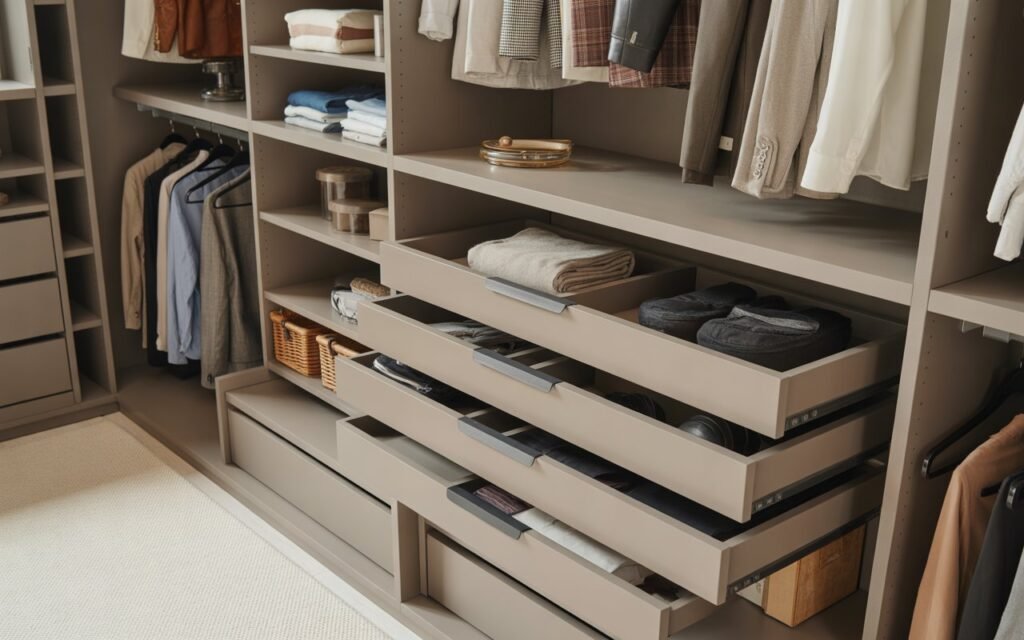
9. Pull-Out Shelves for Better Accessibility
Pull-out shelves act like drawers but maintain the visibility of open shelving.
They are ideal for:
- Accessories
- Folded clothes
- Frequently used items
10. Dedicated Zones for Each Category
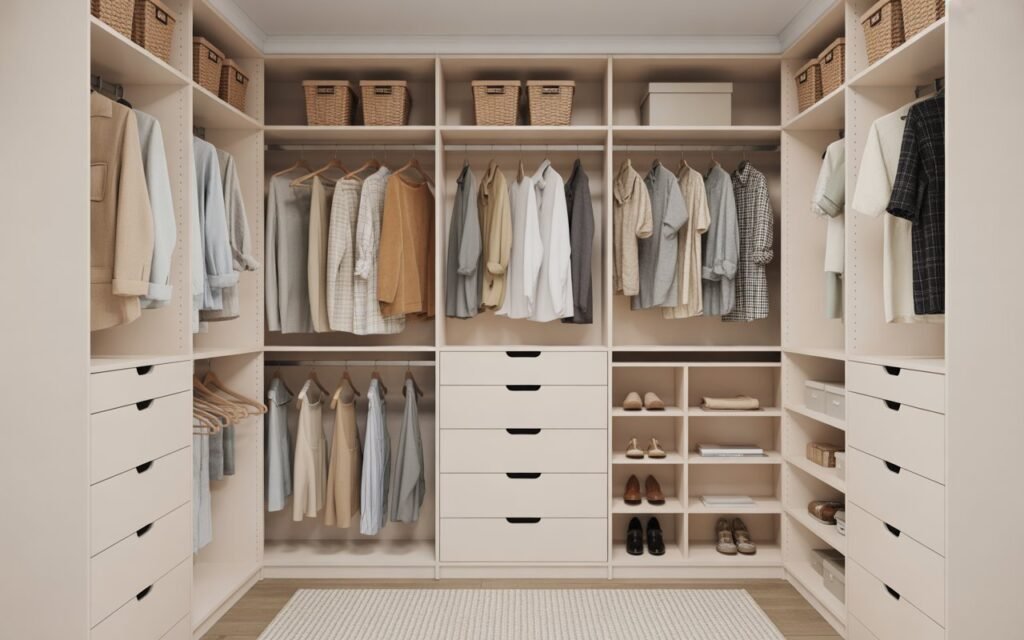
A well-organized closet assigns a specific area for each type of item.
Example:
- Left → clothes
- Center → shelves
- Right → shoes
Zoning reduces clutter and improves daily efficiency.
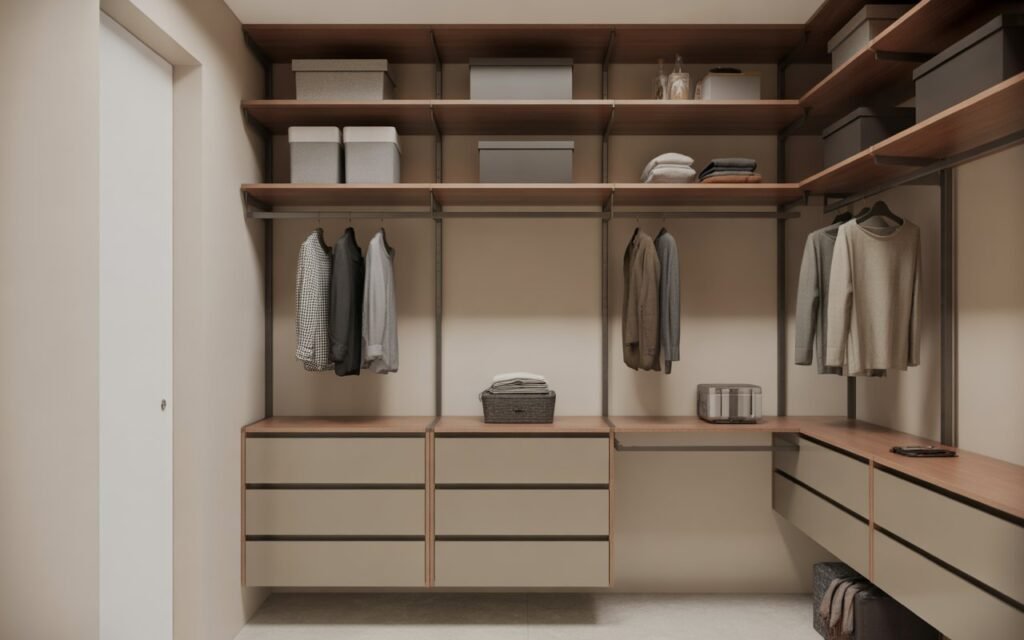
11. Floating Shelves for a Clean Minimal Look
Floating shelves create a modern, uncluttered appearance. They are ideal for small closets where bulky structures can feel overwhelming.
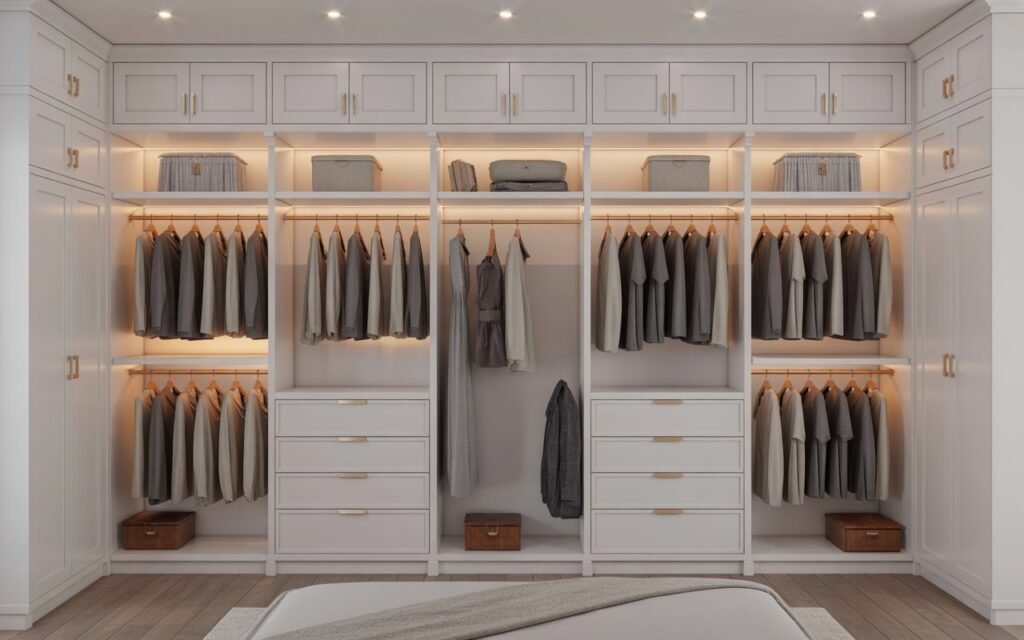
12. Built-In Shelving for Maximum Efficiency
Custom built-in shelves maximize every inch of space and create a seamless look.
They are particularly effective for awkward layouts where standard units don’t fit well.
13. Smart Small Closet Shelving Strategy
In small closets:
- Use vertical storage aggressively
- Keep shelves shallow
- Avoid bulky storage boxes
This prevents the space from feeling cramped.
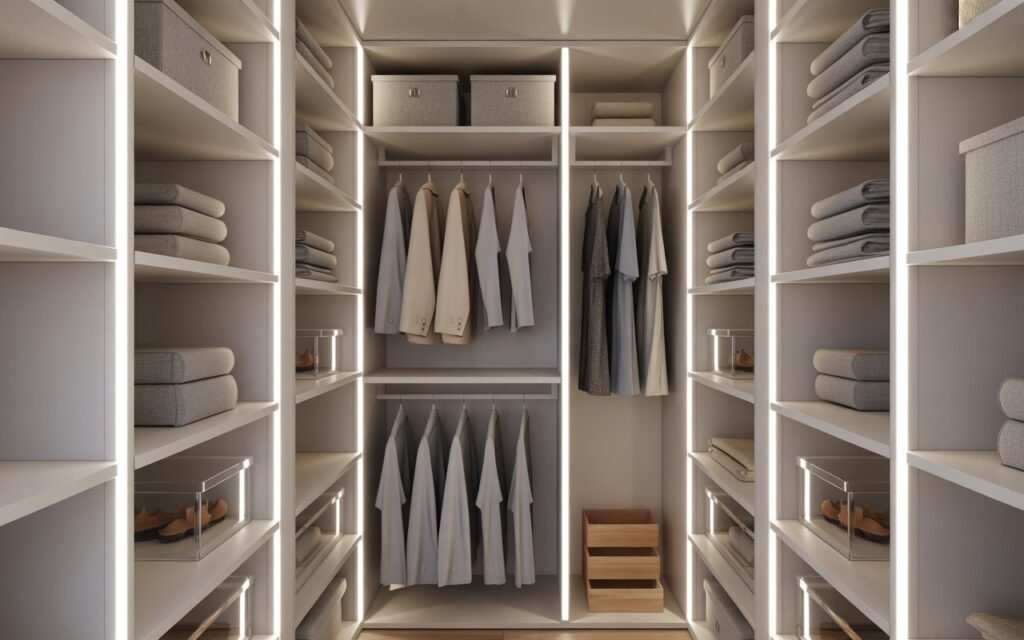
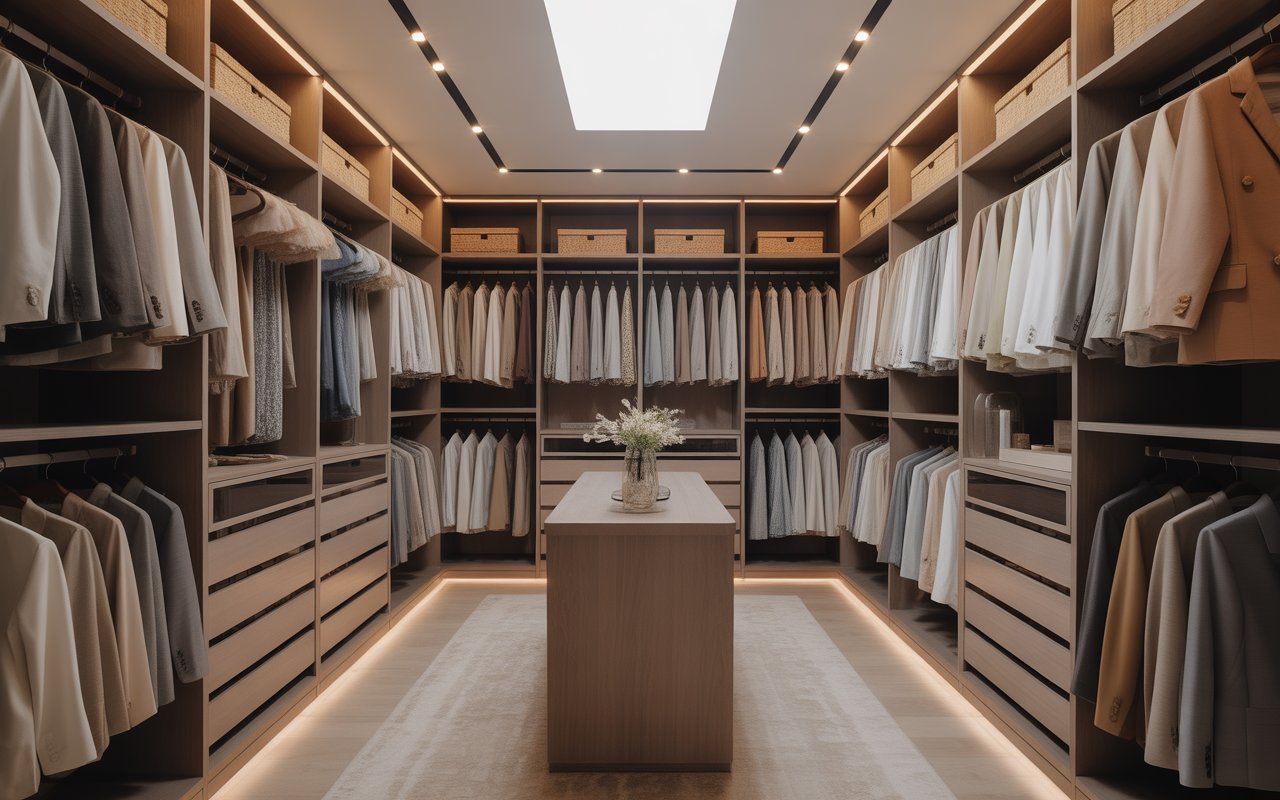
14. Walk-In Closet Shelving Layout Planning
Larger closets require structure to avoid chaos.
Best approach:
- Divide into zones
- Mix open and closed storage
- Maintain walking space
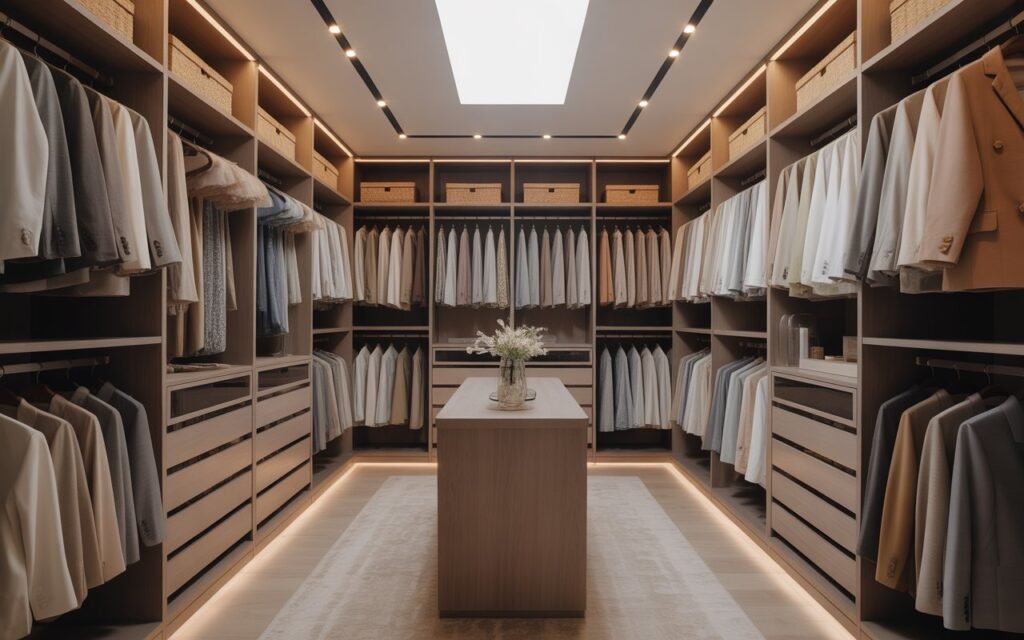
15. Add LED Shelf Lighting for Visibility
Lighting improves both function and aesthetics. LED strips under shelves make it easier to see items and add a premium feel.
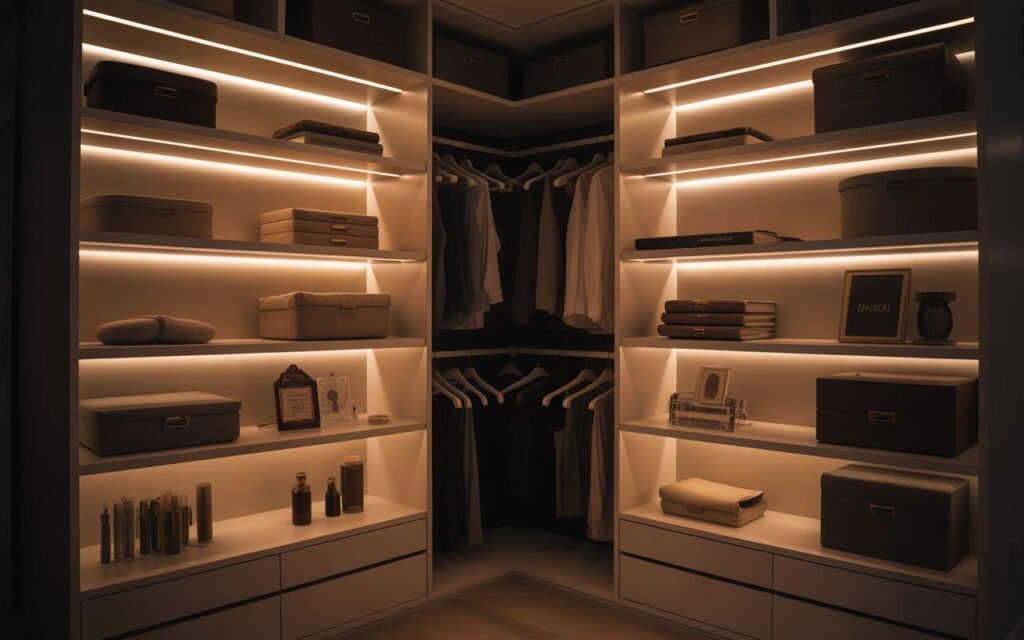
16. Maintain Breathing Space Between Shelves
Overcrowding leads to clutter. Leaving small gaps between stacks improves accessibility and keeps the closet visually clean.
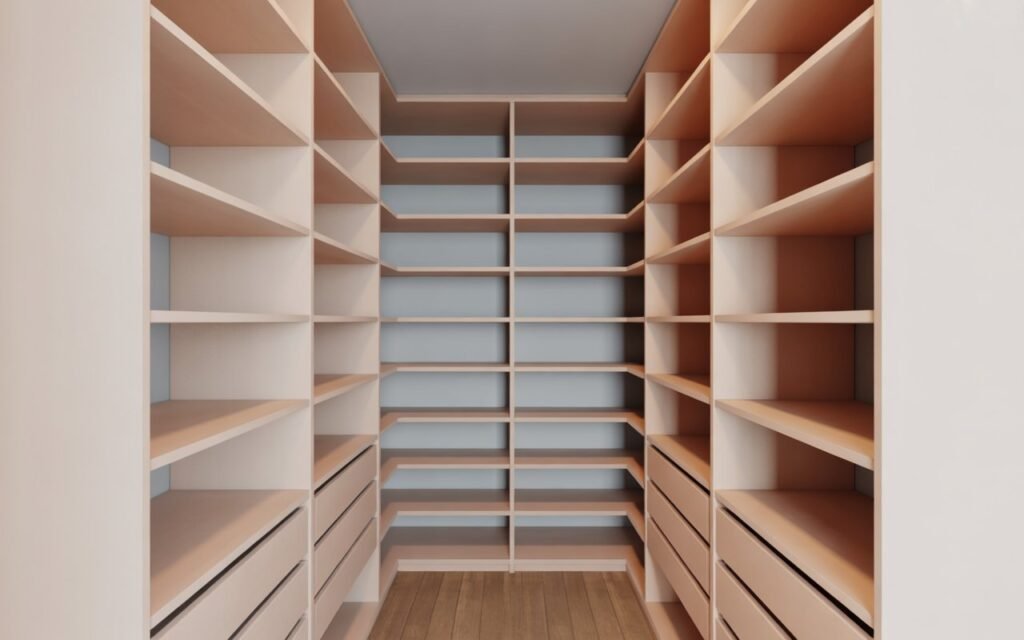
17. Design for Daily Use, Not Just Appearance
The best closet systems are designed around how you use them daily.
Ask:
- What do I access most often?
- What needs quick visibility?
- What can be stored higher up?
This mindset ensures long-term organization.
Practical Closet Planning Framework
Step 1: Measure Precisely
Always measure height, width, and depth before installing shelves.
Step 2: Categorize Items
Group everything into categories:
- Daily wear
- Occasional wear
- Accessories
Step 3: Assign Zones
Create clear zones based on usage frequency.
Step 4: Balance Open vs Closed Storage
Too much open space creates clutter, while too much closed storage reduces accessibility.
Common Mistakes to Avoid
- Installing shelves too deep
- Ignoring vertical space
- No clear layout plan
- Overfilling shelves
- Using one-size-fits-all shelving
Conclusion
Closet shelving is not just about adding more storage—it’s about creating a system that works efficiently every day. A well-designed closet reduces stress, saves time, and keeps everything accessible. The difference between a cluttered and organized space often comes down to how thoughtfully the shelves are planned.
The most effective shelving systems are built around real needs, not assumptions. By focusing on proper measurements, clear zoning, and a balance between open and concealed storage, you can transform even a small closet into a highly functional space. Smart use of vertical space and adaptable shelving ensures that your closet remains useful as your storage needs evolve.
In the end, good closet design is about simplicity and structure. When every shelf has a purpose and every item has a place, the entire space becomes easier to maintain. With the right approach, closet shelving can turn an everyday storage area into a clean, efficient, and visually satisfying part of your home.