Introduction
A bedroom should be more than just a place to sleep—it should feel like a quiet escape from the outside world. That’s exactly what Japandi design offers. Combining the simplicity of Japanese interiors with the warmth of Scandinavian style, Japandi creates spaces that feel calm, balanced, and deeply comfortable.
These Japandi bedroom ideas focus on intentional living. Instead of filling your room with unnecessary items, the goal is to create a space where every detail has meaning. Soft neutral tones, natural materials, and minimal layouts come together to form an environment that promotes relaxation and clarity.
If you want your bedroom to feel peaceful, cozy, and effortlessly stylish, these thoughtfully designed Japandi bedroom ideas will help you transform your space into a calming sanctuary.
1. Build a Soft Neutral Foundation
The first step in creating a Japandi bedroom is choosing the right color palette. Shades like warm white, beige, taupe, and soft gray set a calm tone and make the room feel open and airy.
These neutral colors work as a base that allows textures and natural materials to stand out. Instead of bold contrasts, Japandi design relies on subtle transitions that feel easy on the eyes and relaxing over time.
2. Choose a Low Platform Bed
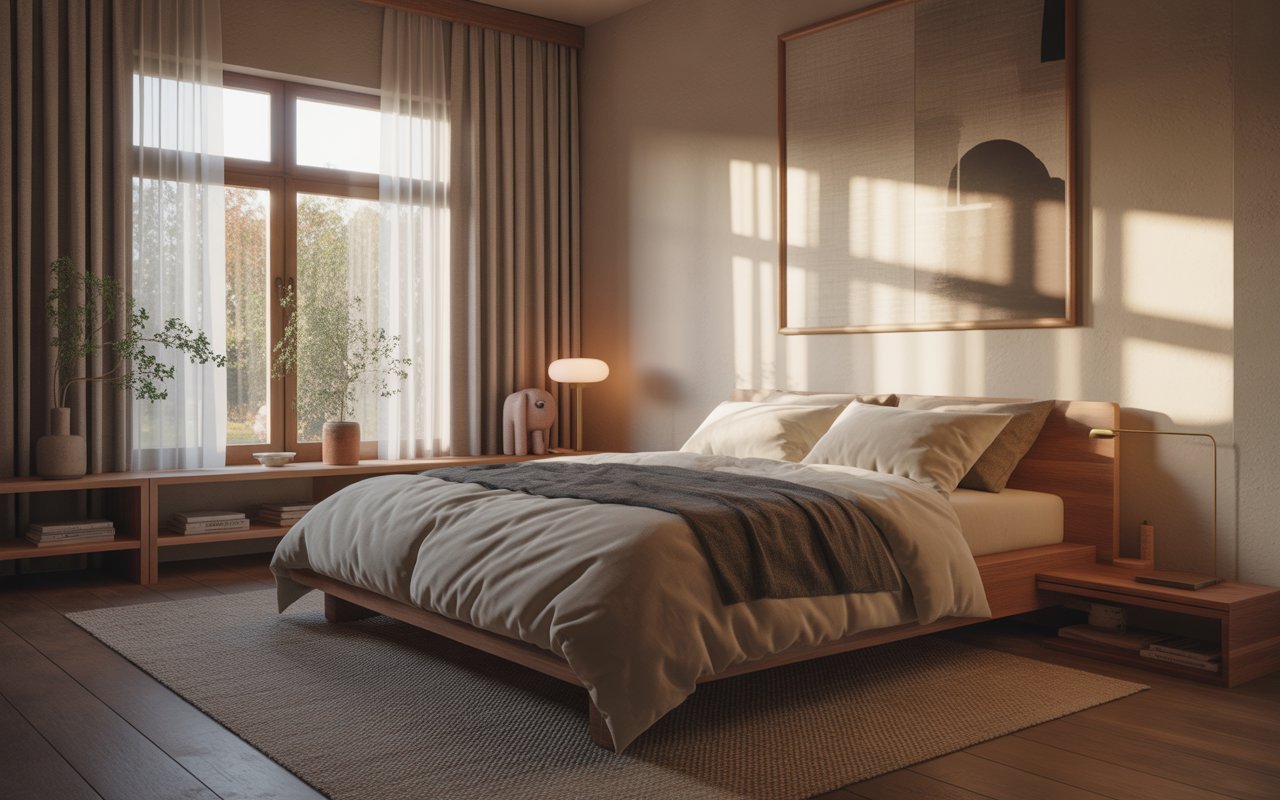
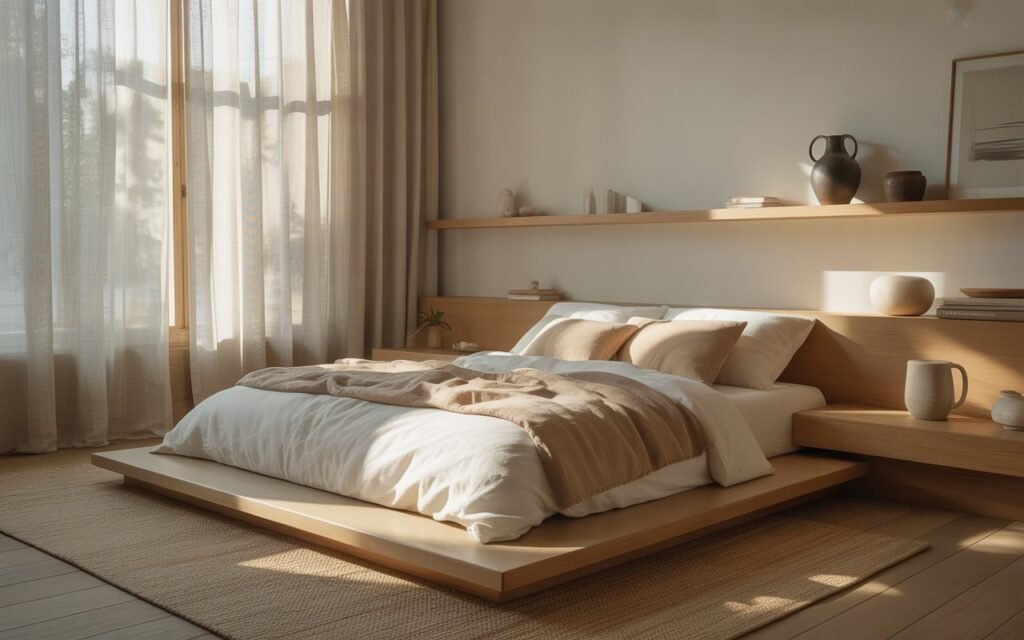
A low-profile bed is one of the defining features of Japandi interiors. It visually lowers the room, creating a grounded and stable feeling that instantly makes the space more peaceful.
Low beds also enhance the sense of openness, especially in smaller rooms, making them a practical and aesthetic choice.
3. Bring in Natural Wood Textures
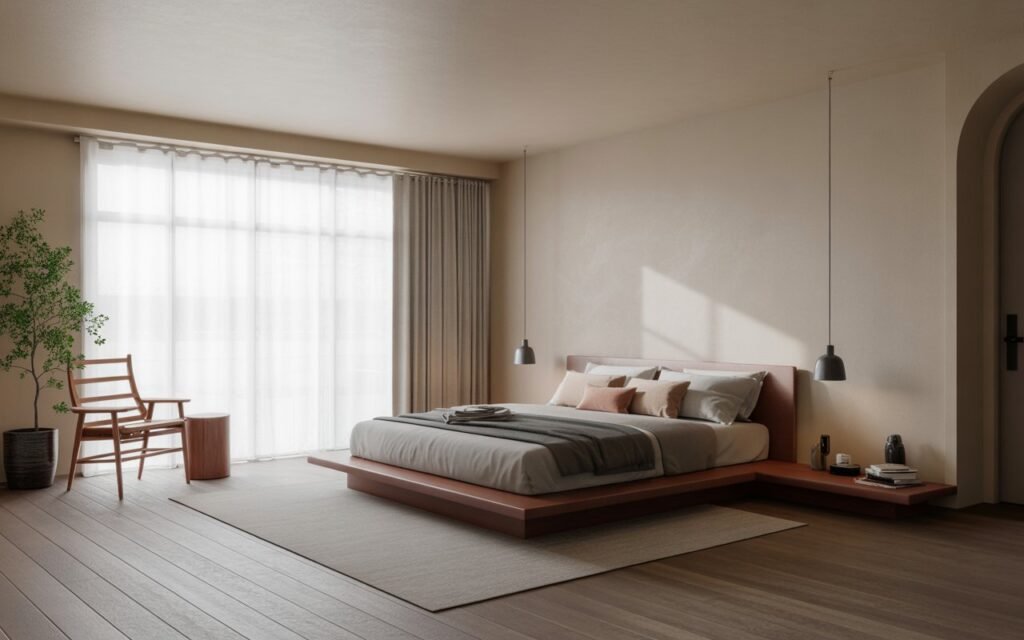
Wood is essential in Japandi design. Light-toned woods like oak, ash, or birch introduce warmth without overwhelming the minimalist aesthetic.
A wooden bed frame, side tables, or even wall panels can add depth and texture, making the room feel more inviting while staying true to the clean design.
4. Keep Furniture Minimal and Intentional
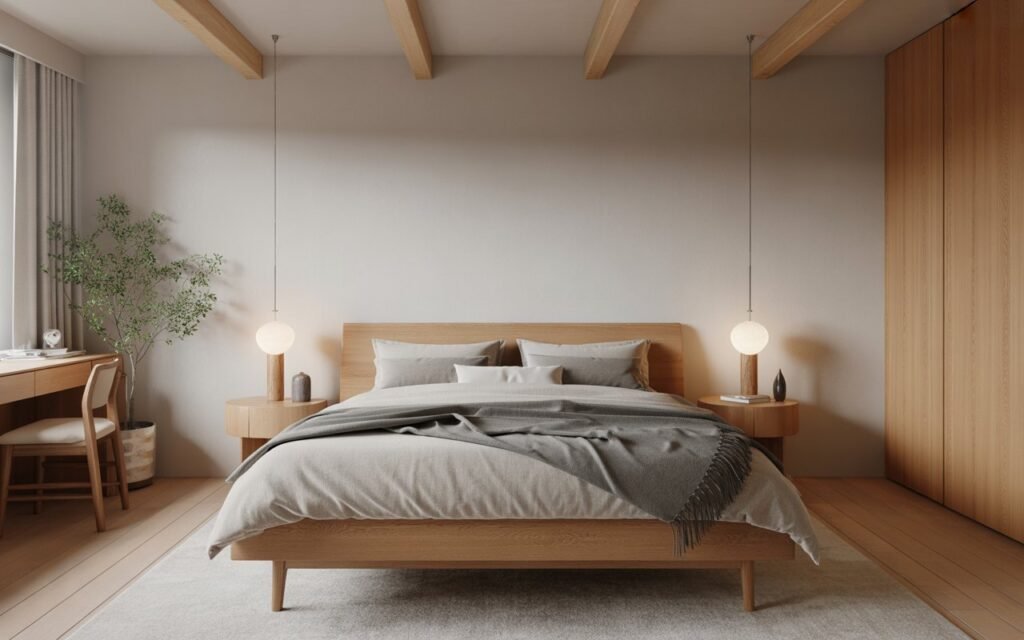
Japandi bedrooms avoid unnecessary furniture. Instead of filling the space, focus on a few essential pieces that serve a clear purpose.
This approach not only reduces clutter but also creates a more breathable and calming environment—one of the key goals of all Japandi bedroom ideas.
5. Layer Soft and Cozy Bedding
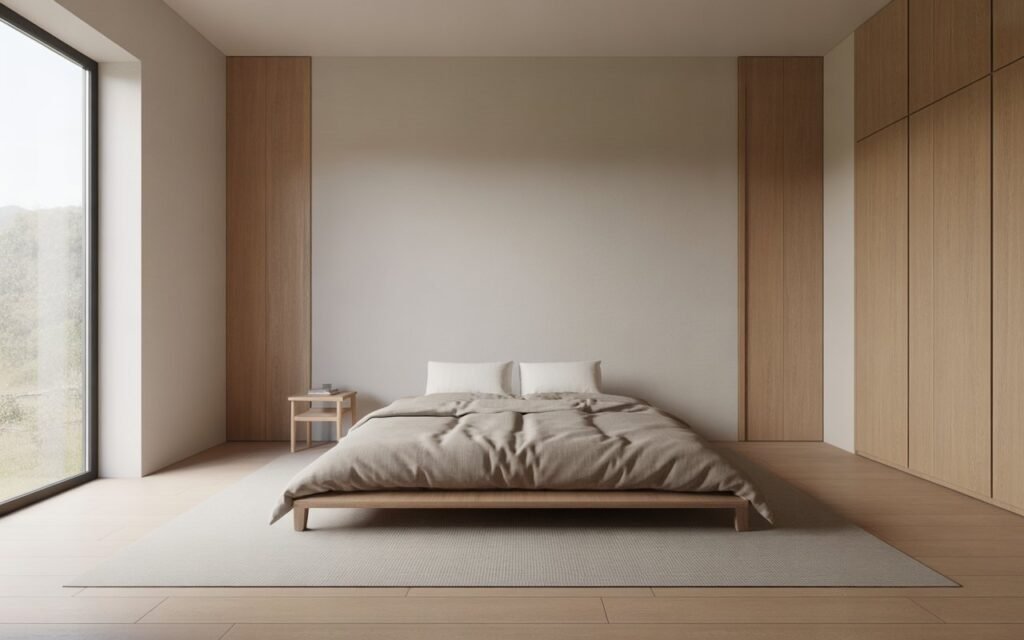
Minimal doesn’t mean cold. Japandi design balances simplicity with comfort through soft, layered bedding.
Use linen sheets, cotton duvets, and textured throws in neutral tones. These layers add warmth and make the bed feel inviting without disrupting the clean aesthetic.

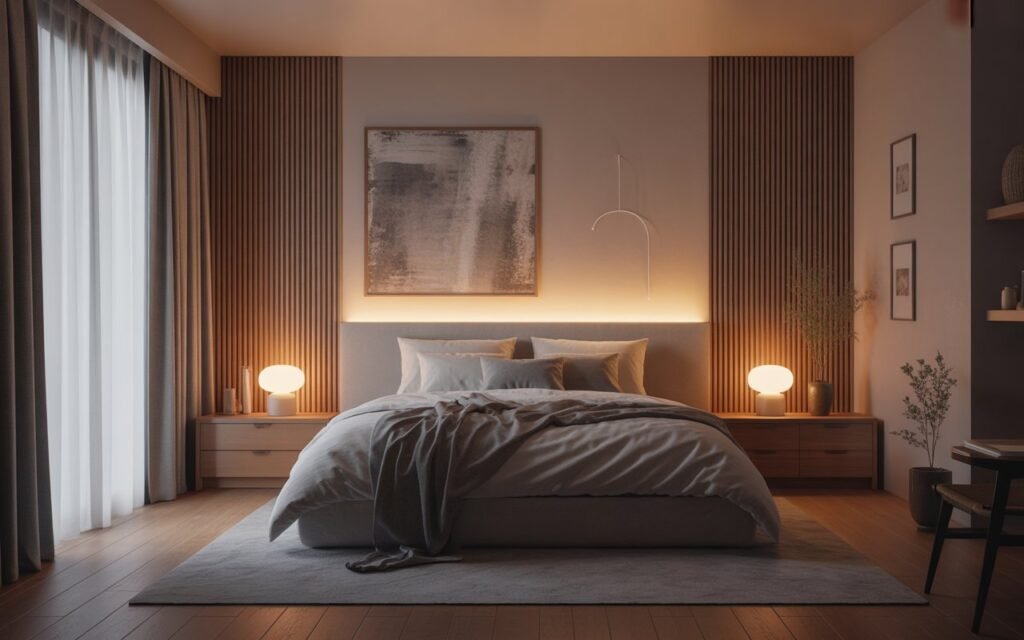
6. Use Warm, Ambient Lighting
Lighting plays a huge role in setting the mood. Instead of harsh overhead lights, opt for warm bedside lamps or soft pendant lights.
The goal is to create a gentle glow that enhances relaxation, especially in the evening.
7. Add a Touch of Greenery
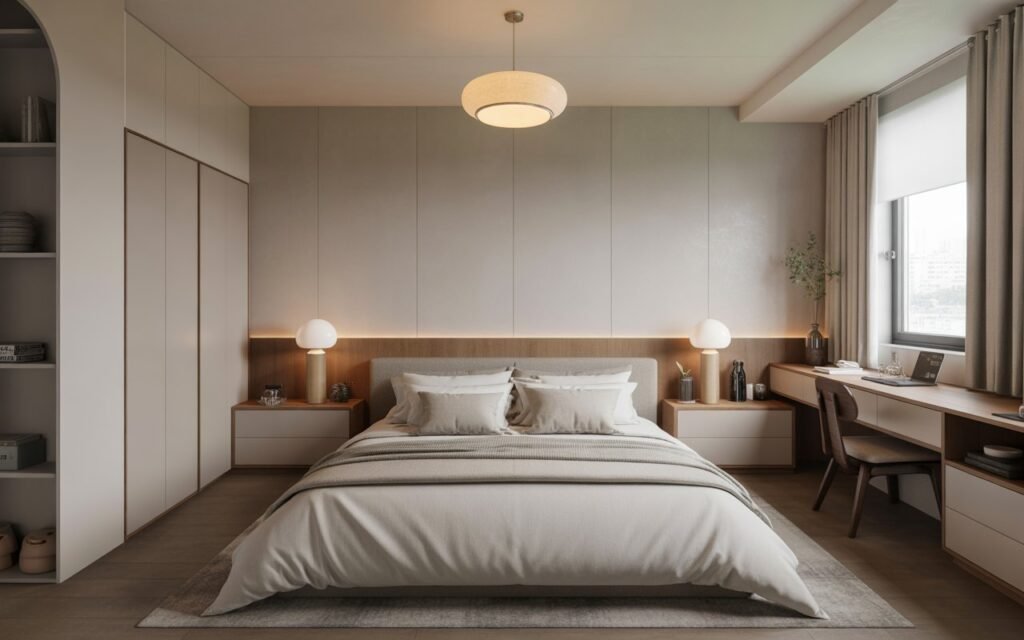
Plants bring life into a minimal space. A single bonsai tree, snake plant, or olive plant can add a natural element without overwhelming the room.
This small addition connects the indoor space with nature—a key principle in Japandi design.
8. Embrace Decluttered Surfaces
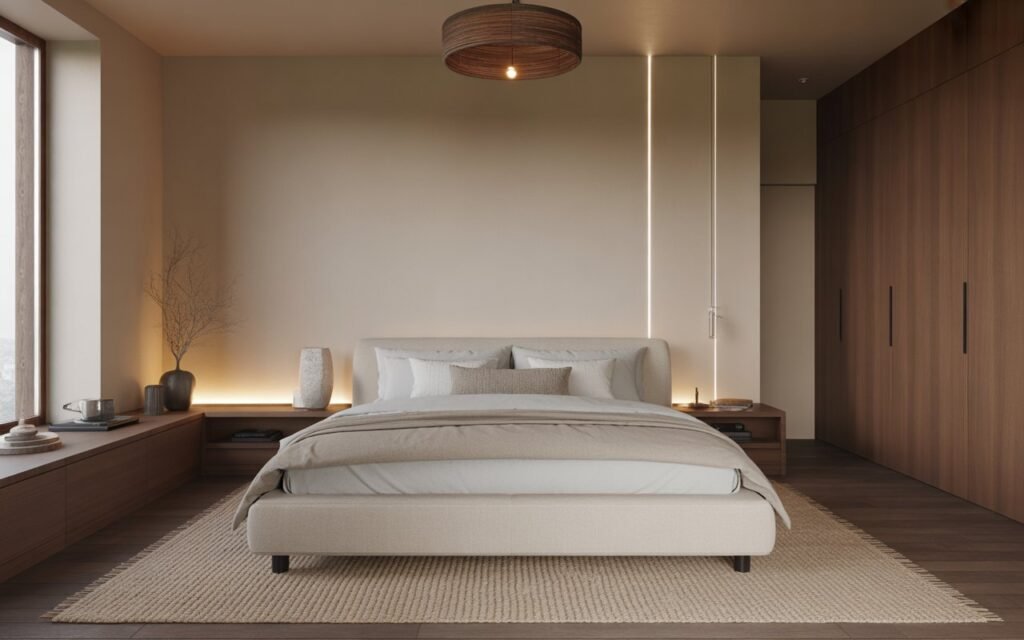
Clear surfaces are essential for creating a calm atmosphere. Avoid placing too many items on nightstands or shelves.
By keeping things minimal, your bedroom will feel more organized and mentally relaxing.
9. Use a Neutral Textured Rug
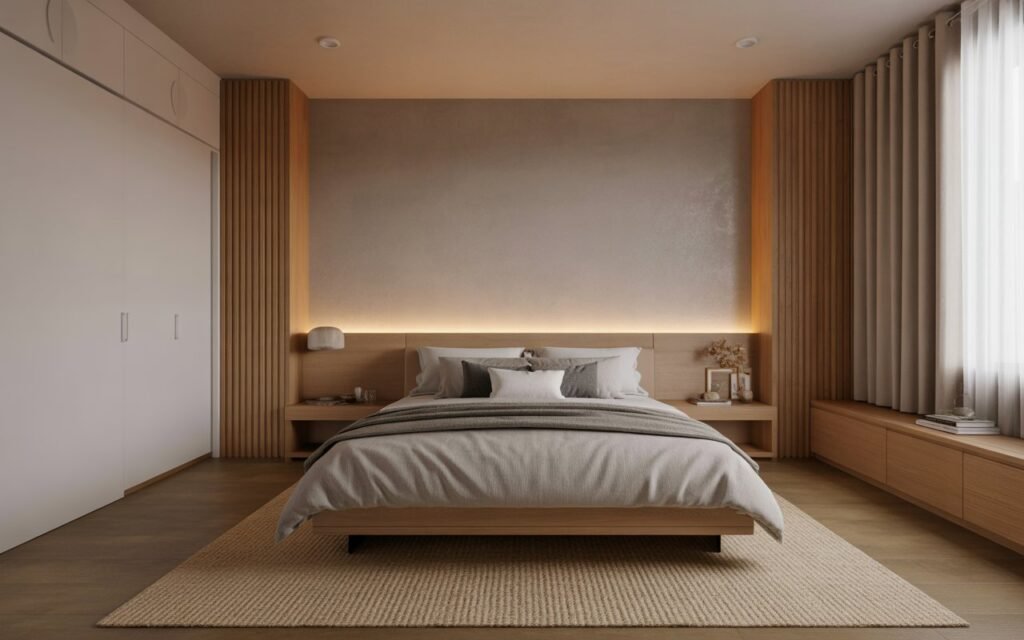
A rug can anchor the room and add comfort underfoot. Choose one in soft, neutral tones with subtle texture to maintain the Japandi aesthetic.
This adds warmth without drawing too much attention.
10. Keep Wall Art Subtle and Meaningful
Japandi wall decor is simple and intentional. Choose artwork that reflects calmness—such as abstract prints, nature scenes, or soft-toned illustrations.
Avoid bold colors or busy designs that disrupt the peaceful vibe.

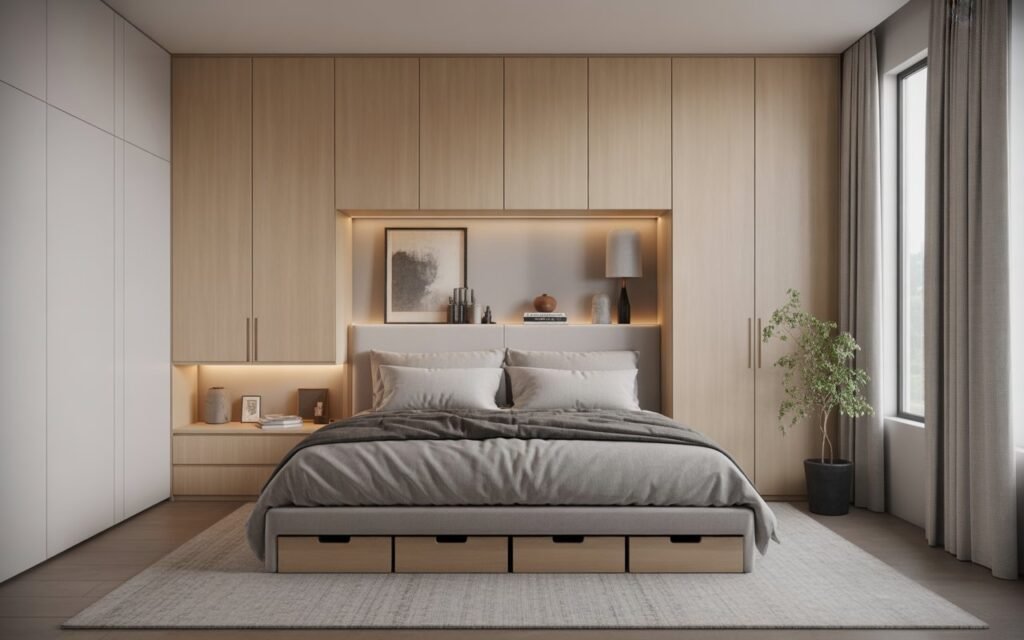
11. Hide Storage for a Clean Look
Storage should be functional but invisible. Use under-bed drawers, built-in cabinets, or sleek wardrobes to keep clutter out of sight.
This helps maintain the clean and open feel that defines Japandi bedroom ideas.
12. Let Natural Light Flow In
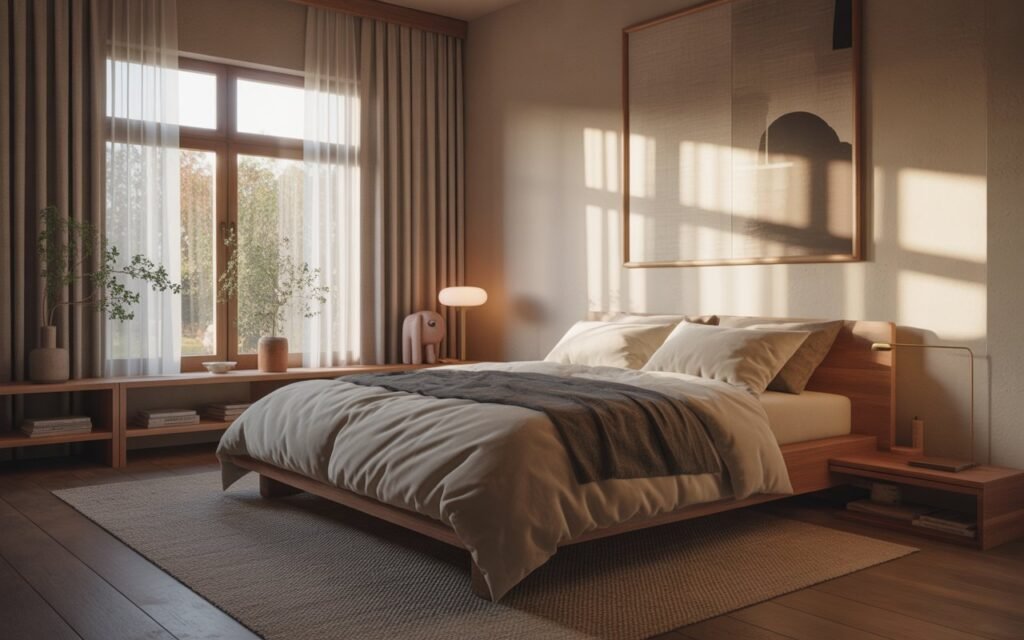
Natural light is one of the most important elements in Japandi design. Use sheer or linen curtains to allow sunlight to filter softly into the room.
This creates a bright yet gentle atmosphere that feels calming throughout the day.
13. Add Subtle Black Accents
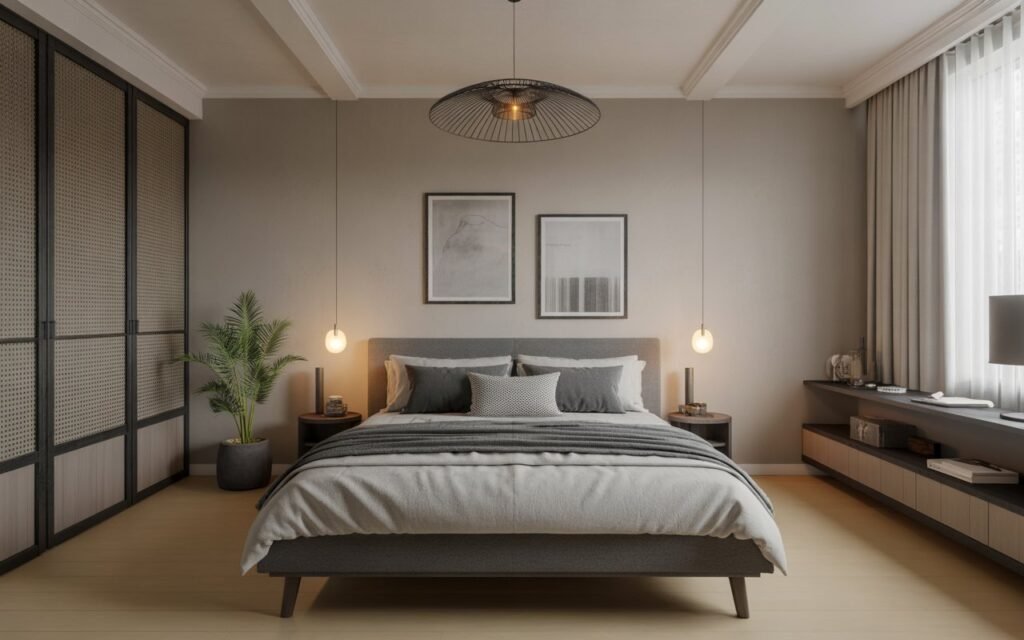
While the overall palette is neutral, small black accents can add contrast and depth. A black lamp, frame, or decor piece can subtly define the space.
The key is to use contrast sparingly.
14. Incorporate Handmade Elements
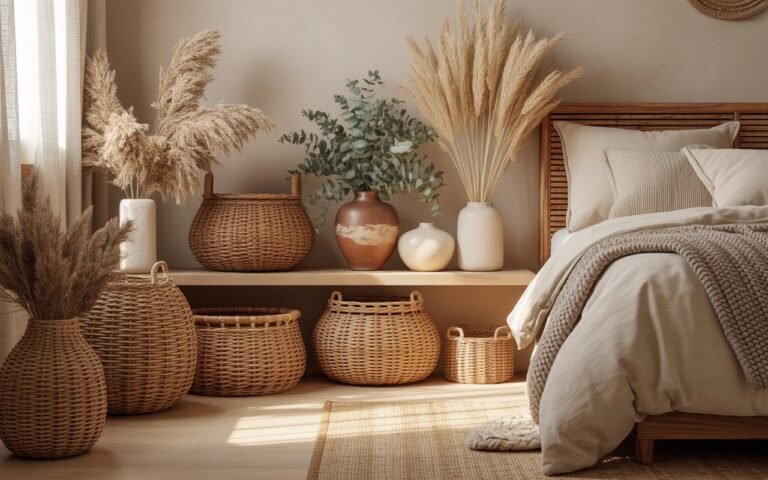
Handcrafted decor adds warmth and authenticity. Ceramic vases, woven baskets, or handmade pottery bring a human touch to the minimal design.
These details make the space feel more personal and inviting.

15. Focus on Clean Lines and Shapes
Furniture in a Japandi bedroom should have simple, clean lines. Avoid overly decorative or bulky pieces.
This keeps the design cohesive and visually calming.
16. Introduce Warm Earthy Tones
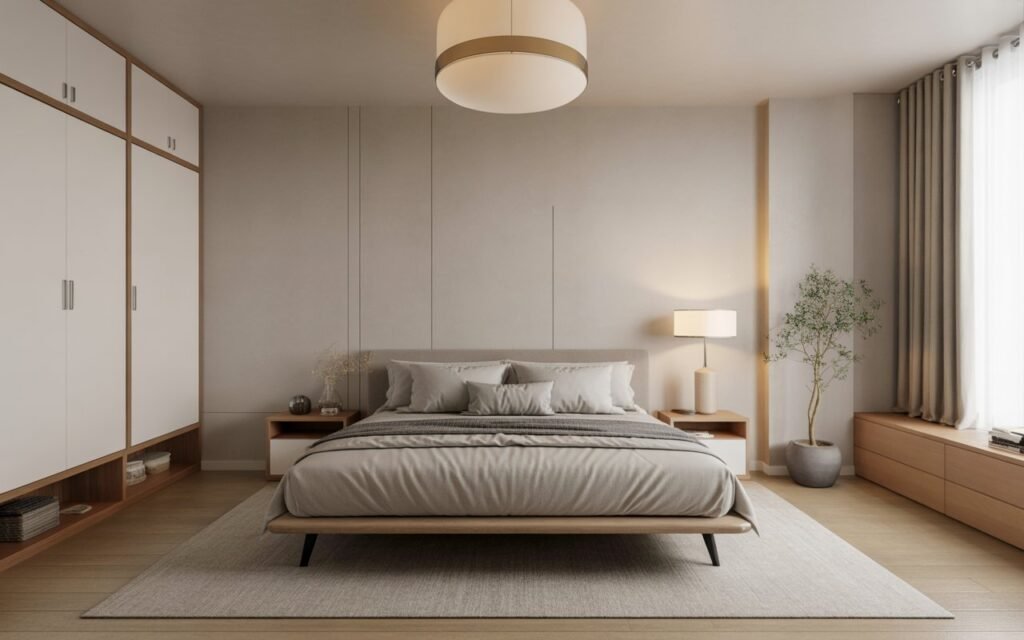
While neutrals dominate, adding earthy tones like sand, clay, or muted brown can enhance the warmth of the room.
These tones work beautifully with wood textures and soft fabrics.
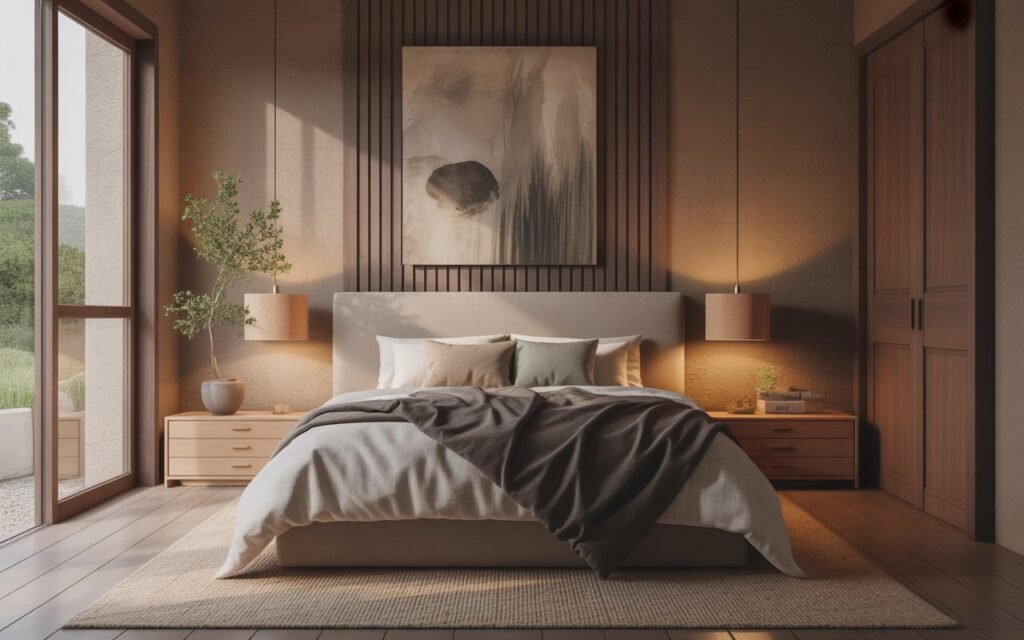
17. Create a Balanced Layout
The final step is arranging everything in a balanced way. Leave enough space between furniture pieces to allow movement and visual breathing room.
A well-balanced layout ensures that the room feels harmonious and uncluttered.
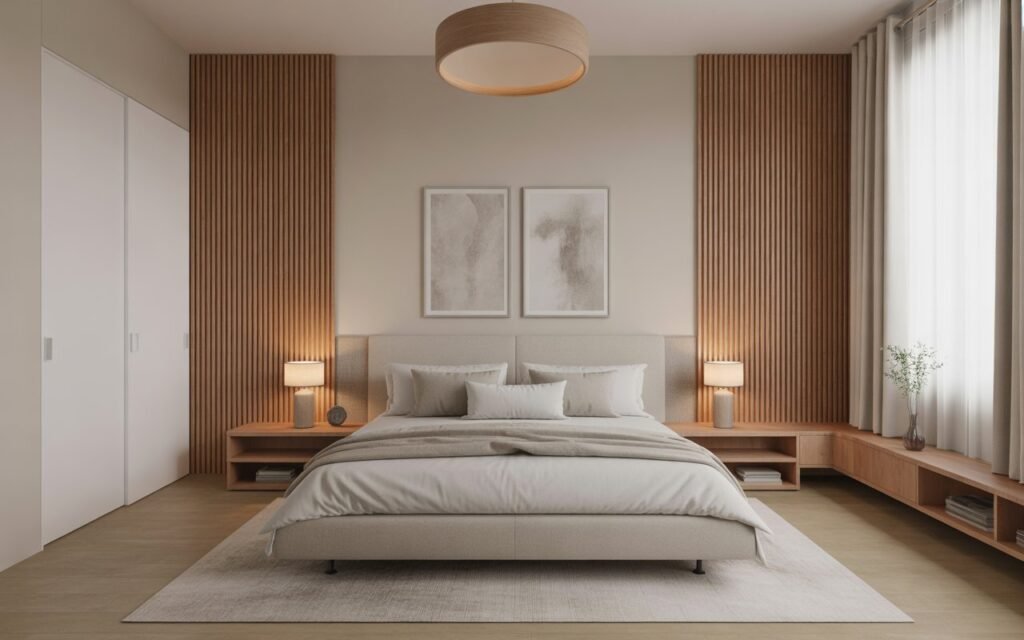
How to Perfect Your Japandi Bedroom
To fully apply these Japandi bedroom ideas, remember:
- Keep things simple but meaningful
- Choose natural materials over synthetic ones
- Focus on comfort without clutter
- Maintain a calm and cohesive color palette
Conclusion
Japandi design is more than a visual style—it’s a way of creating a space that supports calm living. These Japandi bedroom ideas show how simplicity, when done right, can feel incredibly luxurious.
By combining neutral tones, natural textures, and intentional design, you can transform your bedroom into a peaceful retreat that feels cozy, minimal, and timeless.