Introduction
If you want to turn your bedroom into a peaceful, clutter-free, and visually calming space, a Japanese-style bedroom might be exactly what you need.
Japanese interior design is all about simplicity, balance, and a strong connection with nature. It’s not just beautiful to look at—it also helps create a relaxing environment that supports better sleep and mental clarity.
In this article, you’ll discover 15 inspiring Japanese style bedroom ideas that can transform your space into a serene, Zen-inspired retreat.
1. Low Platform Bed for a Grounded Feel
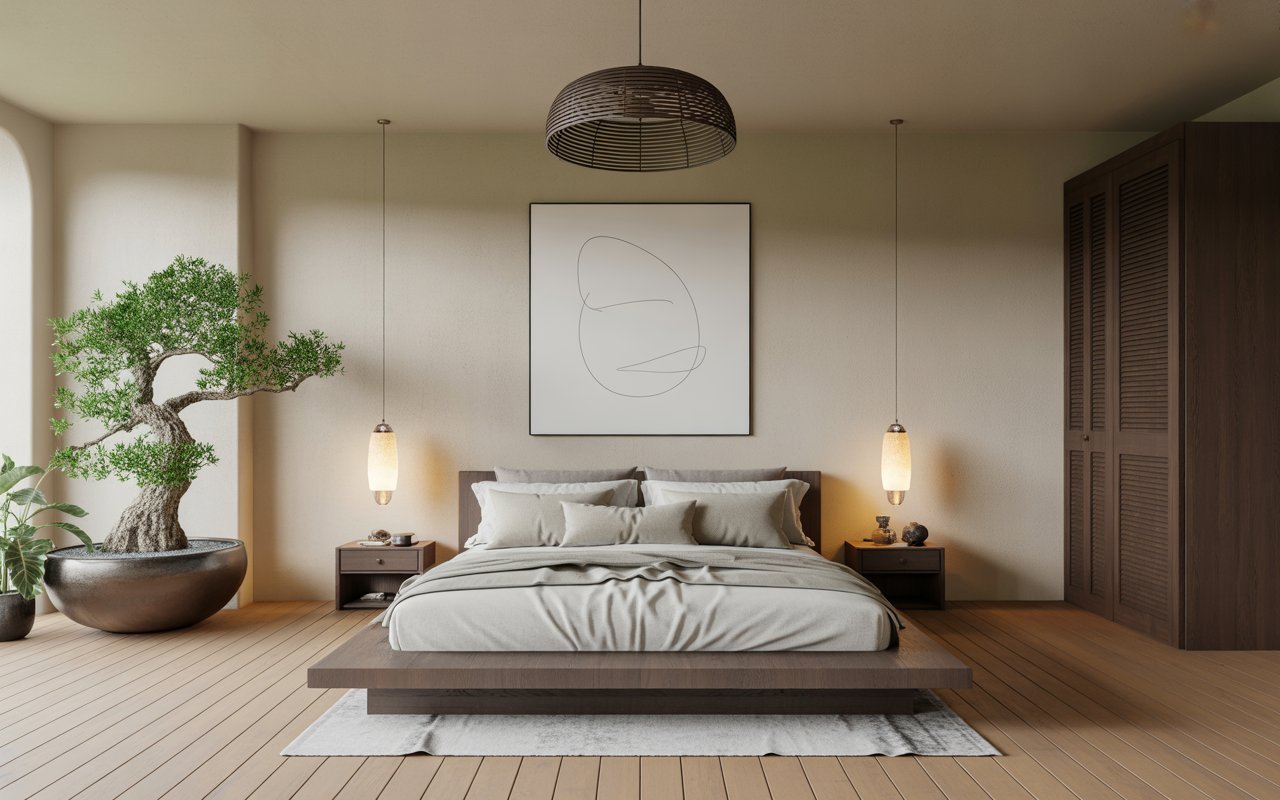
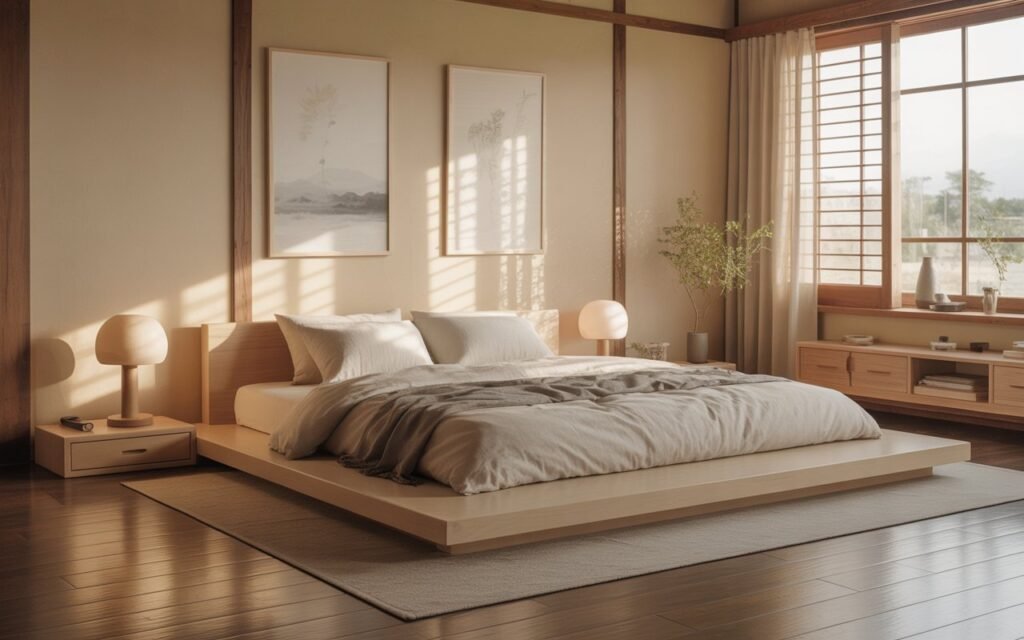
One of the most iconic elements of a Japanese bedroom is a low platform bed. This design makes the room feel more open and spacious.
Sleeping closer to the floor also creates a sense of grounding and calm, which can help improve relaxation and sleep quality. Choose light wood or neutral tones to enhance the authentic Japanese look.
2. Neutral Color Palette
Japanese interiors rely on soft, natural colors such as white, beige, taupe, and light gray.
These shades create a calm atmosphere and reduce visual clutter. Avoid bold or bright colors, as they can disrupt the peaceful, Zen-like environment.

3. Minimalist Furniture Only
“Less is more” is the golden rule of Japanese design.
Keep only essential, functional furniture in your bedroom. Removing bulky or unnecessary pieces helps the space feel clean, open, and breathable.
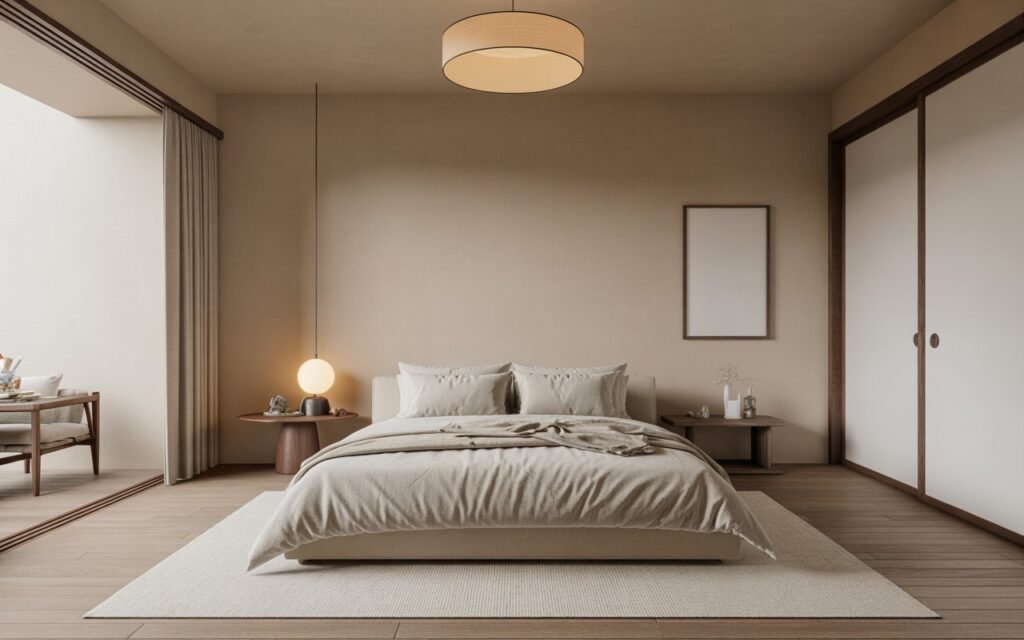
4. Tatami Mat Flooring
Tatami mats are a traditional feature in Japanese homes.
Made from natural materials, they add an earthy texture and organic feel to the room. If real tatami isn’t available, you can use tatami-style rugs to achieve a similar look.
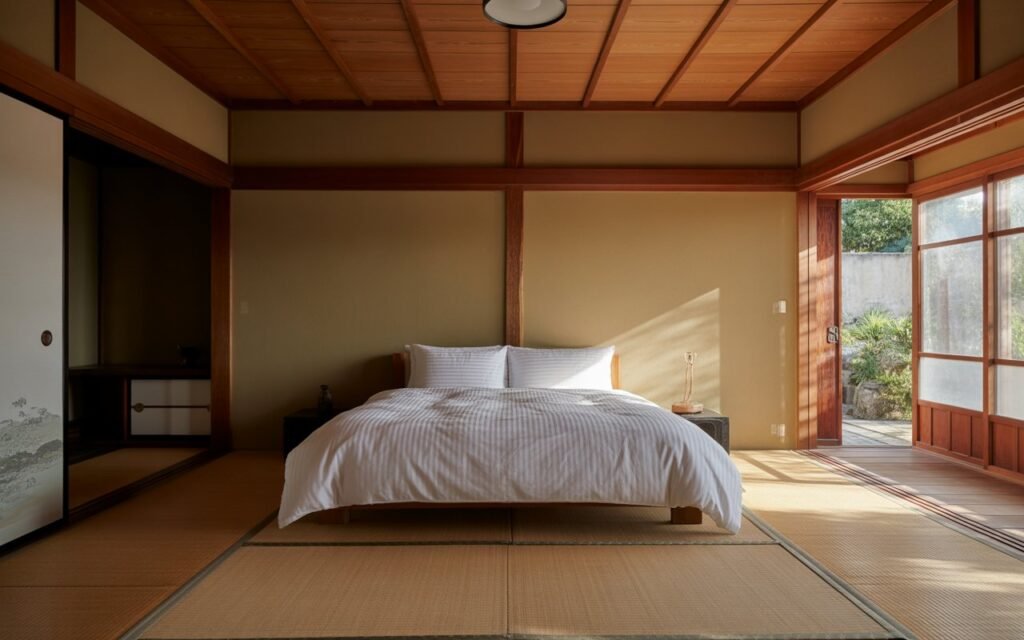
5. Sliding Shoji Screens
Shoji screens (paper sliding doors) are a signature element of Japanese interiors.
They softly filter natural light, creating a warm and diffused glow. They’re also a great space-saving solution, especially for smaller bedrooms.
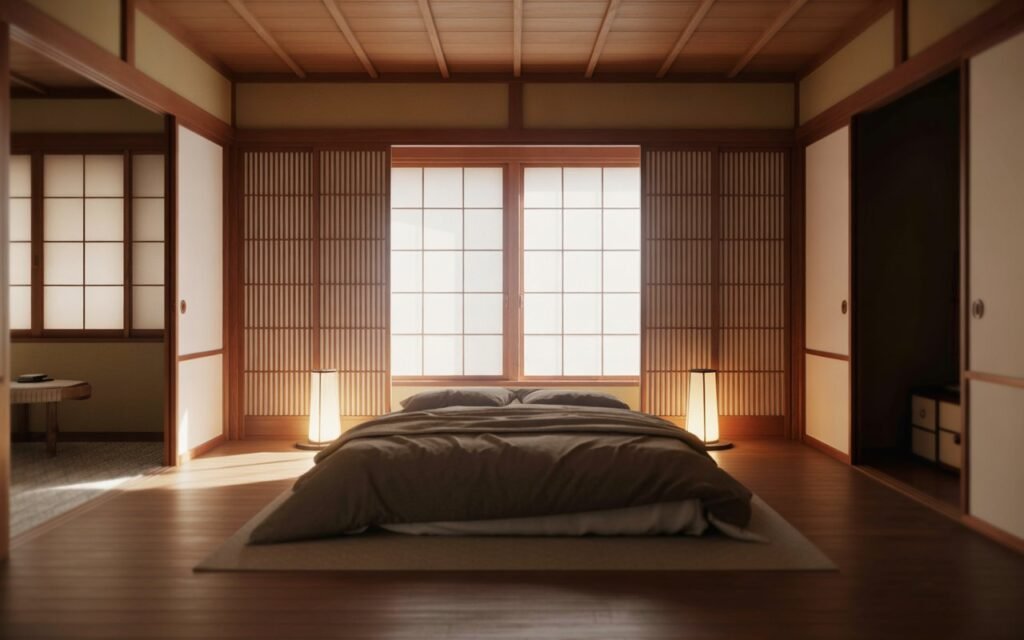
6. Maximize Natural Light
Japanese bedrooms focus heavily on natural lighting.
Replace heavy curtains with light linen or sheer fabrics to let sunlight flow in. Natural light makes the space feel more open, fresh, and calming.
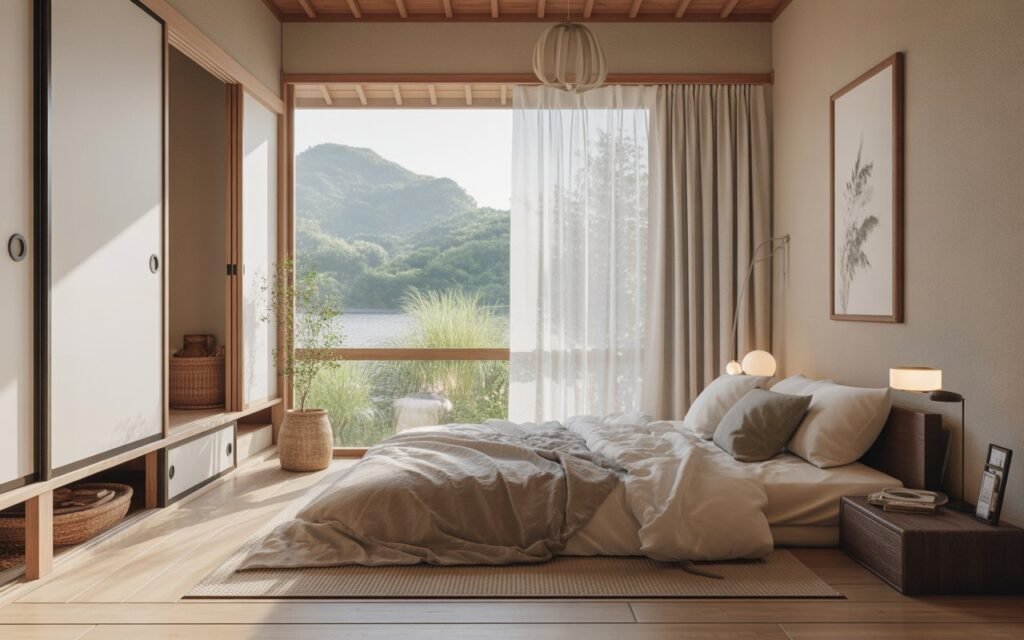
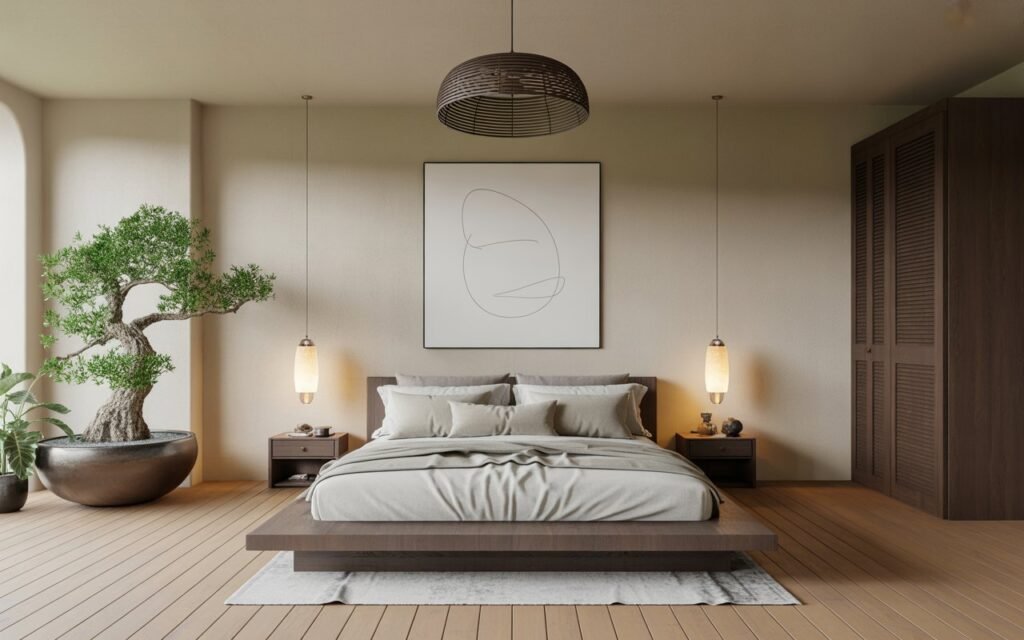
7. Indoor Plants for a Natural Touch
Nature plays a key role in Japanese design.
Adding small indoor plants like bonsai or snake plants brings life into your bedroom while enhancing the calm and refreshing atmosphere.
8. Incorporate Wooden Elements
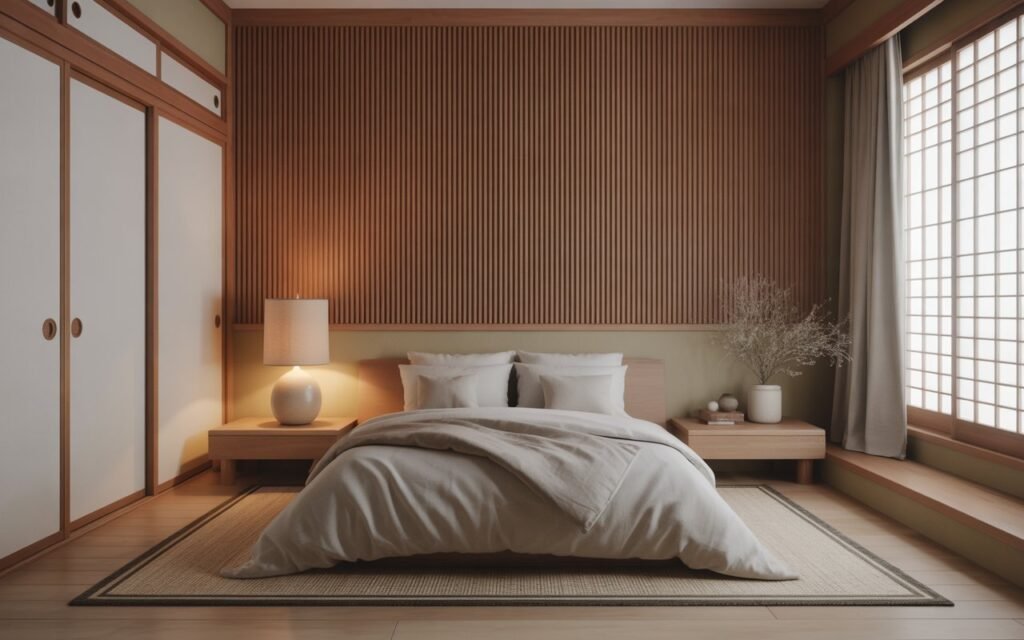
Wood is the backbone of Japanese interiors.
Use light wood tones in furniture, flooring, or decor. This adds warmth and creates a cozy yet minimal environment.
wooden japanese bedroom warm natural design
9. Keep Surfaces Clutter-Free
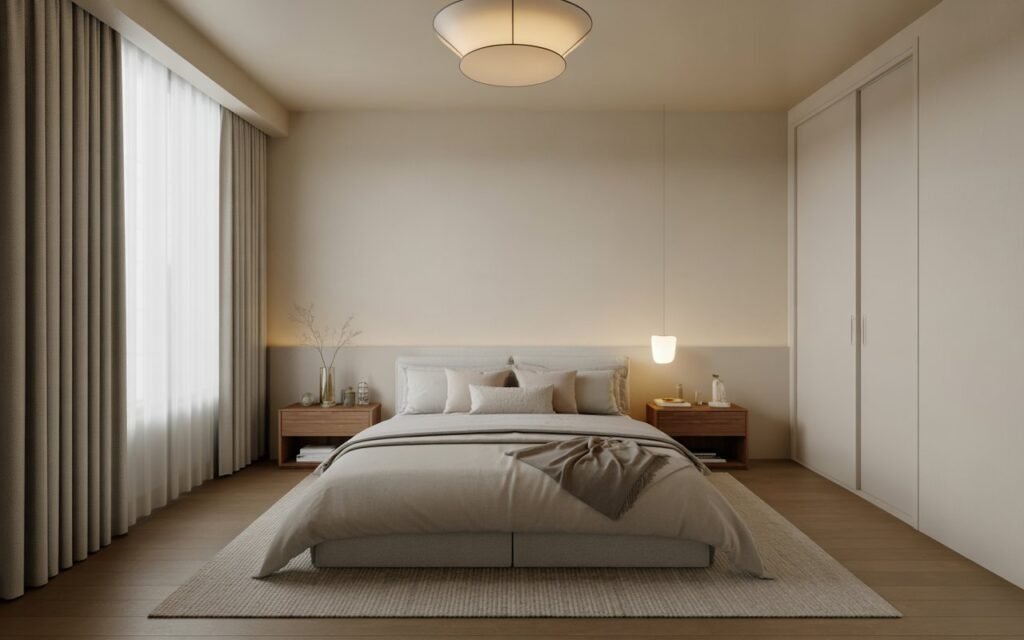
A Japanese-style bedroom always feels clean and organized.
Limit items on nightstands and shelves to only the essentials. Reducing clutter helps maintain a peaceful and visually balanced space.
10. Soft Ambient Lighting
Lighting should be soft and soothing—not harsh.
Use warm lighting options like paper lamps or subtle LED lighting to create a cozy and relaxing atmosphere, perfect for winding down at night.
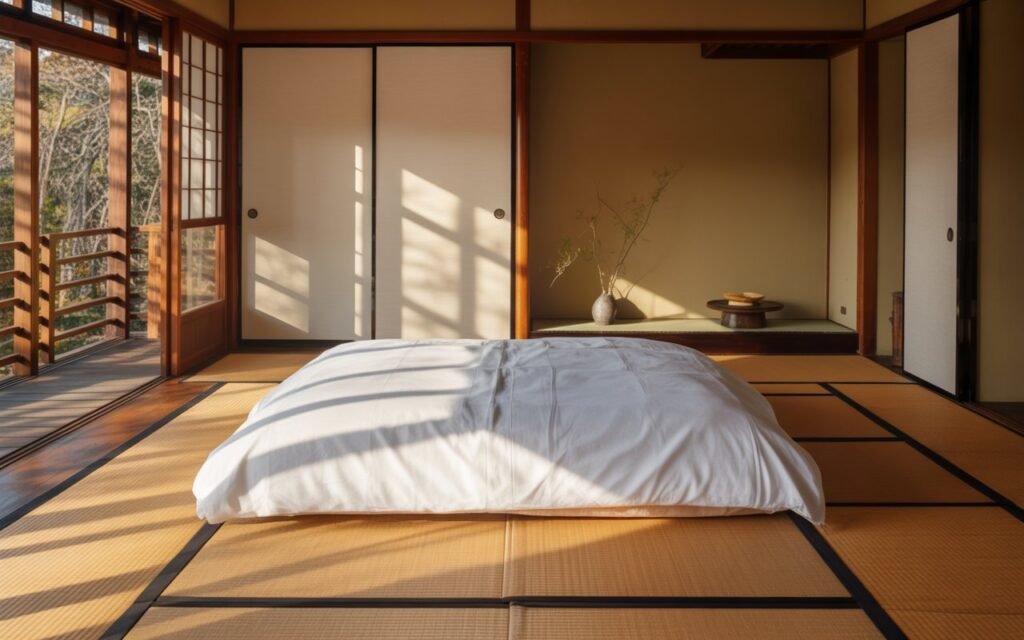
11. Futon Bedding Style
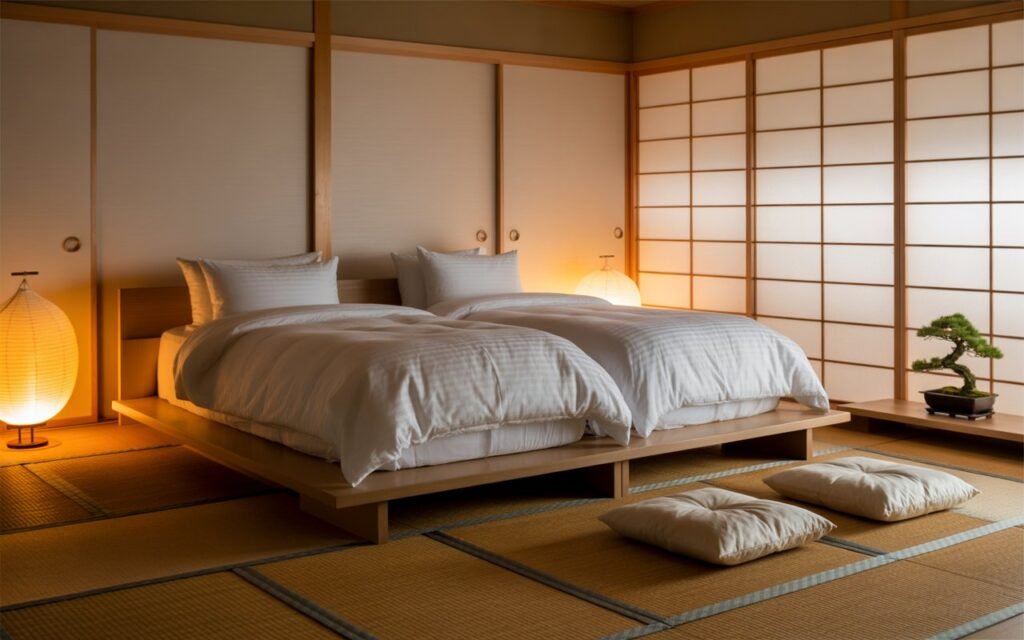
Traditional Japanese bedrooms often use futon bedding, which can be folded and stored away.
This is a great option for small spaces, as it allows you to keep the room open during the day and create a comfortable sleeping area at night.
12. Simple Wall Decor
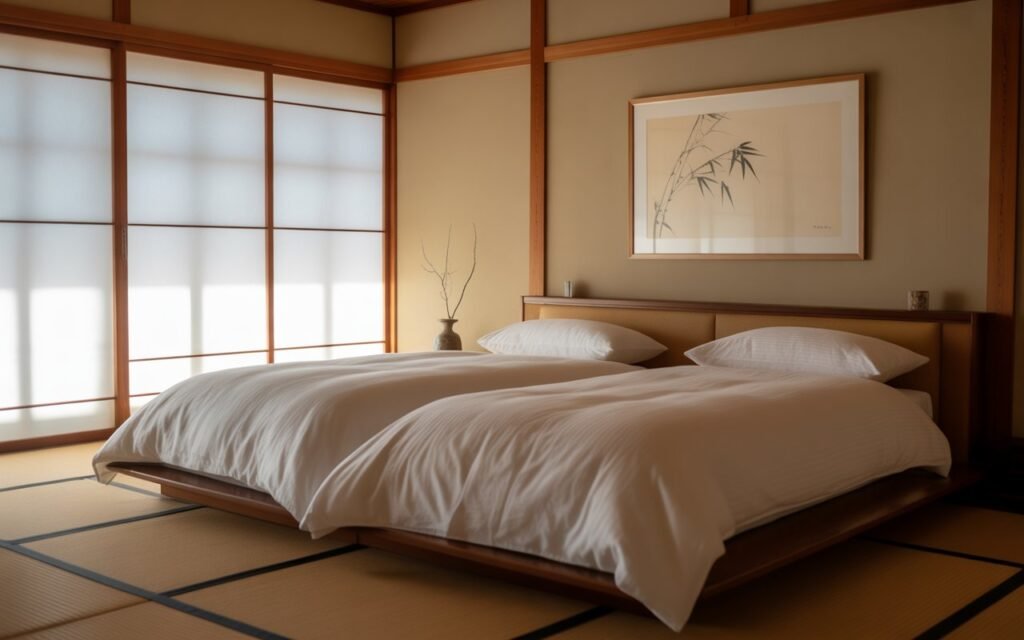
Avoid over-decorating your walls.
Stick to one or two minimalist art pieces or simple Japanese-inspired prints. This keeps the room elegant without overwhelming the space.
13. Use Natural Textures and Fabrics
Opt for materials like cotton, linen, and bamboo.
These natural textures make the room feel soft, breathable, and aligned with the overall Zen aesthetic.

14. Focus on Symmetry and Balance
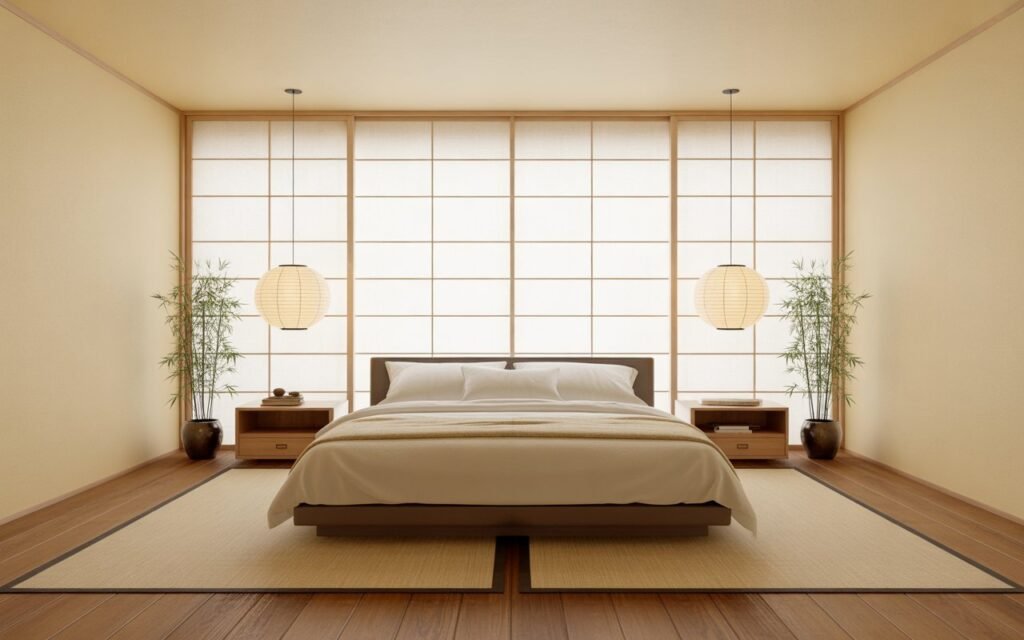
Balance is an essential part of Japanese design.
Arrange furniture and decor in a way that feels visually harmonious. This creates a sense of order and calm within the space.
15. Maintain a Calm, Functional Layout
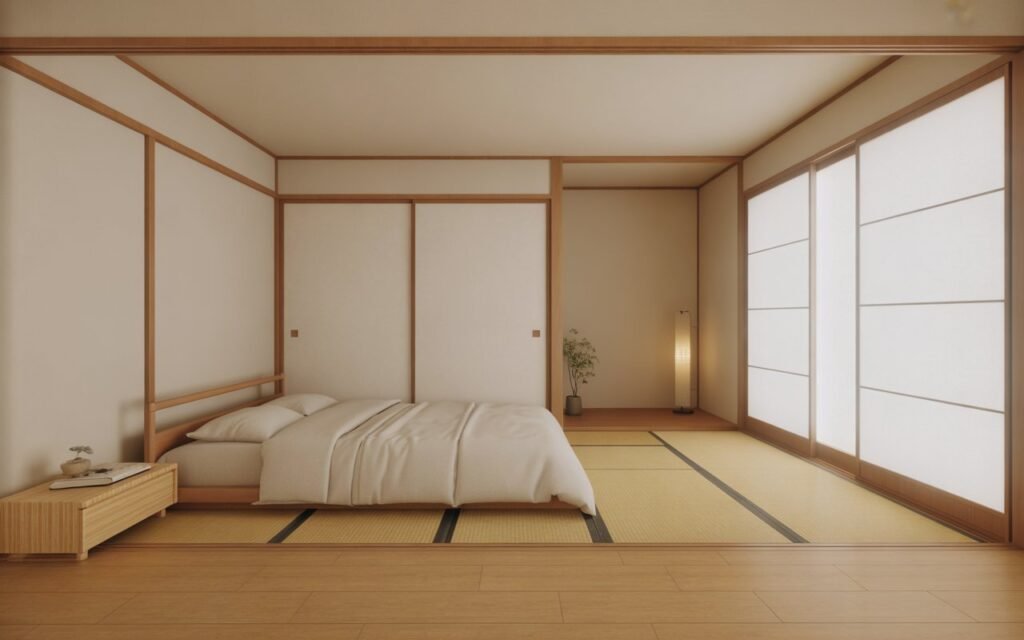
Keep your bedroom layout simple and practical.
Allow for open walking space and avoid overcrowding. A clean, functional layout helps turn your bedroom into a peaceful sanctuary.
Conclusion
A Japanese-style bedroom is more than just a design trend—it’s a shift toward a calmer, more intentional way of living. In a world that often feels busy and overwhelming, creating a space that promotes simplicity and peace can make a real difference in your daily life.
By focusing on natural materials, soft colors, and a clutter-free layout, you’re not just improving how your bedroom looks—you’re shaping how it feels. A well-designed, minimalist space can help reduce stress, improve sleep quality, and give you a sense of balance every time you walk into the room.
The best part is, you don’t need to completely redesign your space overnight. Start small. Swap out heavy decor for lighter, natural elements. Clear your surfaces. Introduce soft lighting or a simple plant. Each small change brings you one step closer to a more peaceful and functional environment.
Over time, these simple adjustments can transform your bedroom into a true retreat—a place where you can unwind, recharge, and feel grounded at the end of every day.