Introduction
Attics are often overlooked, dismissed as cramped, dark, or impractical. But in reality, they hold incredible design potential. With their angled ceilings, hidden corners, and elevated privacy, attic spaces can become some of the most beautiful and personal rooms in a home.
The challenge most people face is not the space itself—it’s understanding how to design around its limitations. Low ceilings, limited natural light, and tricky layouts can feel restrictive. But when approached strategically, these same challenges can become your biggest design strengths.
In this guide, you’ll discover attic bedroom ideas that go beyond surface-level decor. These are smart, space-maximizing, and aesthetic-driven solutions that transform even the smallest attic into a cozy, functional, and visually stunning bedroom.
1. Design Around the Ceiling, Not Against It
Instead of forcing standard furniture into awkward angles, align your layout with the slope. Place beds and seating where ceiling height is lowest, and reserve taller areas for walking space.
2. Create a Layered Neutral Palette
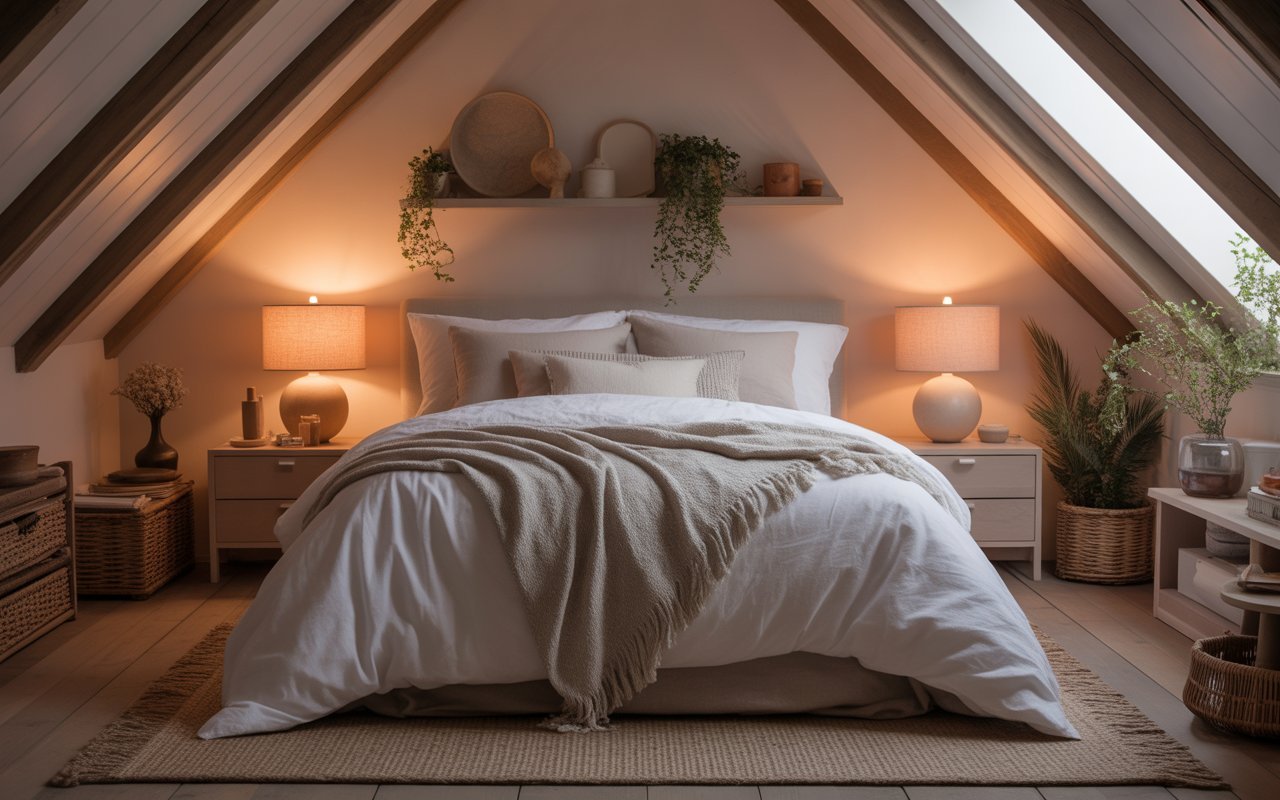
Attics feel larger when colors flow seamlessly. Use layered neutrals—like off-white, beige, taupe, and soft greys—to create depth without visual clutter.
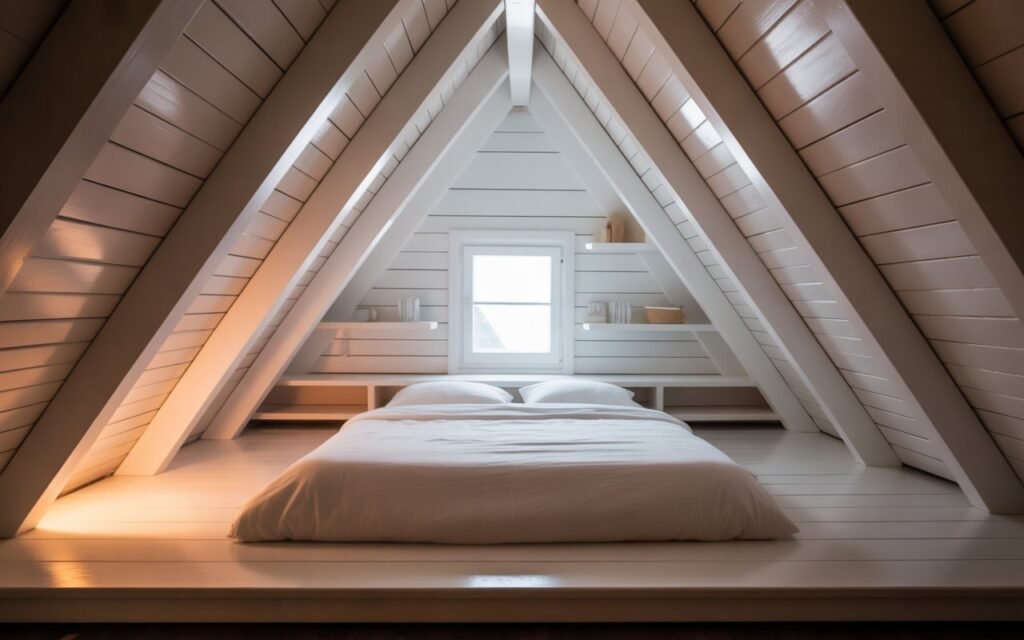
3. Turn Natural Light Into a Focal Feature
If you have skylights or windows, design the entire room around them. Position your bed under a skylight for a soft morning glow or a cozy nighttime vibe.
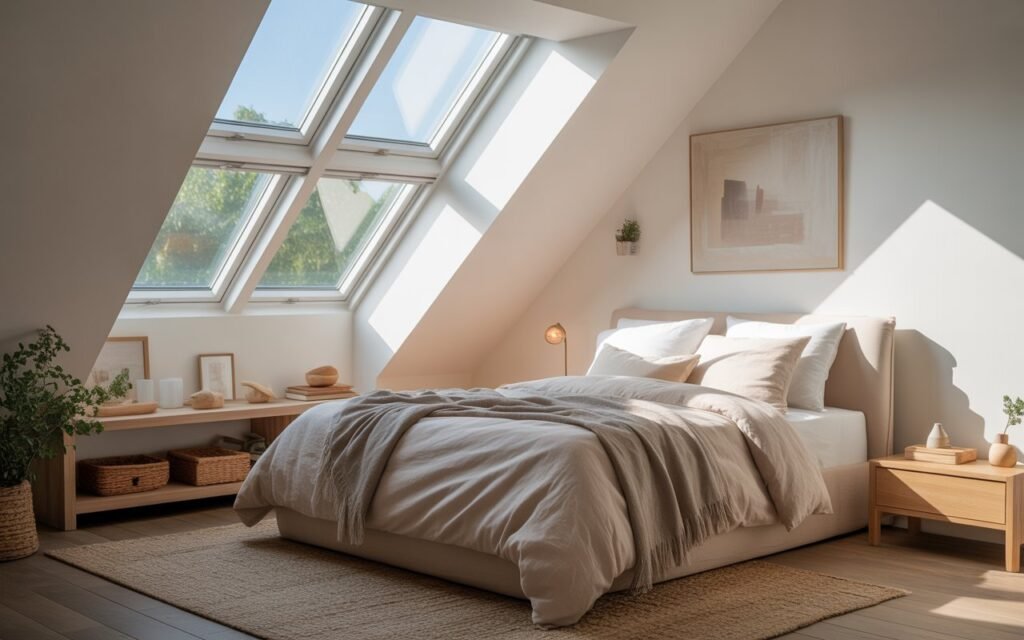
4. Custom Storage That Disappears
The best attic storage doesn’t look like storage. Built-ins that blend with the wall color create a seamless, uncluttered aesthetic.
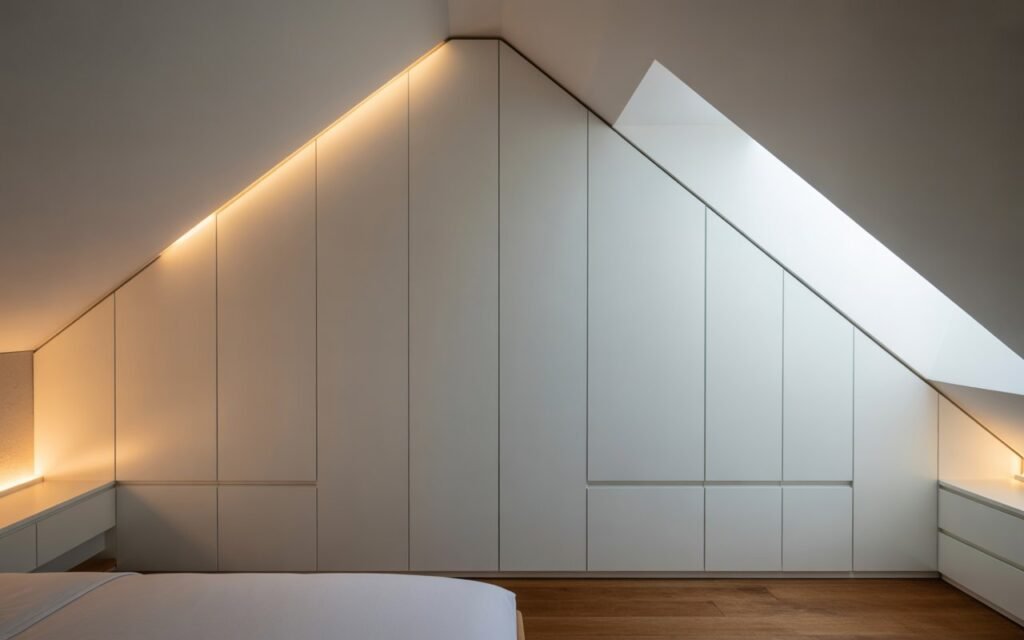
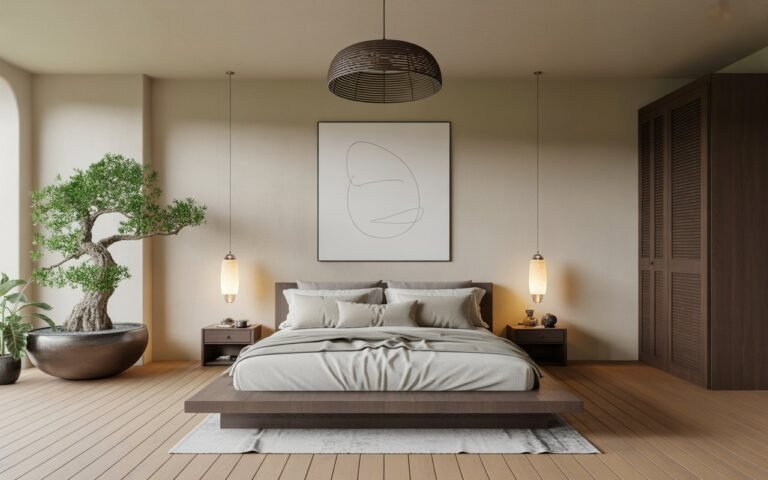
5. Go Ultra-Low With Furniture
Low beds, floor seating, and compact furniture visually “raise” the ceiling, making the room feel more spacious and breathable.
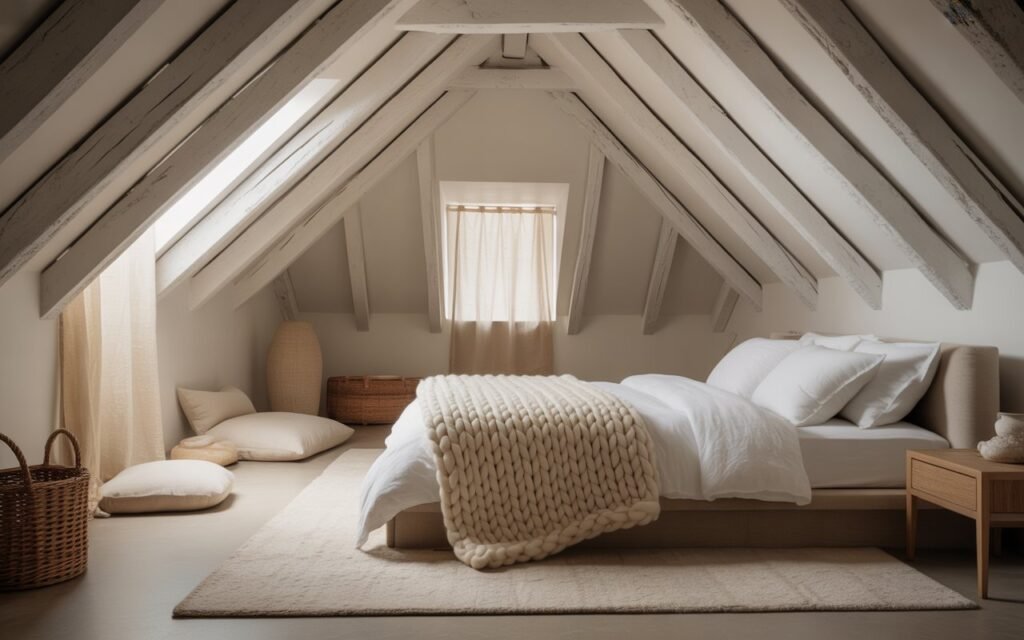
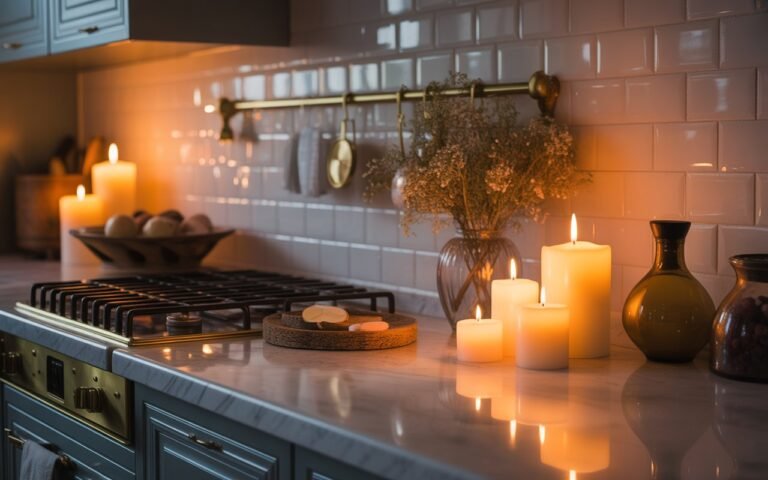
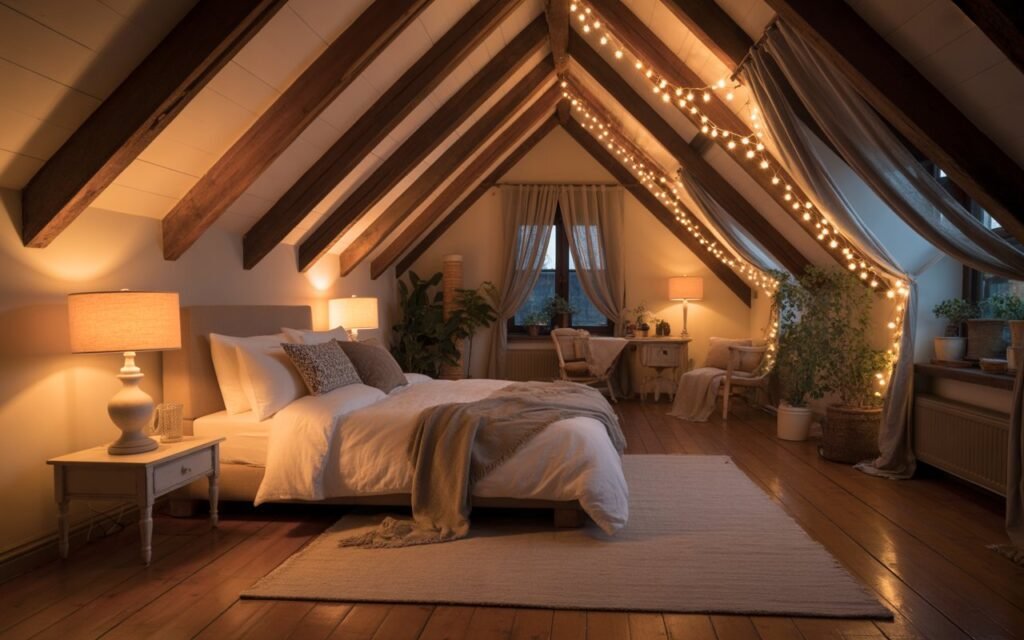
6. Use Layered Lighting to Add Dimension
Attics need more than one light source. Combine:
- Ambient lighting (ceiling or hidden LEDs)
- Task lighting (bedside lamps)
- Accent lighting (string lights or wall lights)
This prevents shadows and creates a warm, inviting atmosphere.
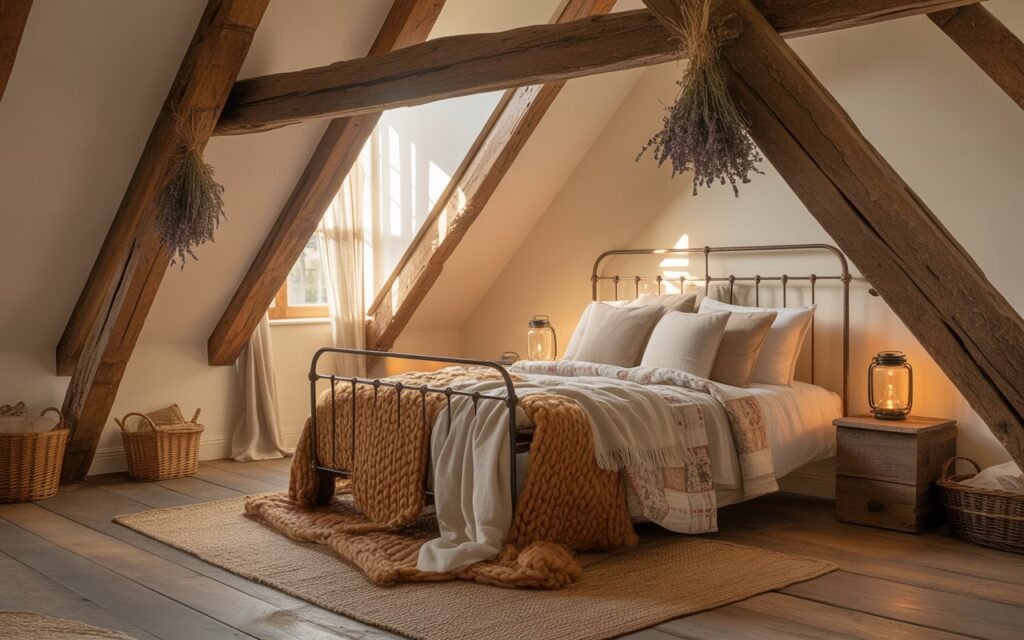
7. Mix Textures, Not Colors
In small spaces, texture matters more than color. Combine linen, wood, wool, and soft rugs to add richness without overwhelming the room.
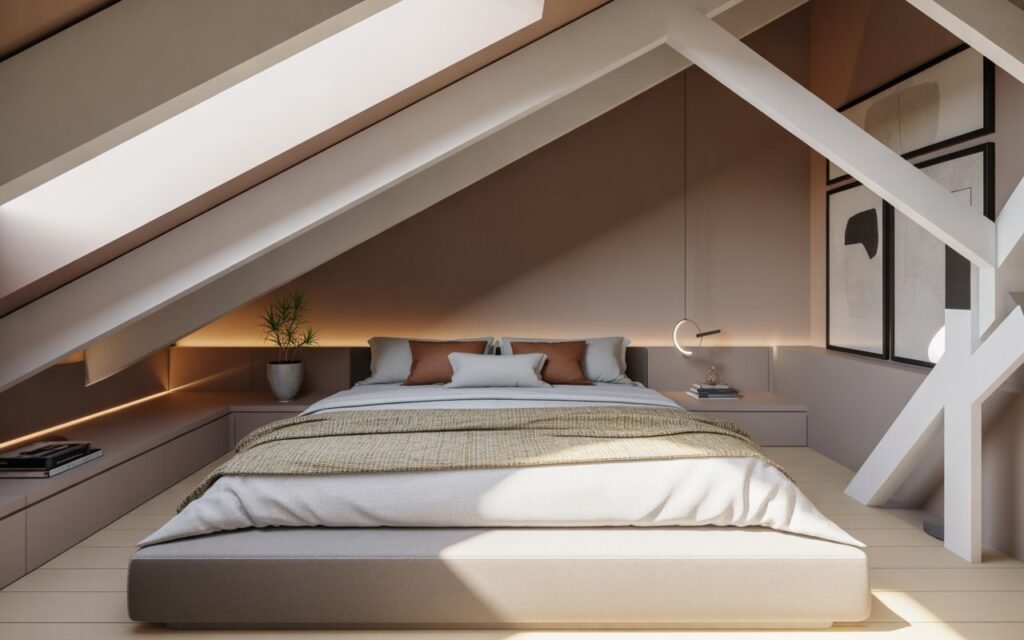
8. Keep Decor Minimal but Meaningful
Instead of filling walls, choose 2–3 standout elements like:
- A large art piece
- A textured rug
- A statement light
9. Turn Dead Corners Into Functional Zones
Every corner has potential. Use low-height areas for:
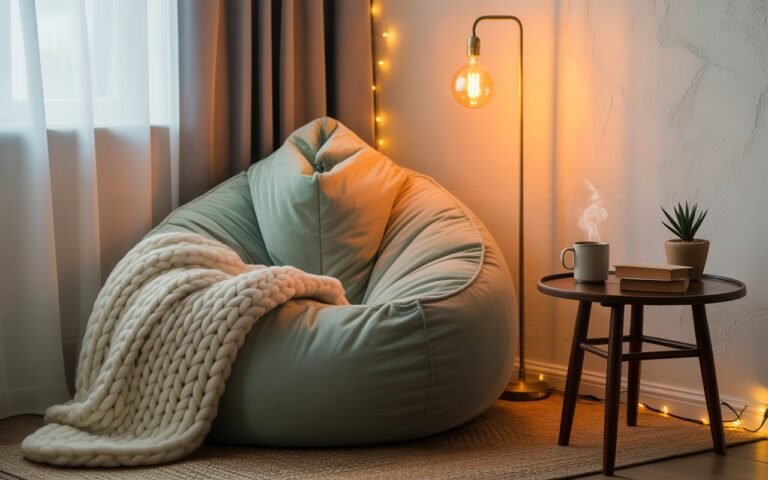
- Reading nooks
- Storage benches
- Floor seating
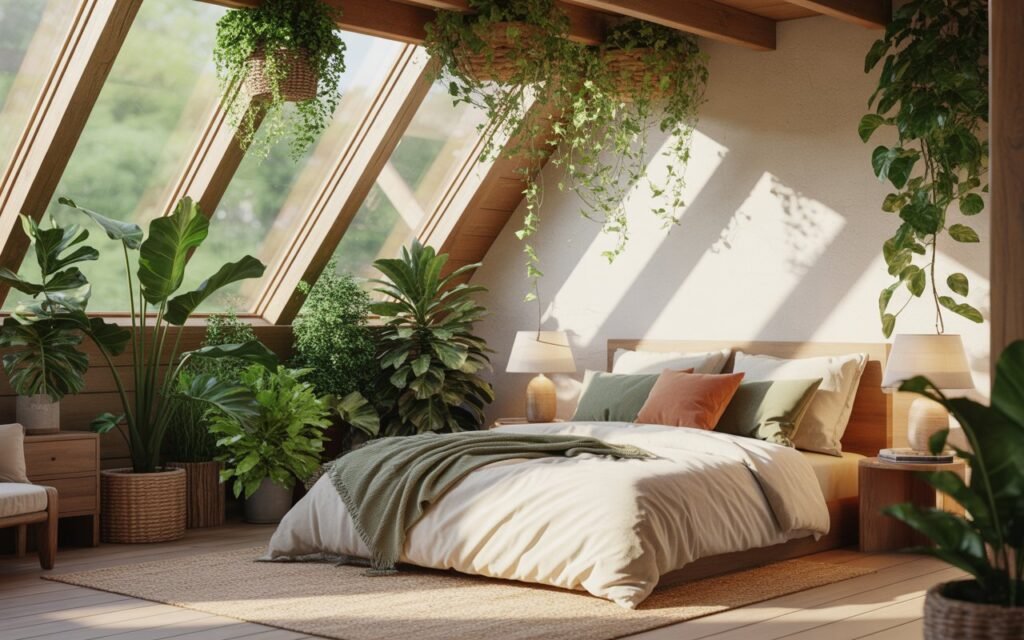
10. Bring Nature Inside
Plants soften harsh angles and add life. Even one or two plants can transform the feel of an attic bedroom.
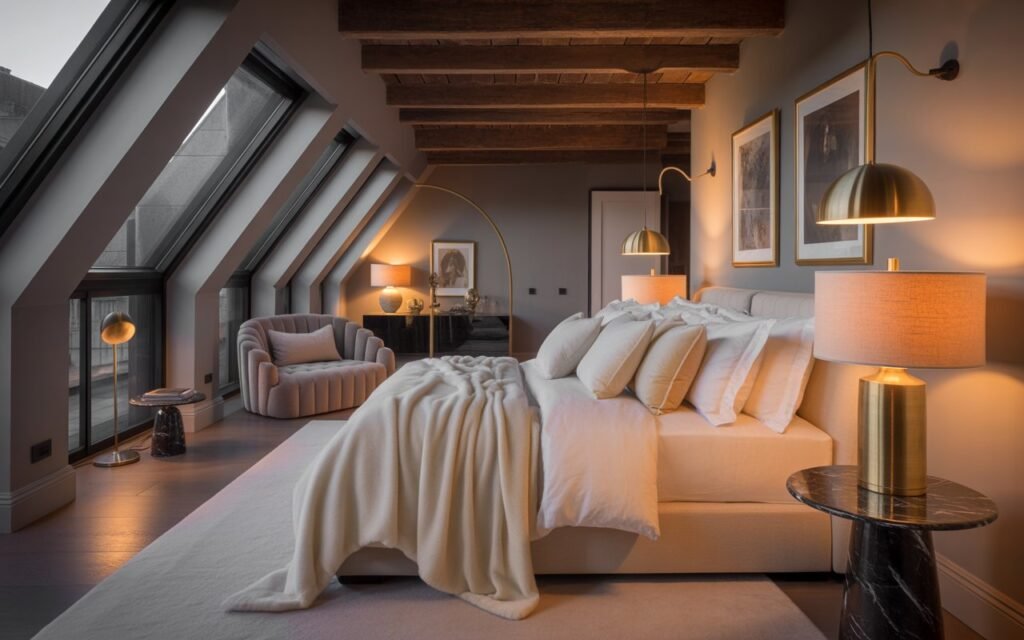
11. Highlight Architectural Features
Exposed beams, brick, or wood textures are assets. Instead of covering them, enhance them with lighting or contrast.
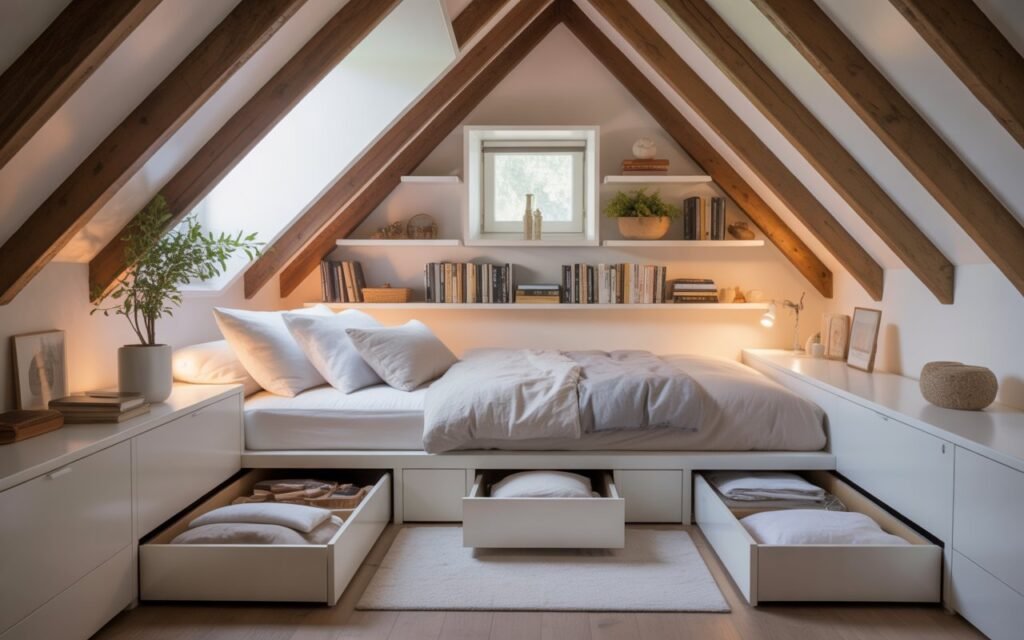
12. Use Mirrors Strategically
Place mirrors opposite windows or light sources to double brightness and create depth.
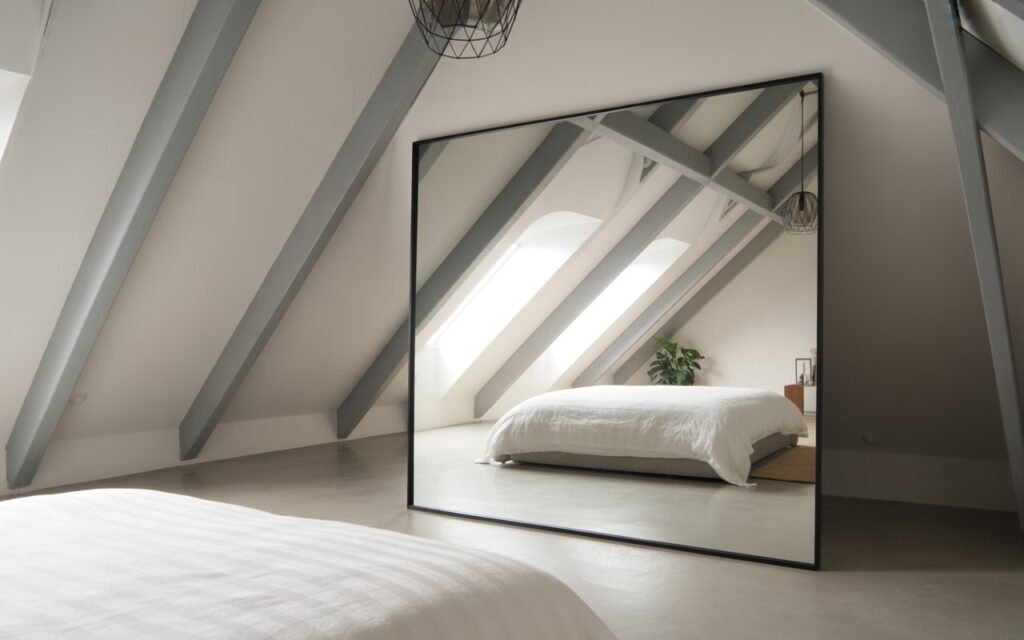
13. Hide Clutter With Stylish Storage
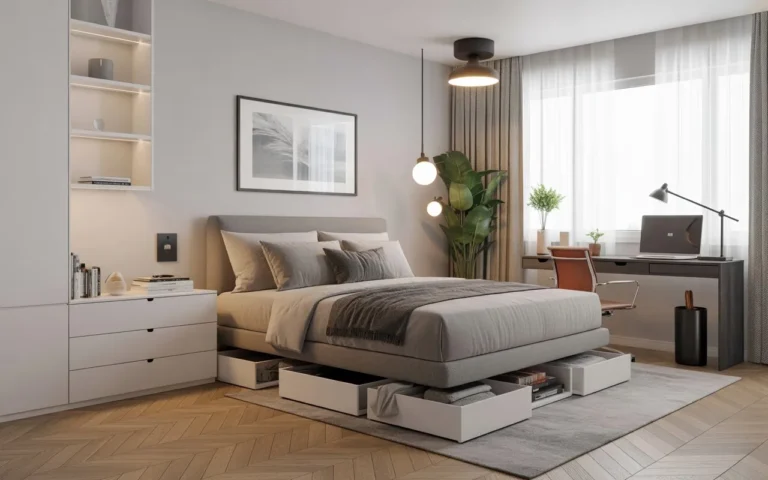
Use aesthetic storage like woven baskets, under-bed drawers, or hidden compartments.
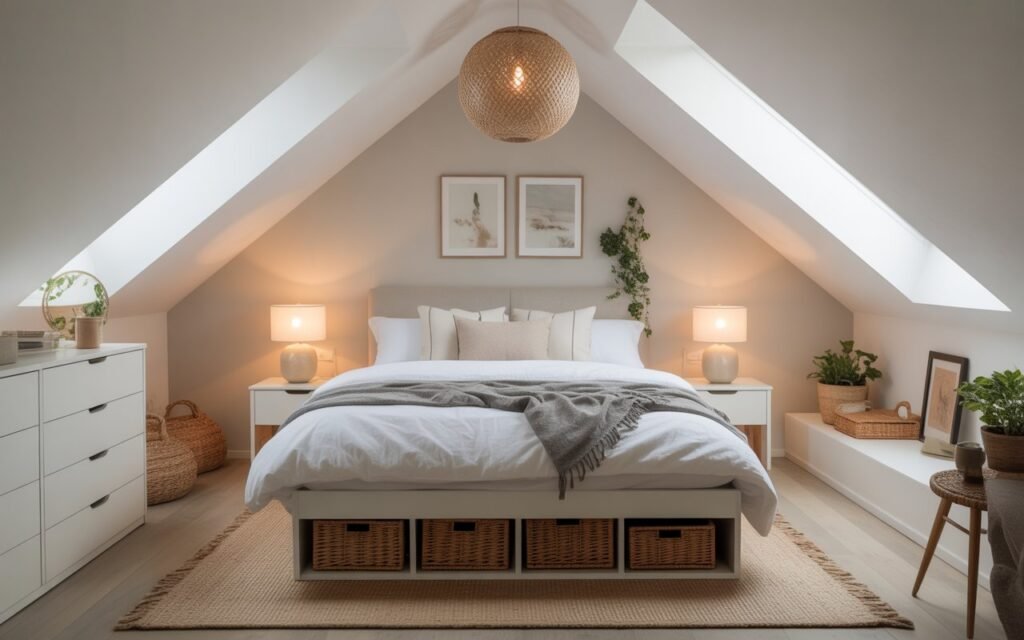
14. Create Visual Balance
Attics can feel uneven. Balance the room by distributing decor and furniture evenly across both sides.
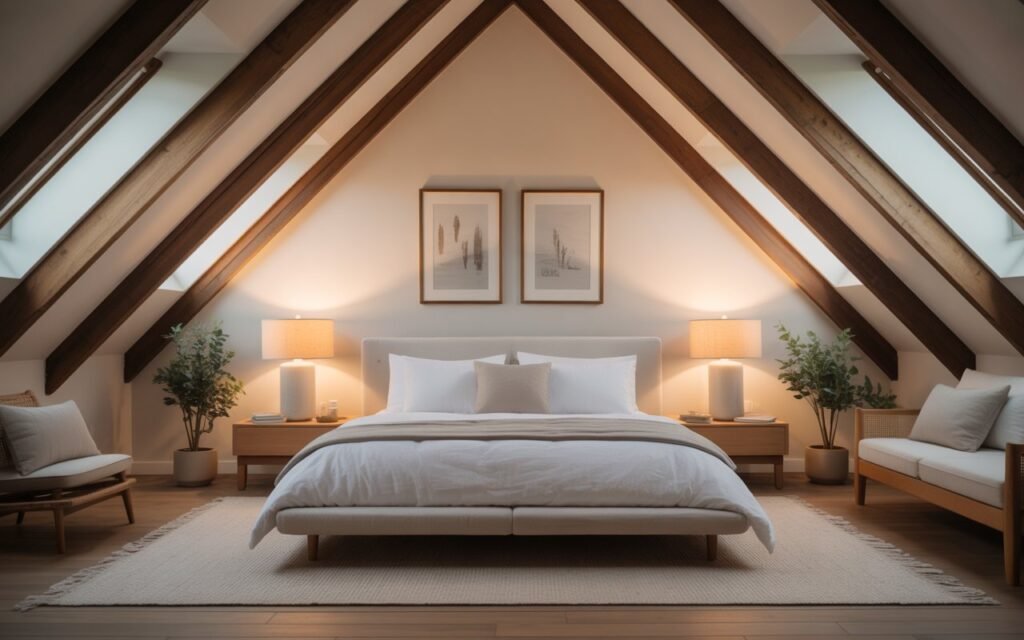
15. Soften Angles With Fabrics
Curtains, throws, and rugs soften sharp lines and make the room feel warmer and more inviting.
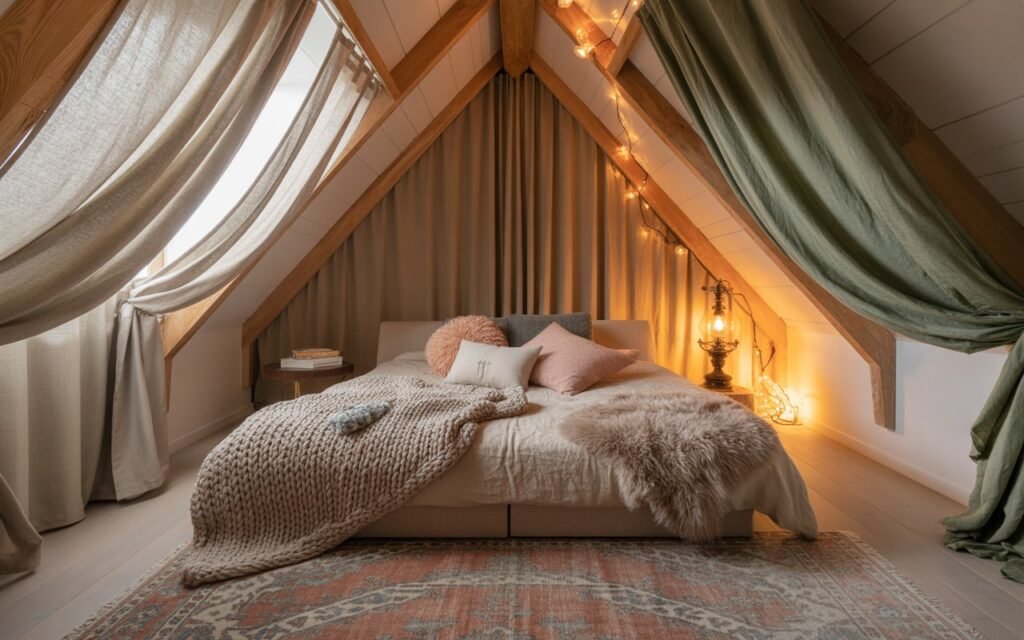
16. Prioritize Open Space
Avoid overfilling. Empty space is essential in attic rooms—it gives the eye room to breathe.
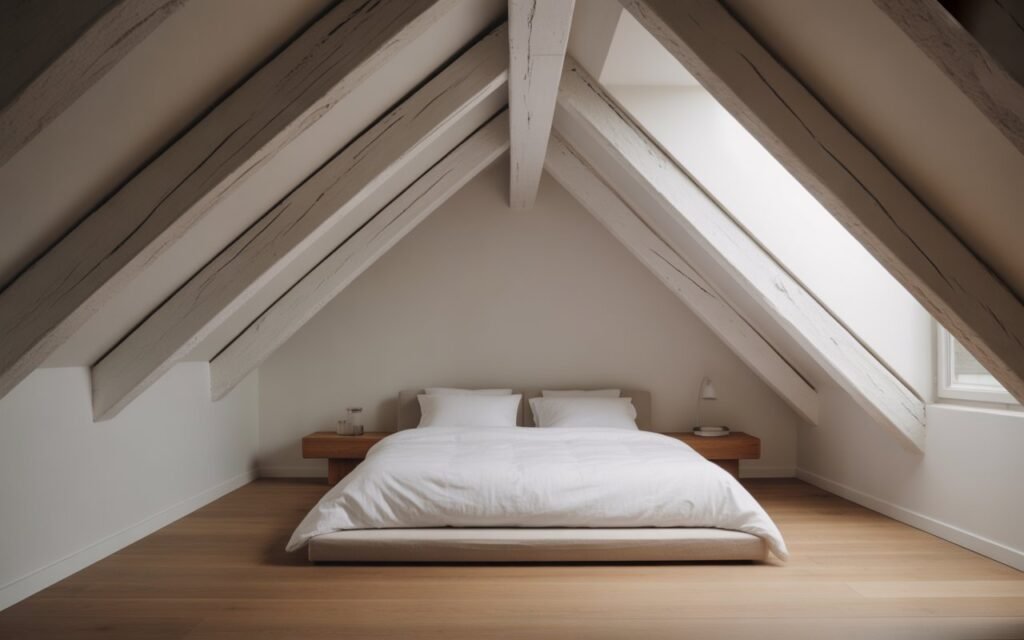
17. Add a Personal Signature Style
Whether it’s boho, modern, or rustic—choose one style and stay consistent. This creates a cohesive, designer-level look.
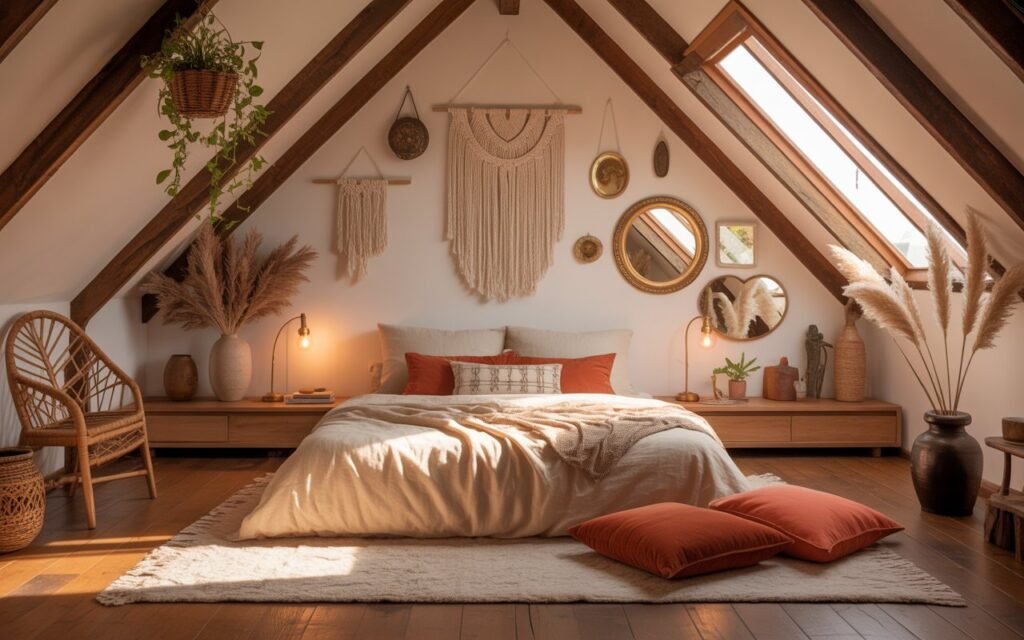
Advanced Pro Tips
- Use vertical paneling to visually lift ceilings
- Install hidden LED strips along slopes
- Choose multi-functional furniture (bed + storage)
- Use sliding doors instead of hinged ones
- Add rugs to define zones without walls
Conclusion
An attic bedroom is not just another room—it’s a hidden opportunity to create something truly unique. While traditional spaces follow predictable layouts, attics challenge you to think differently. And that’s exactly where great design begins. When you stop seeing the sloped ceilings and tight corners as limitations, and start treating them as design features, everything changes.
The real transformation happens when functionality meets emotion. A well-designed attic bedroom doesn’t just look beautiful—it feels calming, personal, and intentional. From soft lighting that creates warmth to smart storage that eliminates clutter, every small decision contributes to a space that feels thoughtfully crafted rather than forced.
In the end, the goal isn’t perfection—it’s comfort and character. Whether your attic is large or small, modern or rustic, you have the ability to turn it into a space that reflects your lifestyle and personality. With the right ideas, even the most awkward attic can become the most loved room in your home.