Introduction
A nightstand is one of the smallest surfaces in a bedroom, yet it carries a disproportionate visual and functional weight. It sits at eye level, is used daily, and directly affects how organized—or cluttered—your space feels. A well-composed bedroom nightstand decor setup is not about decoration alone; it is about control, accessibility, and visual balance.
The most effective nightstand designs follow a simple principle: every item must either serve a purpose or support the composition. When this balance is achieved, the result is a setup that feels effortless, calm, and refined.
Instead of adding more, the goal is to edit, layer, and align. The following ideas focus on structured styling decisions that improve usability while elevating the overall bedroom aesthetic.
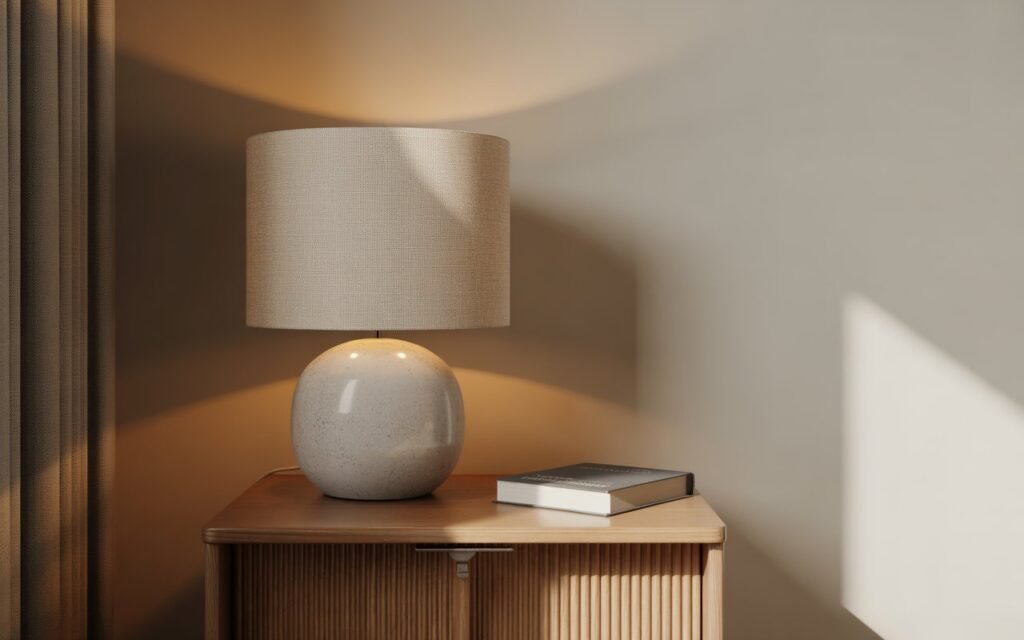
1. Establish a Clear Visual Anchor
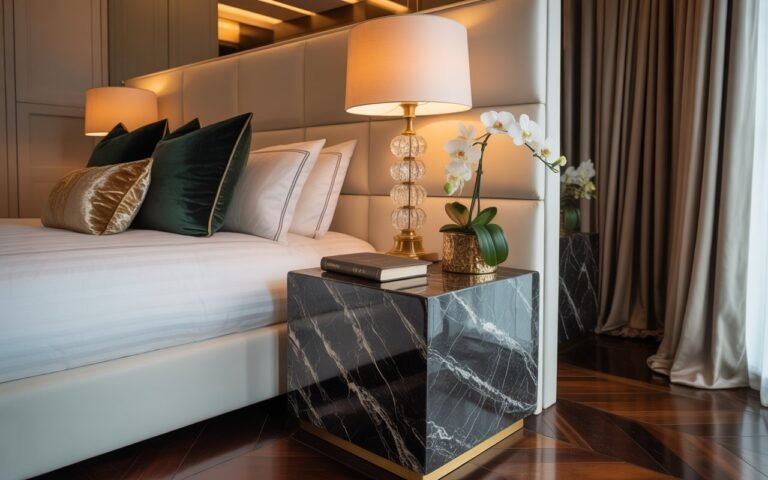
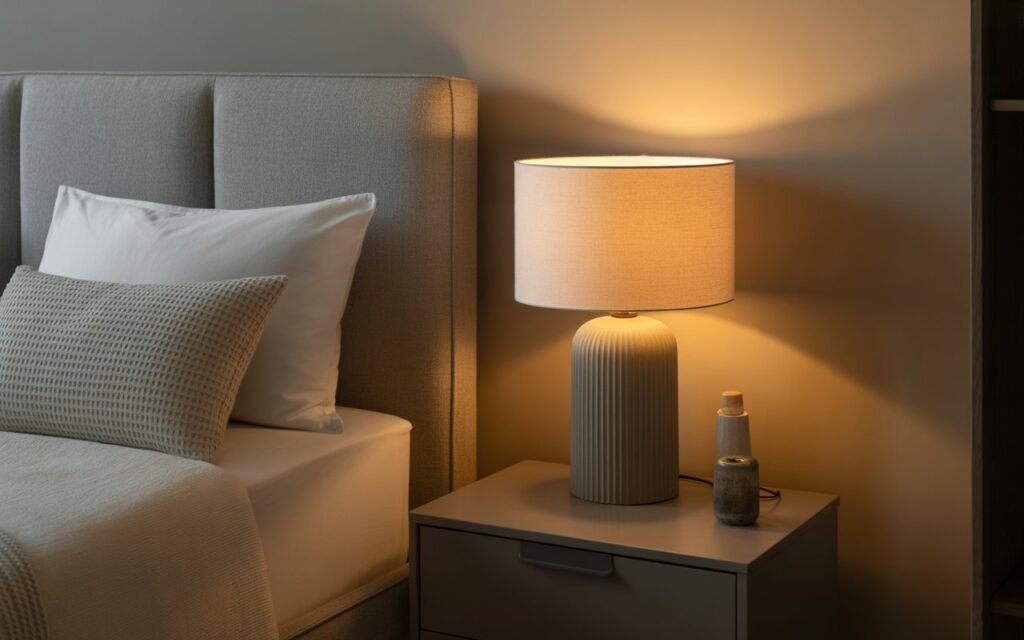
Start with one dominant element—usually a lamp or a tall decor piece. This anchor defines the scale of the nightstand and prevents smaller items from feeling scattered.
Why it works: It creates hierarchy and guides the eye.
How to apply: Place the anchor slightly off-center to allow supporting items to balance the composition.
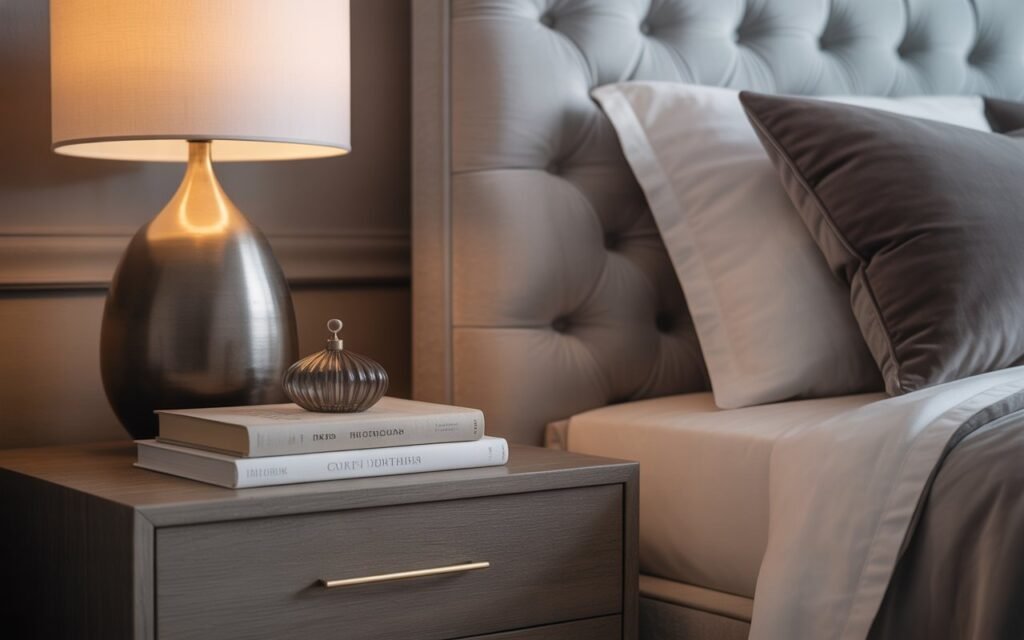
2. Use Horizontal Book Stacks as a Base Layer
Books are not just decorative—they act as platforms. A small stack can elevate objects like candles or vases, creating subtle height variation.
Why it works: Adds structure without adding clutter.
How to apply: Limit to 2–3 books in a consistent color palette.
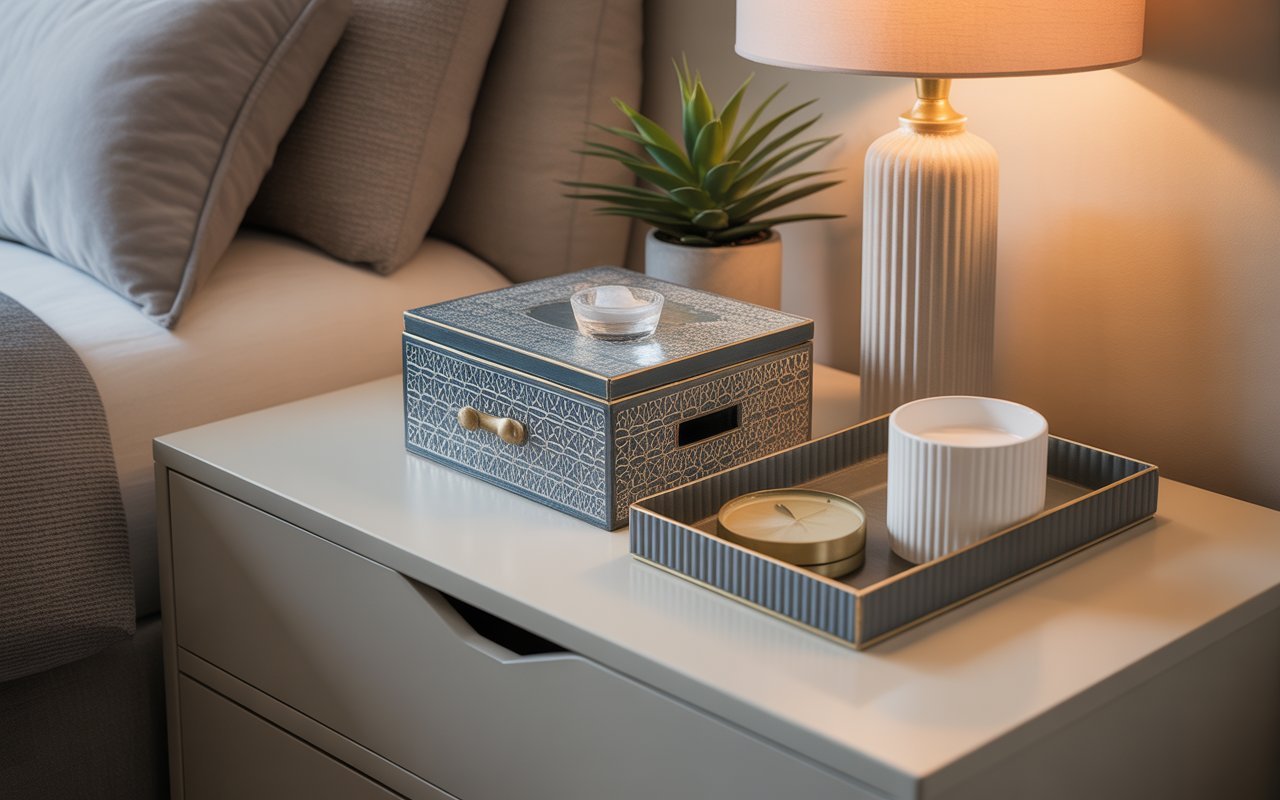
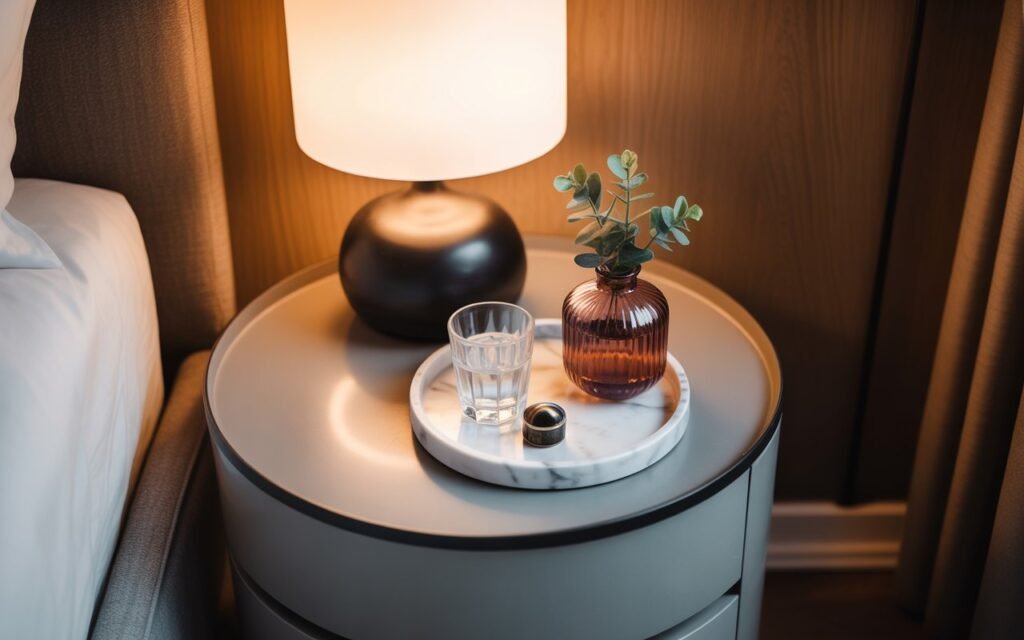
3. Group Small Items with a Tray
Loose items create visual noise. A tray consolidates them into a single unit, making the setup appear organized.
Why it works: Reduces fragmentation on small surfaces.
How to apply: Use a low-profile tray in wood, marble, or metal.
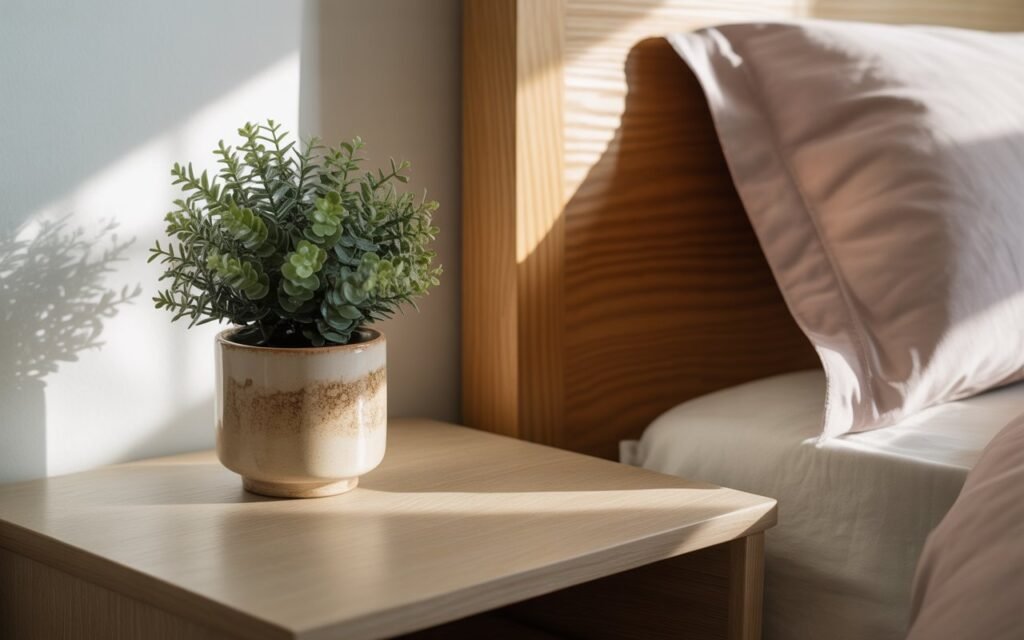
4. Introduce Organic Contrast with Greenery
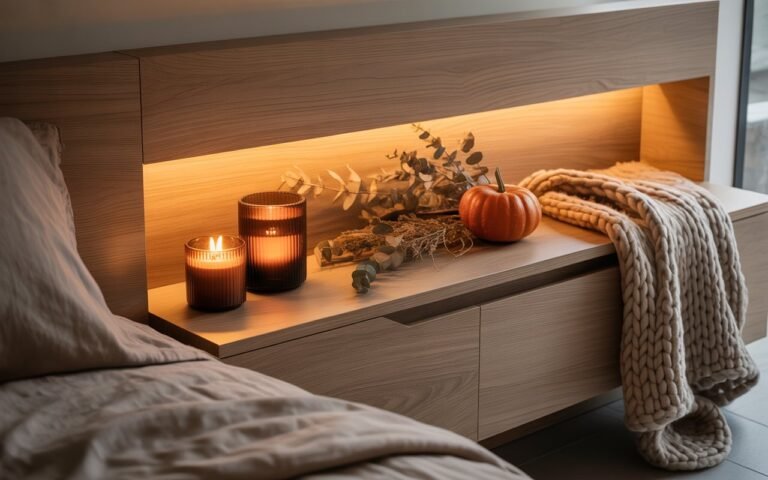
A small plant or dried arrangement softens rigid lines and introduces natural variation.
Why it works: Balances hard materials like wood and metal.
How to apply: Keep the scale compact to avoid crowding.
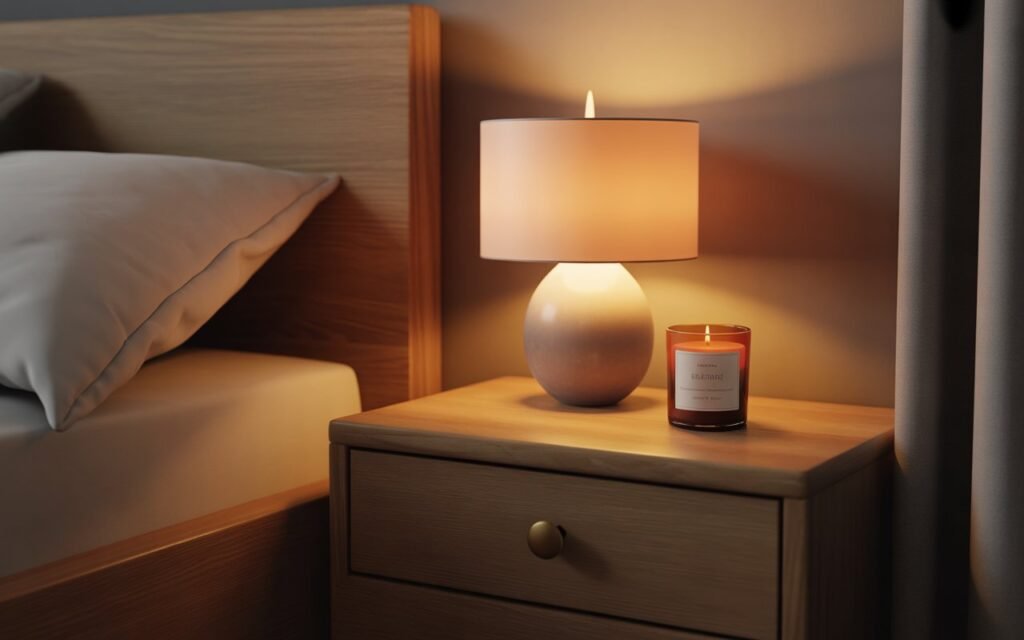
5. Add Controlled Ambient Warmth with a Candle
A single candle introduces both visual warmth and sensory depth without overwhelming the setup.
Why it works: Enhances mood with minimal visual weight.
How to apply: Position it near the anchor element for cohesion.
6. Limit the Number of Items
A common mistake is overfilling. The most refined setups often use fewer than five elements.
Why it works: Negative space increases clarity and focus.
How to apply: Remove anything that does not serve a clear role.
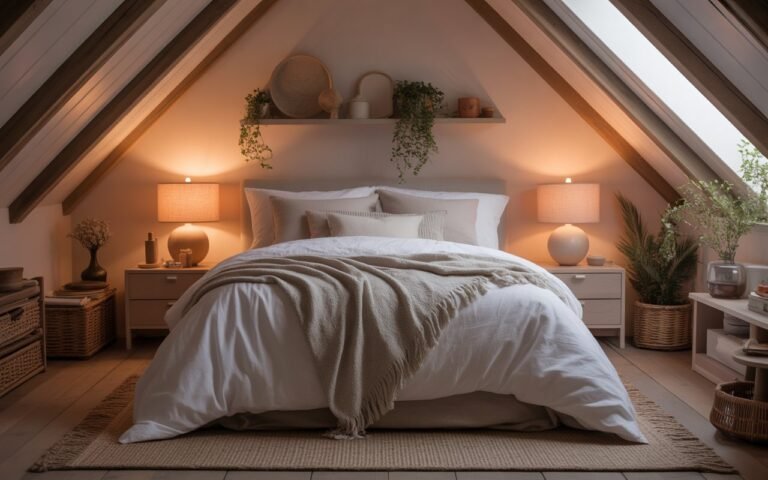
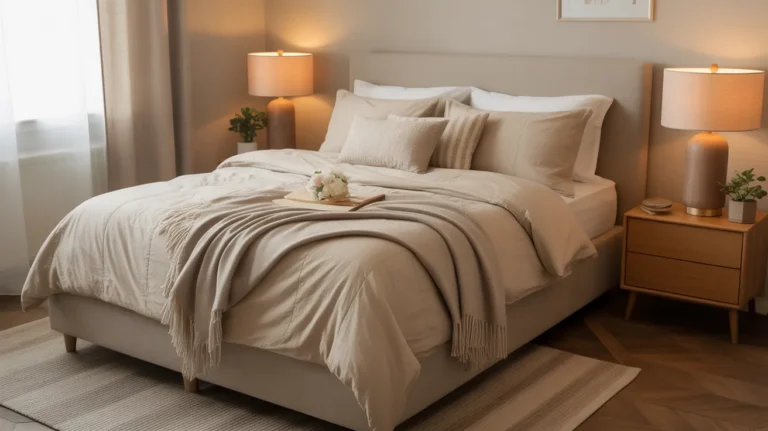
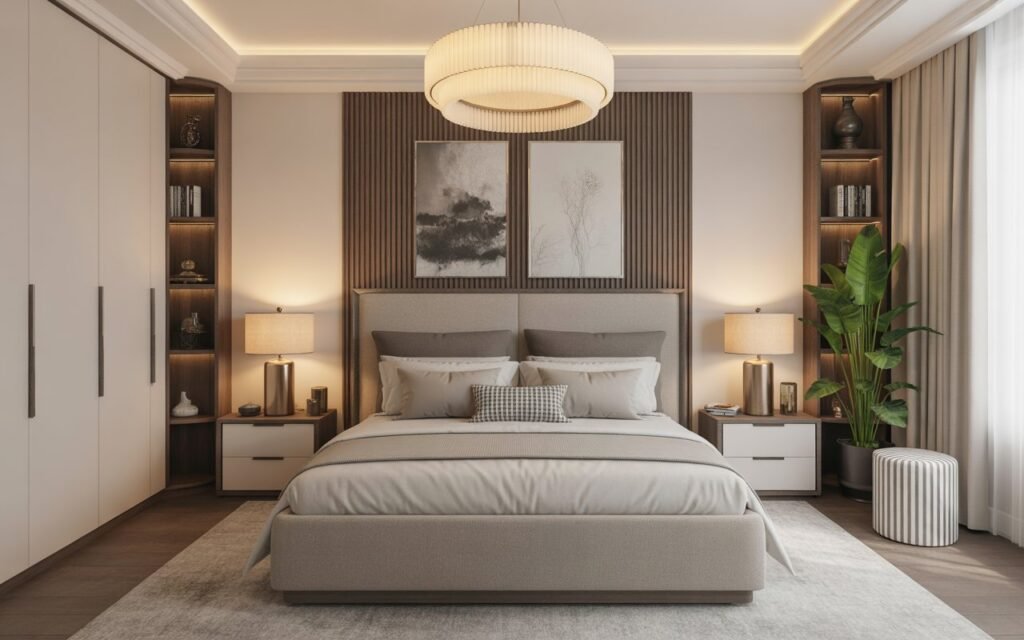
7. Maintain Symmetry in Dual Nightstands
If your bed has two nightstands, align them visually with similar elements and spacing.
Why it works: Symmetry creates calm and predictability.
How to apply: Match key elements (lamp, height, spacing), not necessarily every detail.
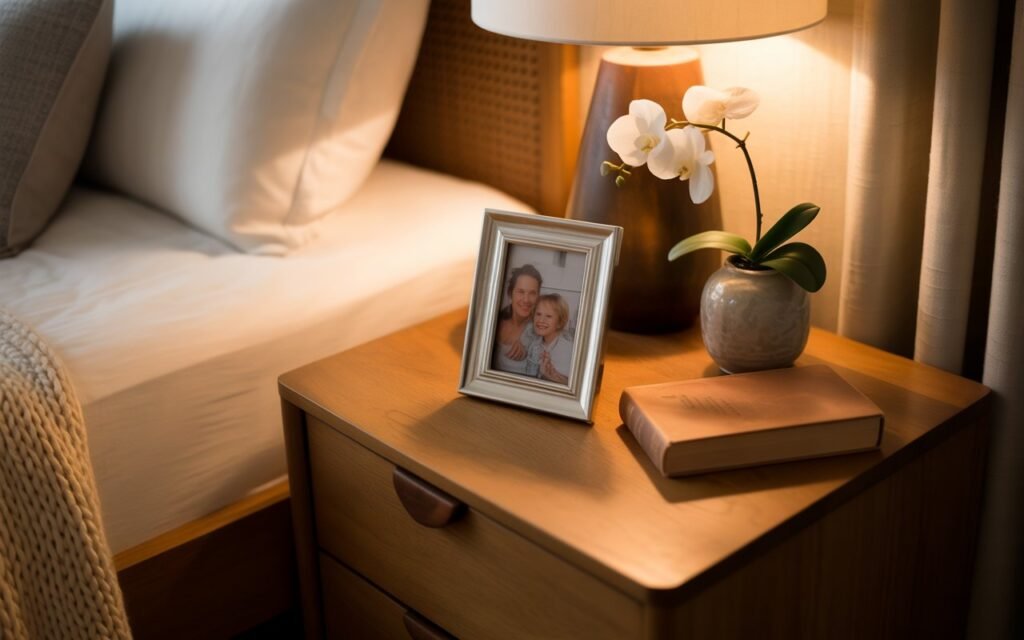
8. Incorporate One Personal Element
A nightstand should not feel staged. One personal object adds authenticity without disrupting the aesthetic.
Why it works: Prevents the space from feeling overly designed.
How to apply: Keep it subtle—avoid oversized or colorful items.
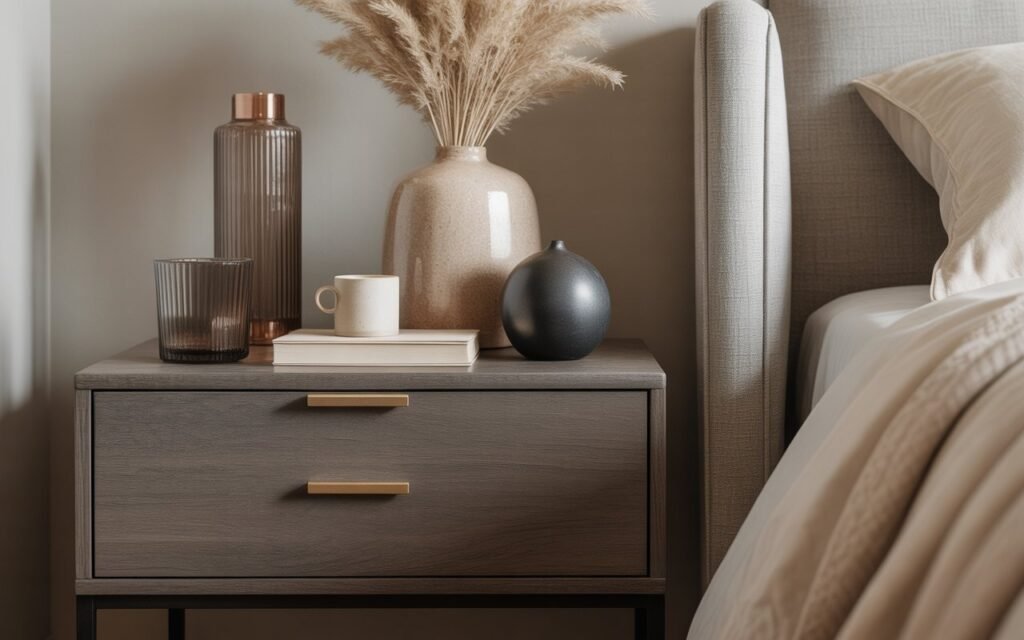
9. Layer Materials for Depth
Combine materials like ceramic, glass, wood, and metal to add richness without adding volume.
Why it works: Texture creates visual interest within a limited palette.
How to apply: Keep tones consistent while varying finishes.
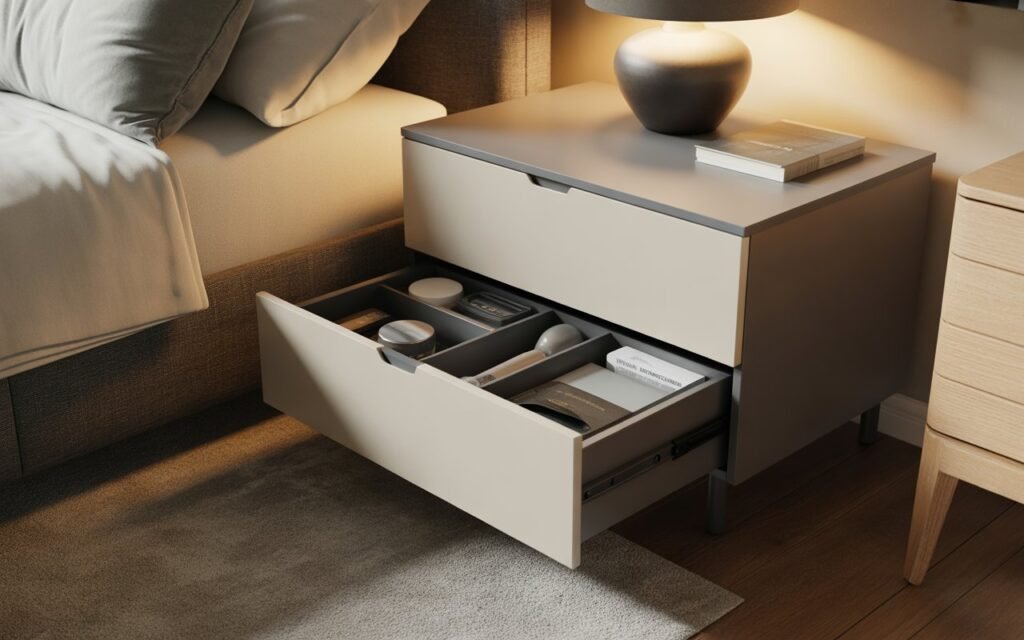
10. Prioritize Hidden Storage
Items used daily should be accessible but not visible. Drawers help maintain a clean surface.
Why it works: Reduces clutter without sacrificing function.
How to apply: Store chargers, remotes, and small items inside.
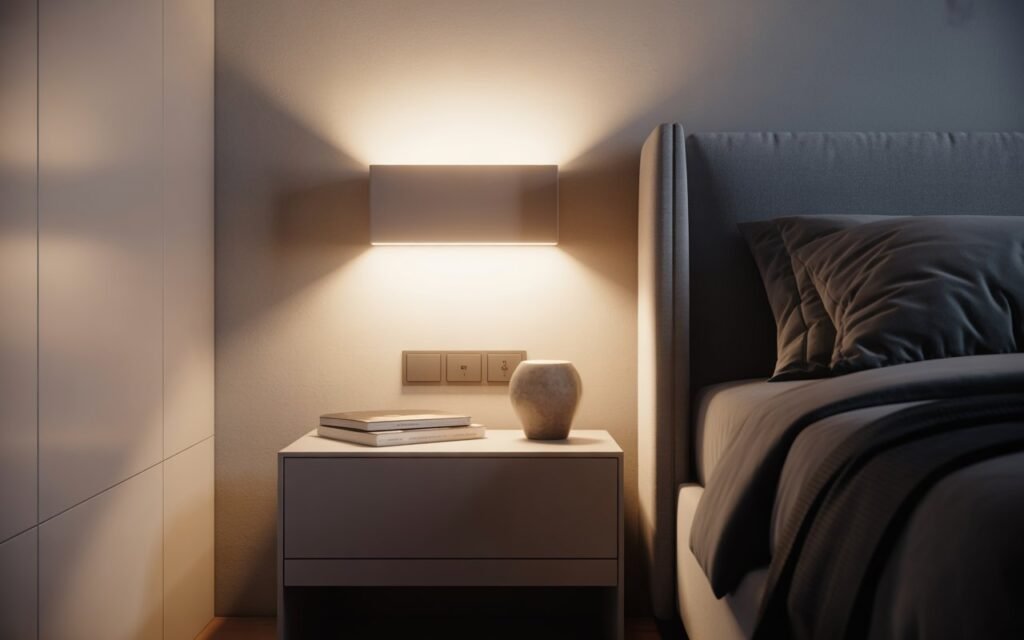
11. Replace Table Lamps with Wall Sconces (If Needed)
For smaller spaces, wall-mounted lighting frees up valuable surface area.
Why it works: Maximizes usable space without losing function.
How to apply: Install at a height aligned with your bed for proper illumination.
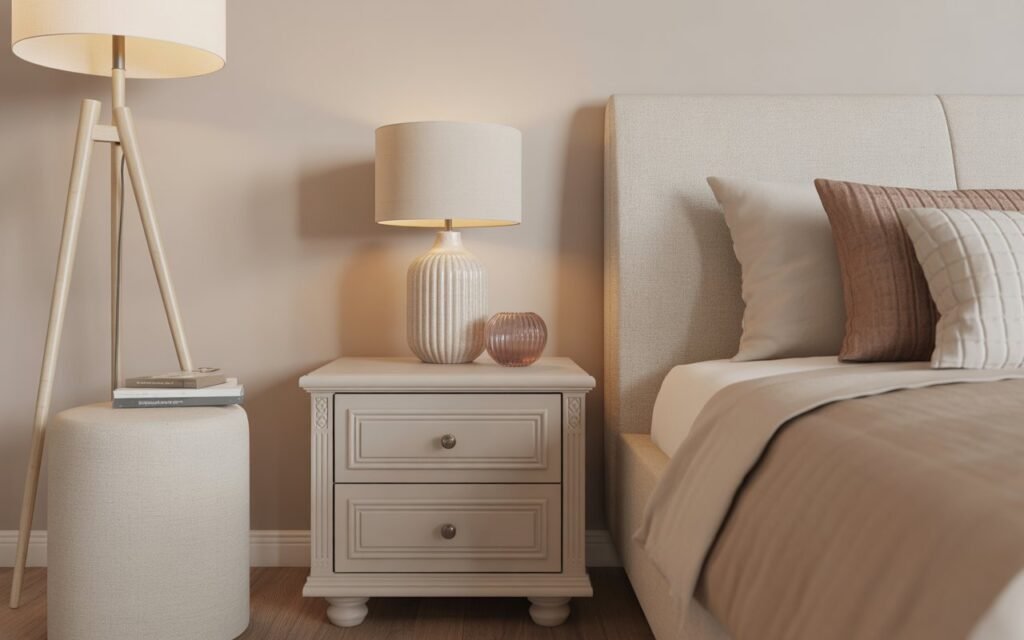
12. Keep a Controlled Color Palette
Avoid introducing unrelated colors. A limited palette keeps the setup cohesive.
Why it works: Reduces visual noise and improves harmony.
How to apply: Match tones with your bedding or wall color.
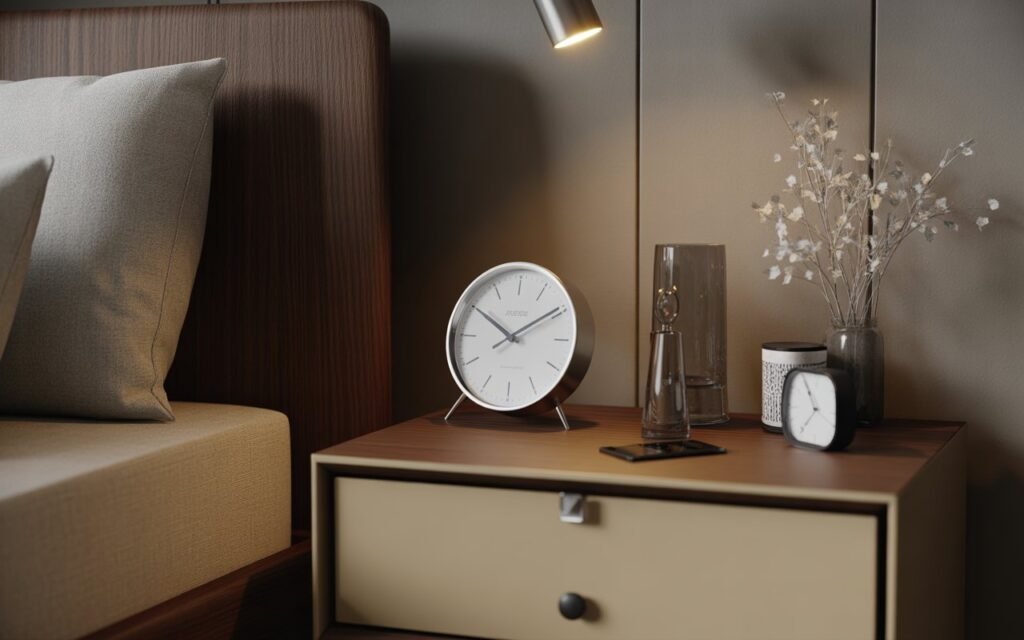
13. Add a Functional Yet Subtle Accessory
Items like a small clock or water glass can be included, but they should blend into the design.
Why it works: Maintains practicality without disrupting aesthetics.
How to apply: Choose minimal, low-contrast designs.
14. Create Vertical Balance
A composition needs height variation. One taller element prevents the setup from looking flat.
Why it works: Guides the eye upward and adds dimension.
How to apply: Pair a tall item with lower supporting elements.
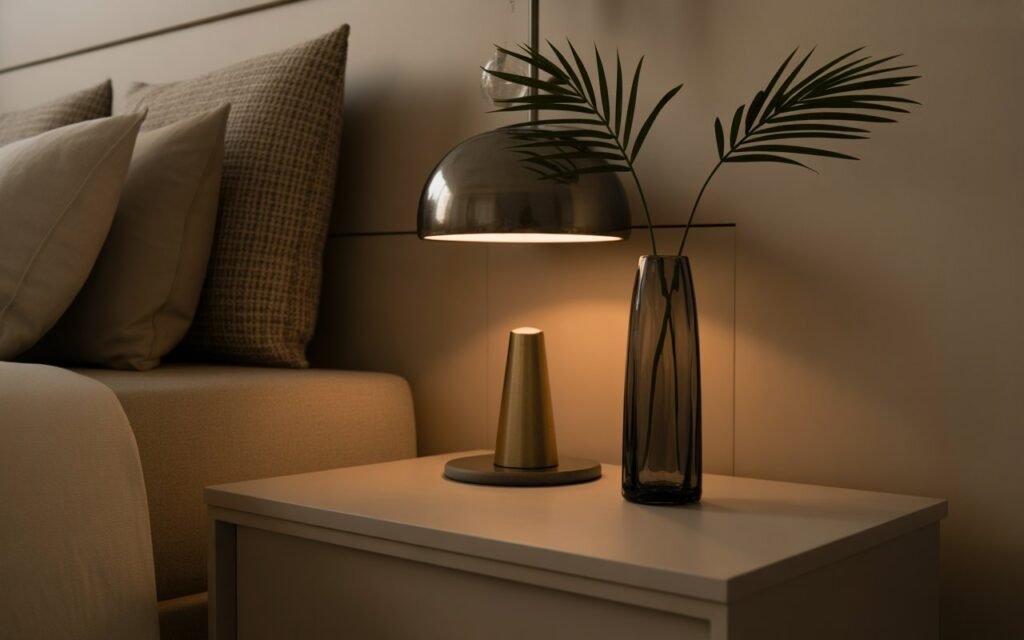
15. Consider a Floating Nightstand
Wall-mounted nightstands reduce visual weight and make the room feel more open.
Why it works: Keeps the floor visible, increasing perceived space.
How to apply: Combine with minimal decor to maintain the effect.
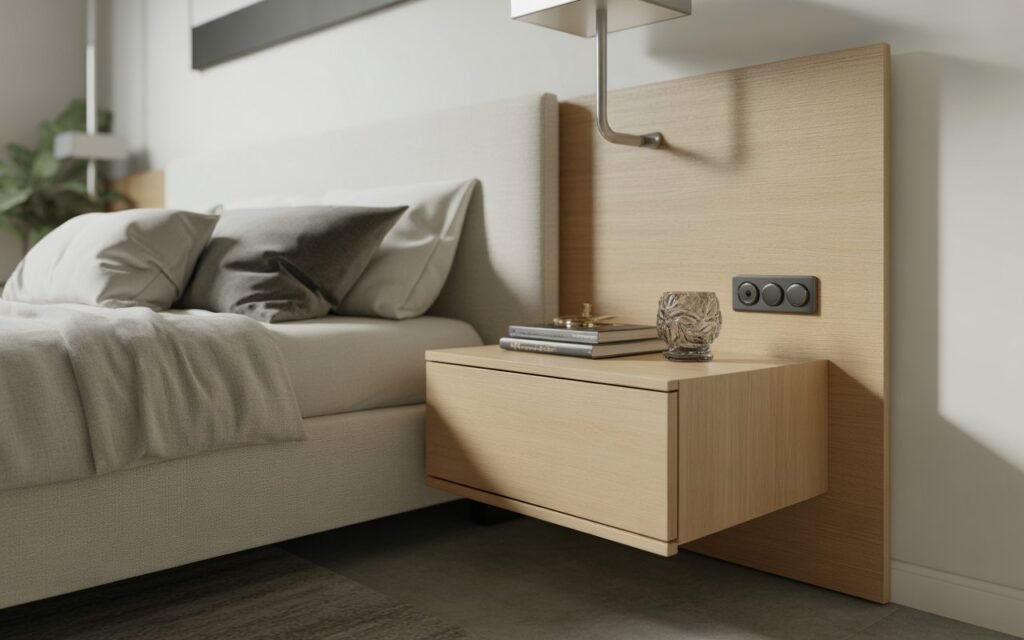
16. Use Layered Lighting Instead of a Single Source
Combine ambient room lighting with bedside lighting to create depth.
Why it works: Improves both function and atmosphere.
How to apply: Use warm tones to maintain a calm environment.
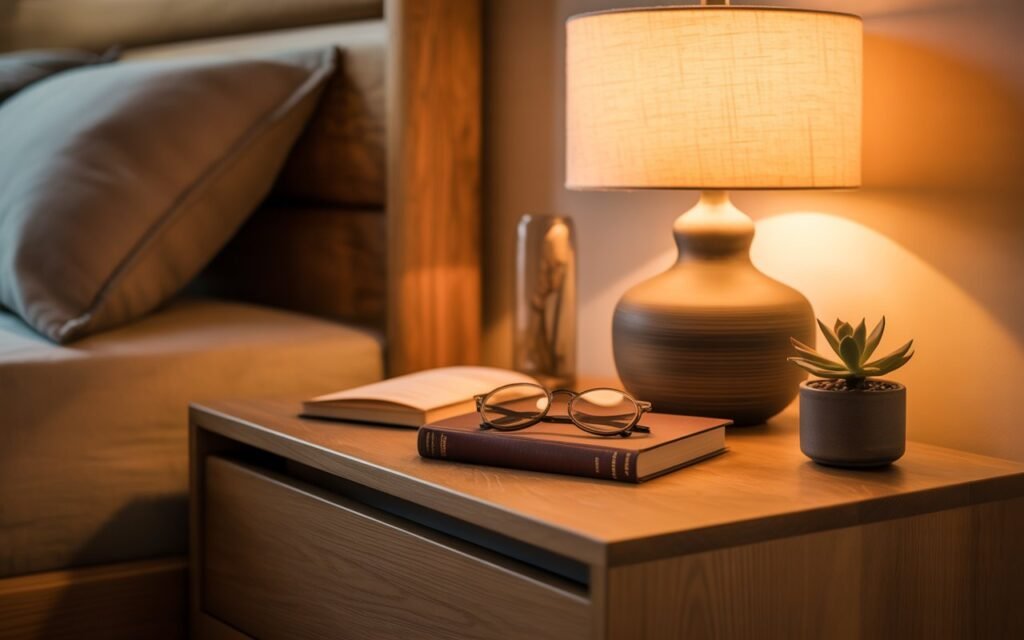
17. Choose Decor with Dual Purpose
Decor that also stores or organizes adds value without increasing clutter.
Why it works: Maximizes efficiency in a small space.
How to apply: Use boxes, trays, or containers that align with your design.
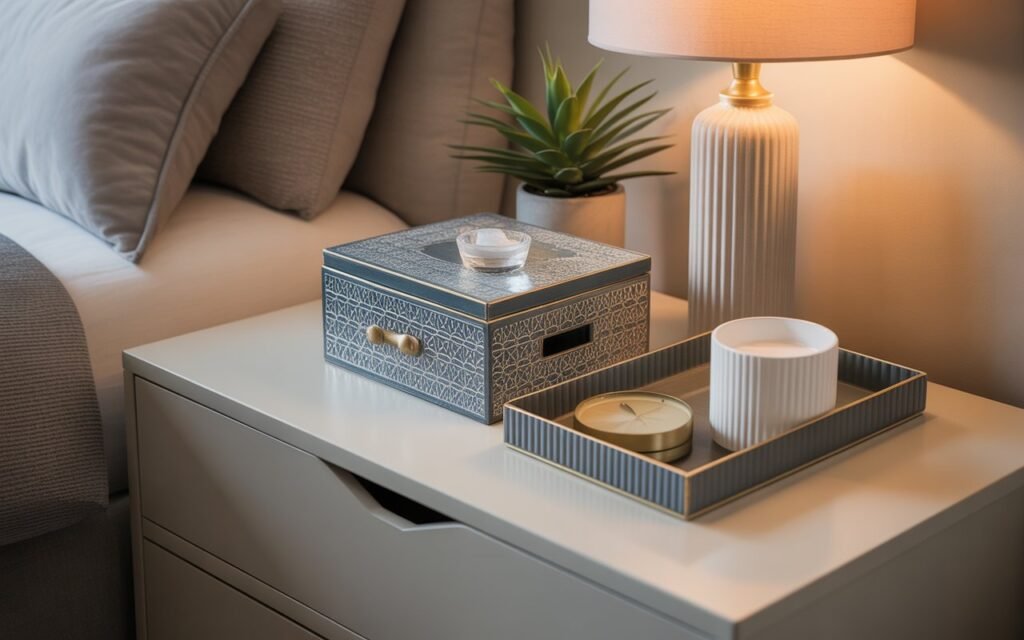
18. Keep Daily Essentials Within Reach
A nightstand should support your routine—books, phone, or water should be easily accessible.
Why it works: Improves usability without disrupting design.
How to apply: Limit essentials to 2–3 items.
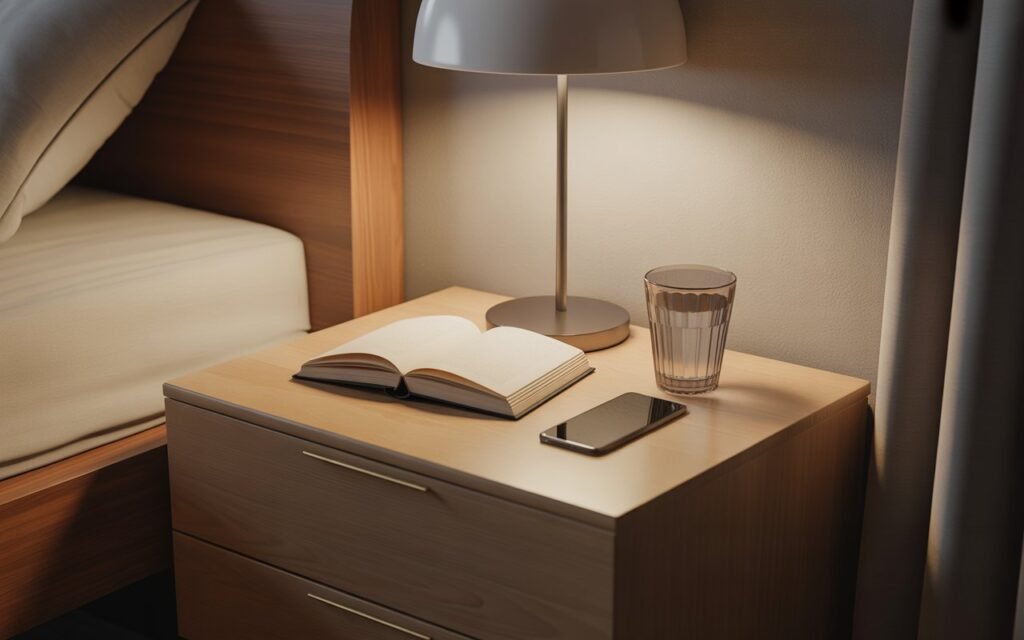
19. Use Negative Space Intentionally
Empty space is not wasted space—it is part of the design.
Why it works: Allows each item to stand out.
How to apply: Leave at least 30–40% of the surface clear.
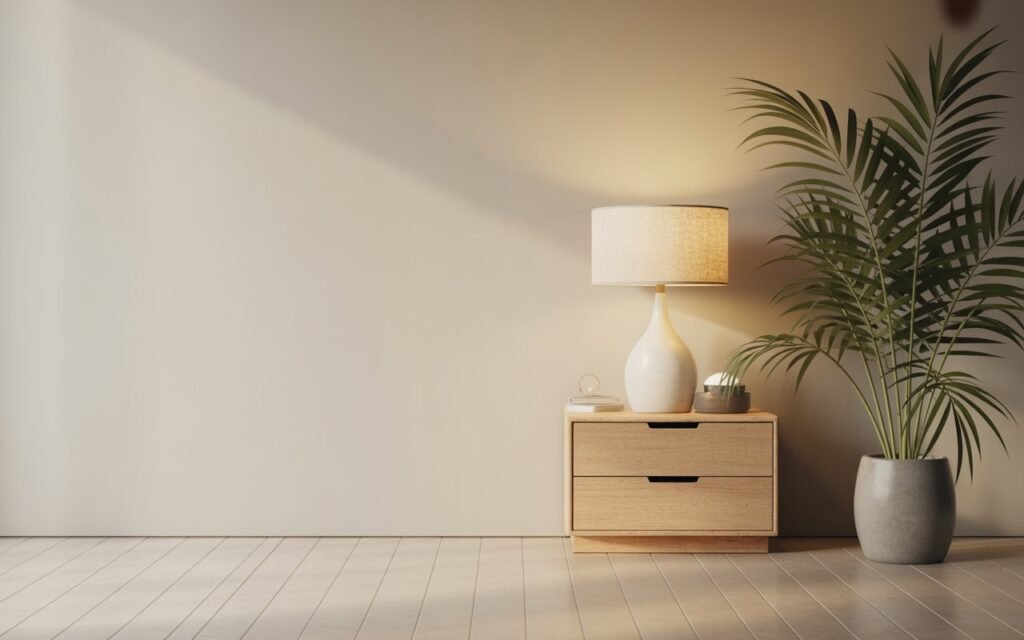
Conclusion
A refined bedroom nightstand decor setup is built through selection, not accumulation. The goal is to create a surface that supports your daily routine while maintaining visual clarity and balance. When each item has a defined role and the layout is structured, the nightstand becomes an extension of the room’s overall design rather than a source of clutter.
Focus on hierarchy, spacing, and material consistency. Avoid unnecessary additions, and refine the setup over time based on how you use it. In a space this small, even minor adjustments—removing one item, adjusting placement, or improving lighting—can significantly elevate the final result.