Every parent knows the feeling. You stand in the doorway of your child’s bedroom — the one with the chipped wall, the mismatched furniture, the toy explosion that never fully resolves — and you think: this room deserves better. My child deserves better.
A well-designed kids room is not a luxury. It is one of the greatest gifts you can give a child — a space that is entirely theirs, that reflects who they are, that sparks imagination and supports rest and makes them feel safe and seen every single day.
The challenge is real though. Kids rooms need to be beautiful enough that you actually enjoy being in them. Practical enough to survive daily chaos. Flexible enough to grow with a child who will change their mind about everything approximately every eighteen months. And ideally, achievable without requiring a designer budget or a complete renovation.
This guide covers all of it — the styles, the layouts, the furniture, the storage, the colors, and the details that transform an ordinary bedroom into a space a child genuinely loves. Whether you are starting from scratch or refreshing what you already have, these kids room ideas will give you everything you need to create something truly special.
What Makes a Kids Room Actually Work
Before you buy a single piece of furniture or choose a single paint color, understand the two things a kids room must achieve simultaneously — and that most rooms get wrong by prioritizing one at the complete expense of the other.
A kids room must be functional first. Storage that a child can actually use. A bed that supports genuine sleep. A floor space that allows real play. A desk or work surface as they grow. Without function, even the most beautiful kids room becomes a source of daily stress — for the child and the parent both.
But a kids room must also be joyful. Color, imagination, personality, and beauty matter deeply in a child’s space. Research consistently shows that children’s environments significantly influence their mood, creativity, and sense of identity. A beige, featureless room is not calm — it is simply uninspiring.
The best kids room ideas hold both of these truths at once. Beautiful and practical. Joyful and organized. Personal and flexible. That balance is exactly what this guide will help you find.
Kids Room Styles Worth Knowing
Choosing a style before you begin shopping saves enormous time, money, and decorating regret. Here are the most pinned and most beloved kids room aesthetics right now — each one genuinely beautiful and fully achievable.
Montessori Kids Room is the most thoughtfully designed approach to children’s spaces available. It is built entirely around the child’s independence and access. A floor bed or low platform bed the child can get in and out of safely. Open low shelving where toys and books are fully visible and reachable. A child-sized table and chairs for activities. Minimal clutter — only the toys and books currently in rotation are out, everything else is stored away. The color palette is warm and natural — wood tones, cream, sage green, soft terracotta. The Montessori kids room is calm, organized, and deeply respectful of a child’s autonomy. It is also one of the most beautiful room styles on Pinterest for good reason.
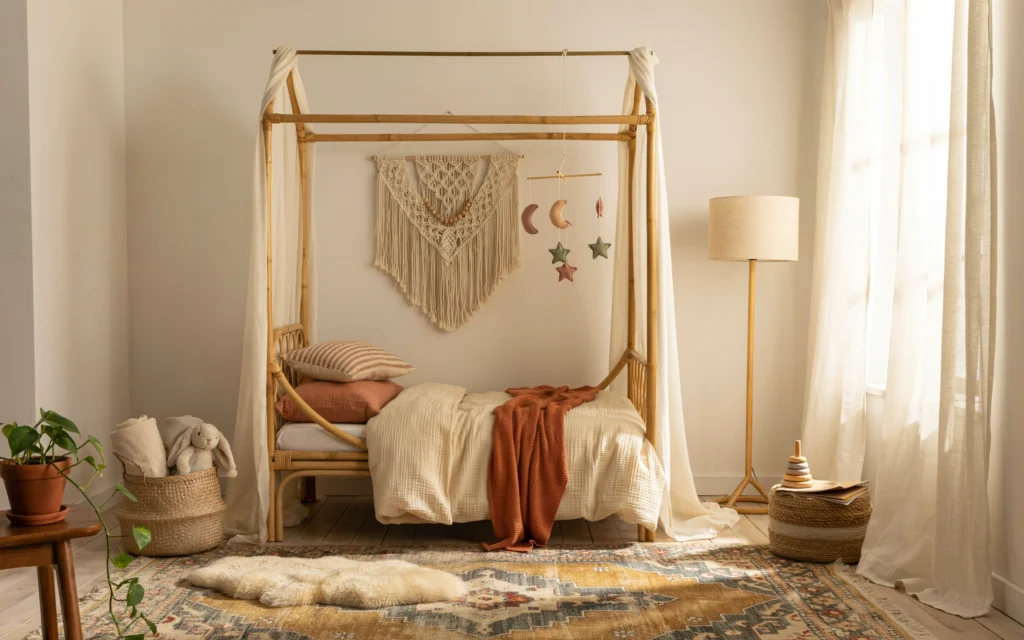
Boho Kids Room is warm, textural, and full of personality. Macramé wall hangings, rattan furniture, a canopy over the bed, earthy tones mixed with pops of dusty rose or sage green, woven baskets for toy storage, a vintage-style rug on the floor, and botanical or animal prints on the walls. It feels collected and loved rather than designed and installed. Boho kids rooms photograph beautifully and age well — the aesthetic works from toddlerhood through the early teenage years without feeling babyish or too grown-up.
Jungle and Nature Theme is the most enduringly popular kids room theme — and with good reason. It works for every age, every gender, and every room size. Deep botanical green walls or a painted jungle mural, animal print textiles, wooden furniture, rattan light fixtures, and a genuine sense of adventure. Layer in plush animal toys, botanical framed prints, and a floor rug with a map or nature motif. The jungle room never feels dated because nature never goes out of style.
Gender Neutral Kids Room is the fastest growing kids room category on Pinterest — and it produces some of the most beautiful children’s spaces being designed today. Moving away from the blue-or-pink binary opens up a world of rich, sophisticated color options: warm terracotta, sage green, dusty yellow, earthy red, deep forest green, warm cream. The furniture is simple and quality-focused. The textiles are natural — linen, cotton, wool. The result is a room that feels genuinely beautiful rather than generically gendered and that works equally well for any child regardless of who they grow up to be.
Maxima list Colourful Kids Room celebrates the full spectrum of childhood joy. Rainbow walls or a bold painted accent wall. Mismatched colourful furniture. A gallery wall of bright art prints. Colourful bunting, pom-pom garlands, and layered textiles in every hue. This style requires confidence but rewards it — a truly colourful kids room is one of the most joyful spaces it is possible to create, and children absolutely love them.
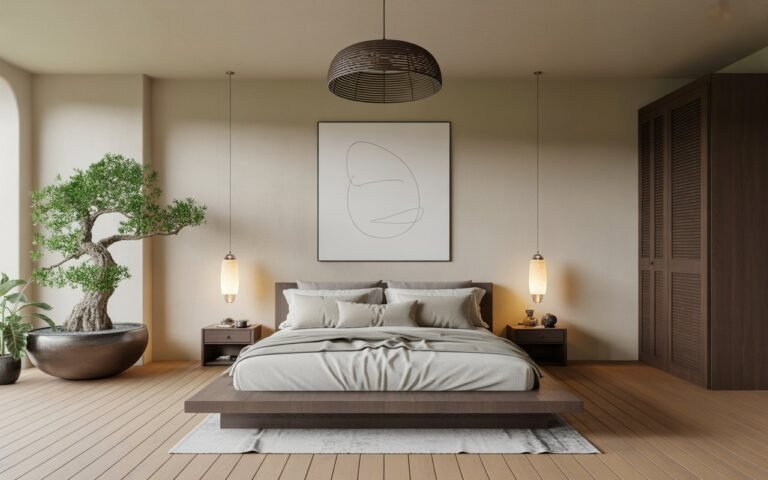
Minimalist Scandi Kids Room strips everything back to its most essential and most beautiful form. White or very pale walls, white and natural wood furniture, a simple low platform bed with crisp white linen, a single piece of meaningful wall art, a few carefully chosen toys displayed on open shelving. The restraint is the point. Scandi kids rooms feel calm, spacious, and incredibly sophisticated — the kind of room that grows effortlessly with a child because it never leans too young or too specific.
Kids Room Color Ideas That Actually Work
Color in a kids room is one of the most important and most overthought decisions parents face. Here is the framework that makes it simple.
Walls are the background, not the statement. Choose a wall colour that works as a foundation — warm white, soft sage, pale terracotta, dusty blue — and let the textiles, art, and furniture bring the personality. This approach means you can update the room’s look entirely by changing the bedding and wall art without repainting every two years as your child’s tastes evolve.
One bold colour, used intentionally, is more powerful than many colours competing. A single deep green accent wall behind the bed. One terracotta painted dresser in an otherwise neutral room. One bright yellow reading nook. Restraint with colour creates impact. Chaos with colour creates noise.
Nature-inspired colors outlast trend colors in kids rooms. Sage green, warm terracotta, forest green, warm cream, dusty blue, and earthy red all feel fresh and relevant regardless of the year. Neon yellow and bright orange feel very specific to a moment in time — and children grow out of moments quickly.
The most universally successful kids room colour palettes on Pinterest right now combine warm white walls with one nature-inspired accent colour and natural wood tones throughout. This combination works from nursery through teenage years with minimal updates required.
Kids Room Furniture: What to Buy and What to Skip
The bed is the most important purchase in any kids room — and the one most worth spending money on. A quality bed frame in a simple, well-made design in natural wood or painted white will grow with your child from age three through their teenage years. Avoid highly themed beds — the rocket ship bed is beloved at age four and embarrassing at age nine. Invest in the frame. Change the bedding as tastes evolve.
Bunk beds and loft beds are the single most space-efficient furniture investment available for kids rooms. A loft bed frees the entire floor area beneath for a desk, a reading nook, a play area, or additional storage. In small kids rooms, a loft bed is not just a style choice — it is a spatial necessity. In shared kids rooms, bunk beds allow two children to coexist comfortably in a space designed for one.
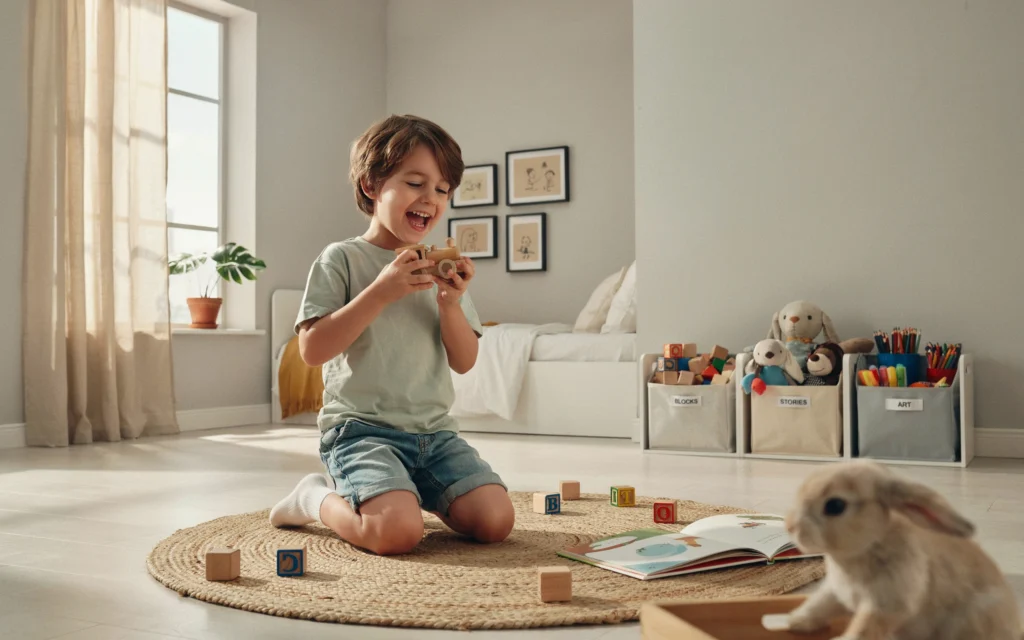
Open low shelving is the Montessori-proven solution to toy organization that children actually maintain. When toys are visible and accessible, children can find what they want, use it, and return it independently. Deep toy boxes and closed storage teach children nothing about organization — they simply hide the chaos temporarily.
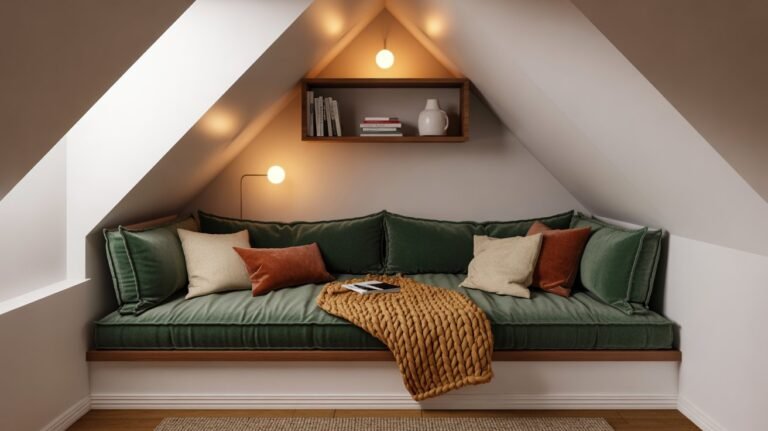
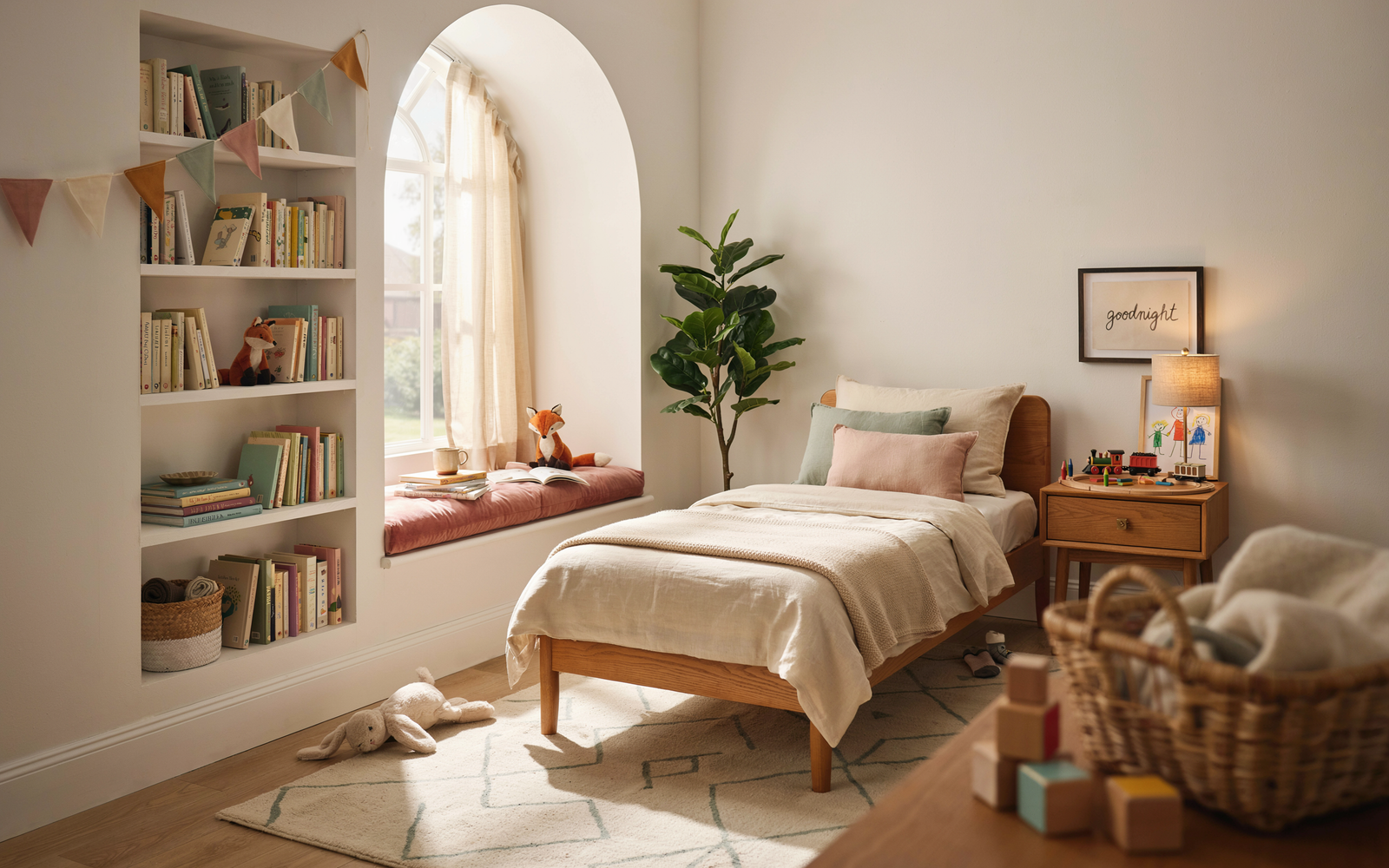
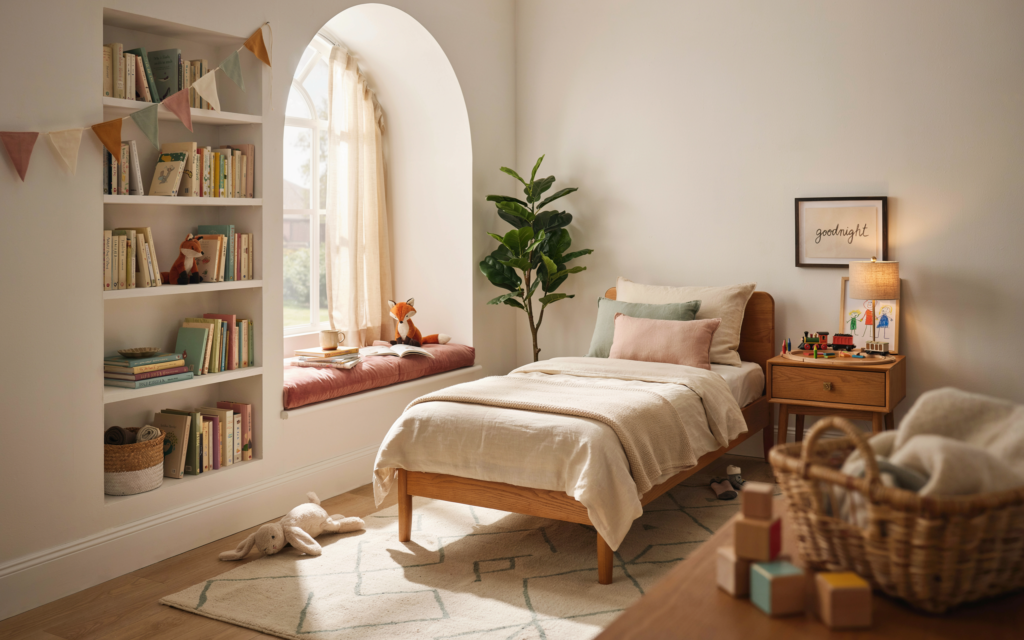
A reading nook is the most beloved kids room feature on all of Pinterest — and for good reason. It does not need to be elaborate. A canopy tent over a corner of the floor with a cushion and a small bookshelf creates a magical dedicated reading space that children return to again and again. Built-in window seat nooks with storage below are the premium version — but even a simple IKEA tent and a floor cushion achieves the same emotional magic at a fraction of the cost.
A child-sized desk becomes essential from around age five and remains relevant through the teenage years. Choose a simple, quality desk in a neutral finish that grows with the child. Avoid novelty desks shaped like race cars or princess castles — they have the same problem as themed beds.
Kids Room Storage Ideas That Children Will Actually Use
Storage is where kids room design most often fails. Parents choose storage that looks beautiful but requires adult organization to maintain — and then wonder why the room is perpetually chaotic.
The golden rule of kids room storage is this: if a child cannot put it away independently, it will never be put away.
Open baskets and bins at floor level are the most child-friendly storage solution available. Label each basket with a picture rather than words for pre-readers. One basket for cars. One for building blocks. One for art supplies. The system is immediately understandable to a child and immediately maintainable without adult intervention.
A low bookshelf with books displayed face-out rather than spine-out makes independent book selection possible from age two. Children choose books they can see. A spine-out bookshelf is a library. A face-out bookshelf is an invitation.
Under-bed storage on rolling drawers is the most underused storage solution in kids rooms. The space beneath a bed — in a standard single or double — can hold an enormous volume of seasonal clothing, extra bedding, or out-of-rotation toys completely invisibly.
A pegboard on one wall for hanging art supplies, craft materials, headphones, bags, and daily-use items keeps the most-reached-for objects completely accessible and completely off surfaces and floors.
Small Kids Room Ideas That Maximize Every Inch
Small kids rooms are not a design problem. They are a design opportunity — the constraint forces creativity and the result is often more charming than a large room with space to spare.
Go vertical in a small kids room. Loft beds, tall shelving, wall-mounted storage, and hanging organizers all free up floor space for the play area that matters most to a child. Floor space is playtime. Vertical space is storage.
Use built-in furniture wherever possible — a window seat with drawers beneath, shelving built around a door frame, a bed with drawers integrated into the base. Built-ins eliminate the wasted space between furniture and walls that freestanding pieces always create.
Mirrors make small kids rooms feel significantly larger — a large round mirror on one wall, or a full-length mirror on the back of the door, doubles the perceived depth of even the smallest space.
Keep the colour palette light in small kids rooms. Warm white or very pale walls reflect light and open up the space. Save the bold colour for one accent wall, the bedding, or the textiles — not all four walls.
Kids Room Wall Decor Ideas
The walls of a kids room are its most powerful storytelling surface. Use them.
A painted mural on one wall is the single most transformative and most pinned kids room feature available. A simple forest scene, a mountain landscape, a galaxy of stars, or an abstract color wash — even a confident amateur can achieve a beautiful result with the right paint colors and a YouTube tutorial. The impact is extraordinary. The cost is a few cans of paint.
A gallery wall of children’s own artwork framed and hung professionally tells your child that their creativity is worth displaying — a message that matters enormously for developing confidence and identity. Rotate the pieces regularly to keep the display fresh.
Removable wallpaper is the renter’s and commitment-phone’s greatest ally in kids room design. Beautiful botanical prints, geometric patterns, cloud and rainbow designs, and jungle murals are all available in peel-and-stick wallpaper that goes up in an afternoon and comes down without damage when tastes change.
Alphabet and number prints, world maps, and constellation charts serve double duty in a kids room — they are genuinely beautiful as wall art and genuinely educational as daily reference. A large vintage-style world map above a desk is a piece of art that also quietly teaches geography every single day.
Final Thoughts: Design the Room Your Child Will Remember
Years from now, when your child is grown, they will not remember the exact paint color on their bedroom walls. But they will remember the feeling of that room. The sense of safety. The joy of their own space. The magic of a reading nook that was entirely theirs on a rainy afternoon.
That feeling is what you are actually designing. The furniture and the color and the storage systems are just the tools you use to create it.
Start with what matters most to your child. Ask them. Listen to the answer. Then build the most beautiful, functional, joyful version of their answer that your budget and space allow.
The room your child loves is the right room. Every time.