Introduction
A home coffee station is no longer just a trend—it’s a functional upgrade that simplifies your daily routine while adding a strong visual element to your home. Instead of scattering coffee essentials across the kitchen, a dedicated station creates order, efficiency, and a sense of ritual.
However, many setups fail because they focus only on aesthetics and ignore usability. A beautiful coffee corner that feels inconvenient will never last. The goal is to create a system where everything flows naturally—from brewing to serving—while still looking visually refined.
This guide goes deeper than surface-level inspiration. Each idea is designed to help you build a coffee station that is organized, space-efficient, and visually cohesive, regardless of your home size.
1. Define a Clear Coffee Zone
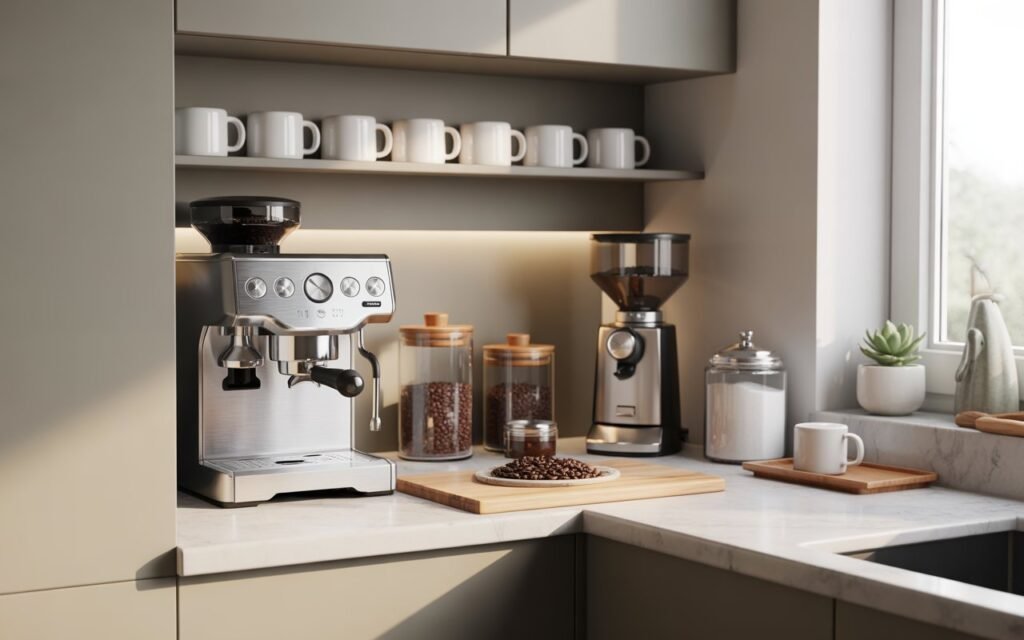
Start by choosing a fixed location. This could be a kitchen corner, a sideboard, or even a small unused wall. A defined zone prevents clutter from spreading and creates a dedicated routine space.
Think of it as a mini workstation—once it’s defined, everything else becomes easier to organize.
2. Build Upward With Vertical Layers
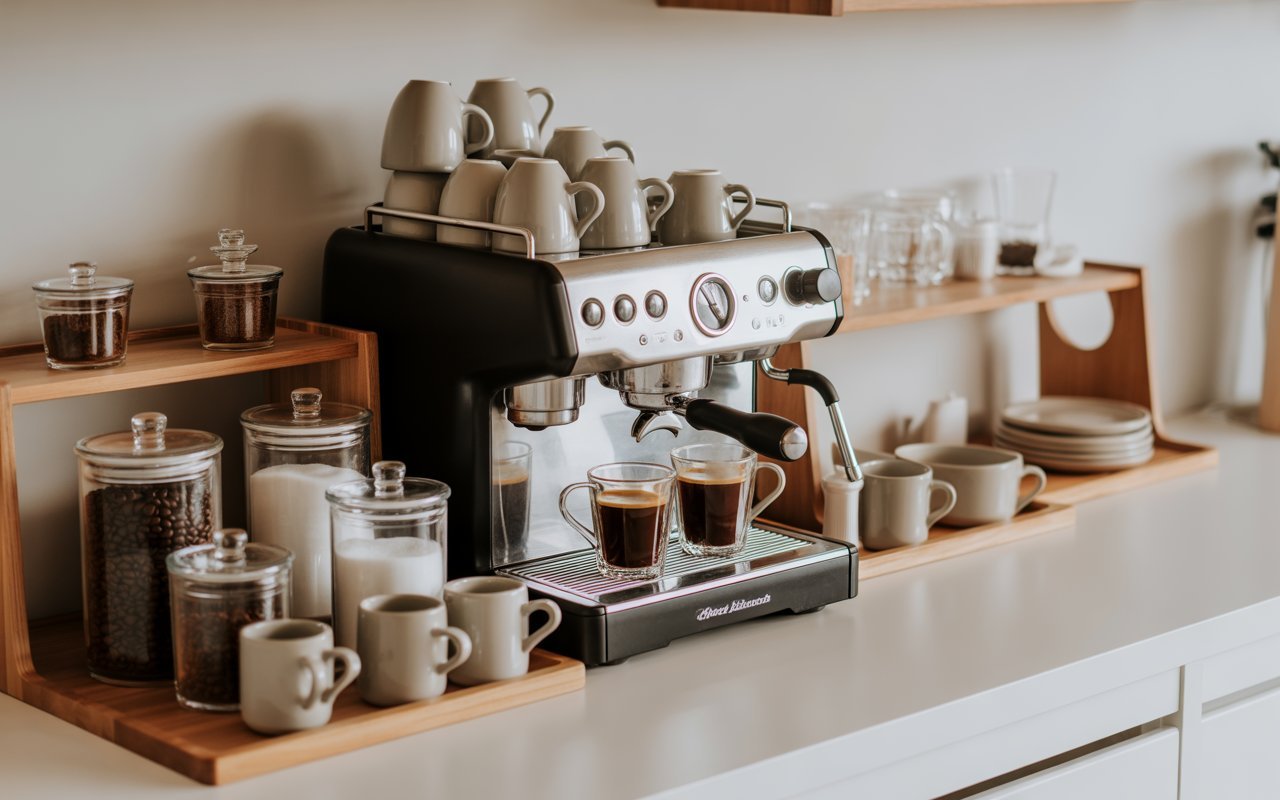
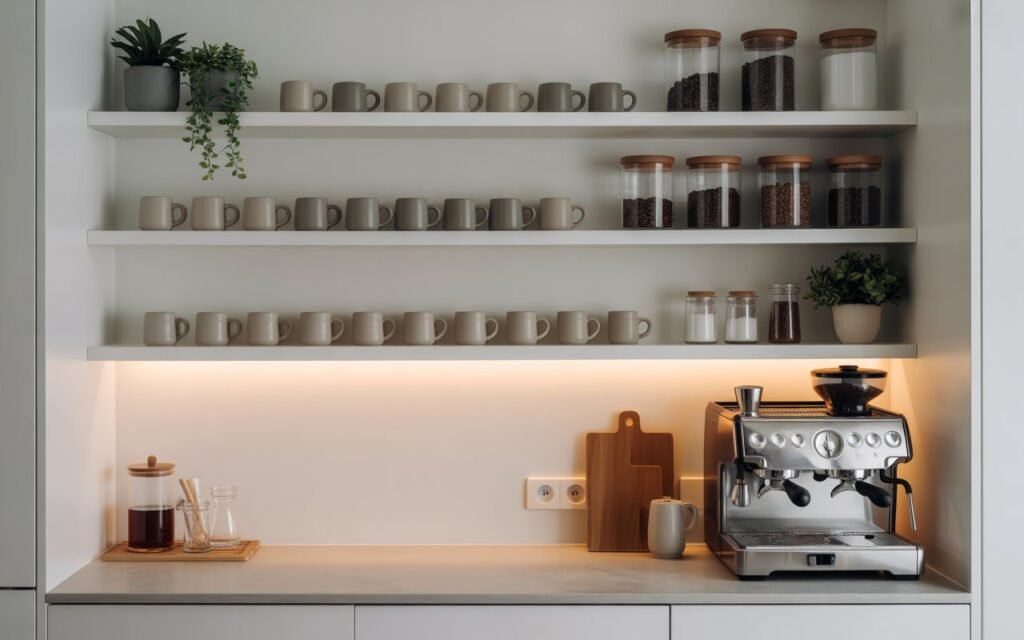
Instead of spreading outward, go upward. Floating shelves or wall racks allow you to store mugs, jars, and decor without consuming counter space.
Layering vertically also creates depth, making your coffee station look more styled and intentional.
3. Organize by Usage Flow
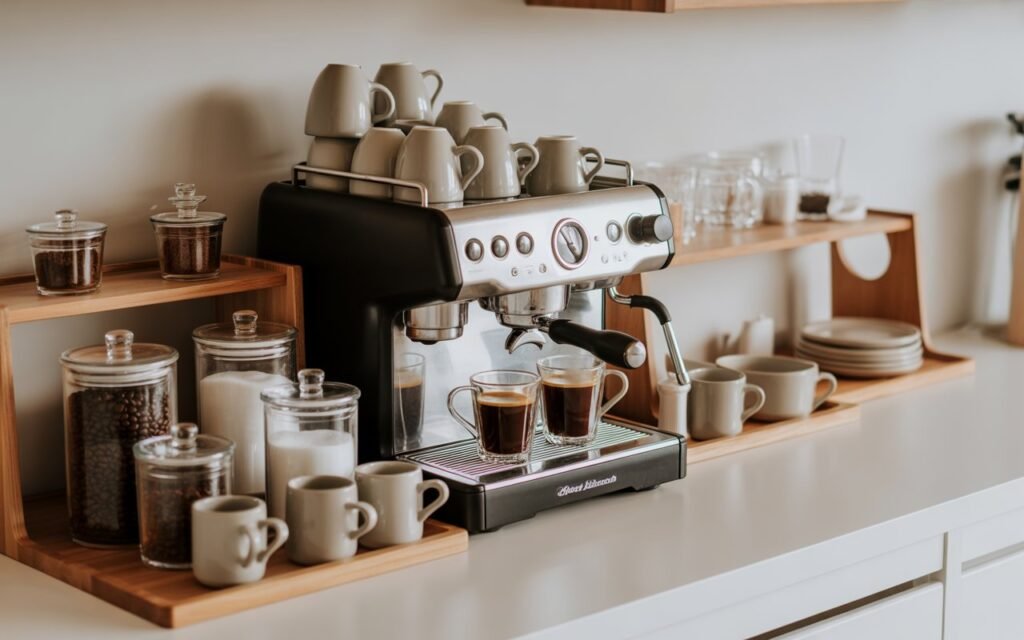
Design your setup based on how you actually make coffee:
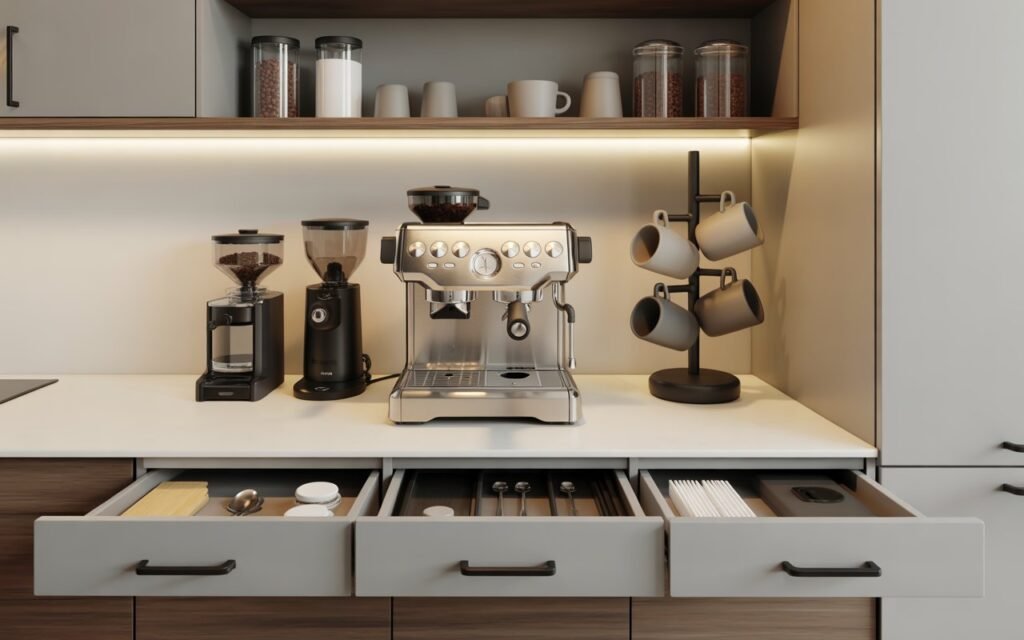
- Machine in the center
- Ingredients on one side
- Cups on the other
This logical flow reduces movement and makes the process smoother.
4. Keep a Consistent Design Language
Choose one style and stick to it. Mixing too many styles makes the setup feel chaotic.
For example:
- Modern: clean lines, neutral tones
- Farmhouse: wood textures, warm accents
- Minimal: very few items, simple palette
Consistency creates a professional, designer-level look.
5. Let the Coffee Machine Anchor the Space
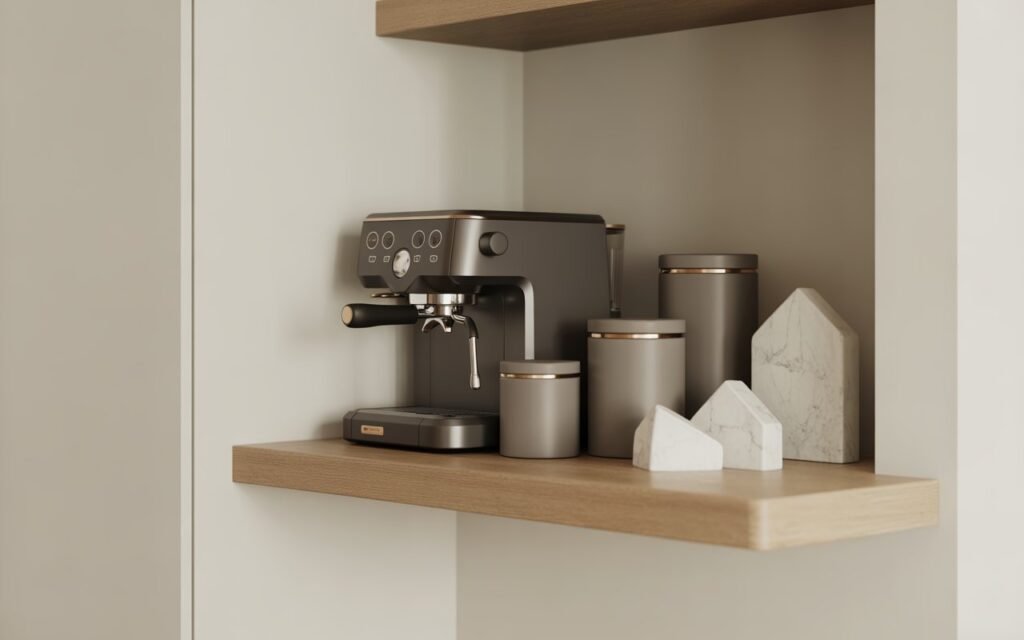
Your machine should visually anchor the station. Place it where it feels natural and ensure enough space around it for use.
Avoid overcrowding this area—function comes first.
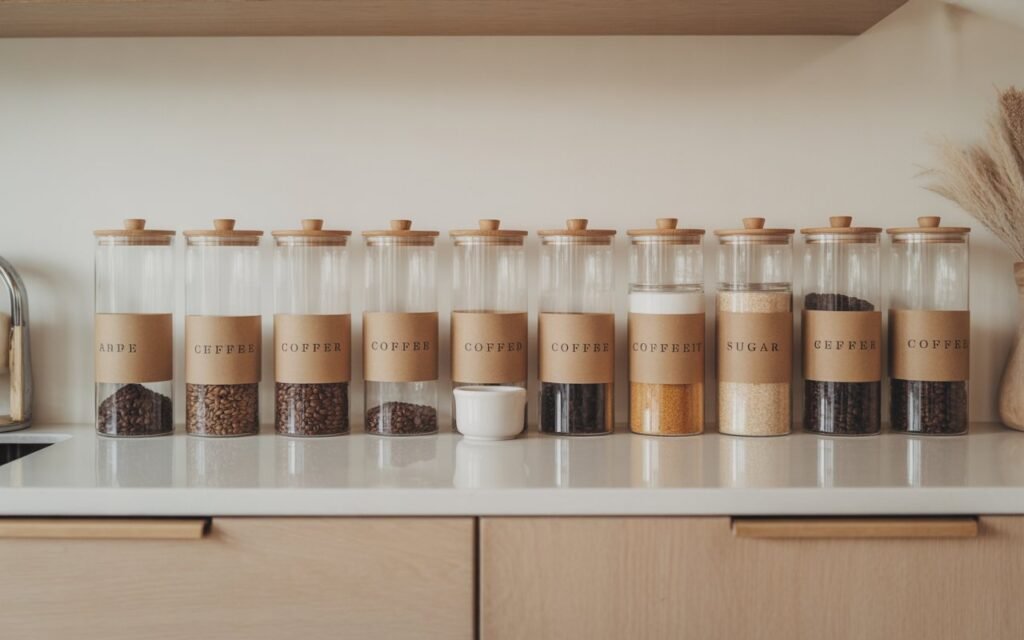
6. Use Uniform Containers for Clean Visuals
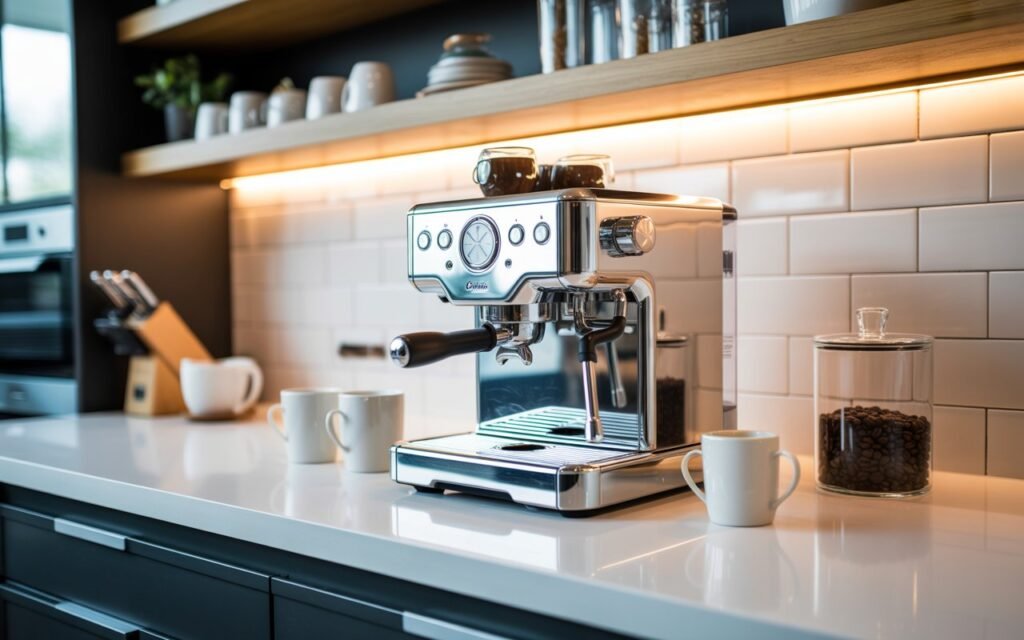
Random packaging creates visual noise. Transfer coffee, sugar, and pods into matching containers.
This instantly upgrades the look from casual to curated.
7. Introduce Layered Lighting
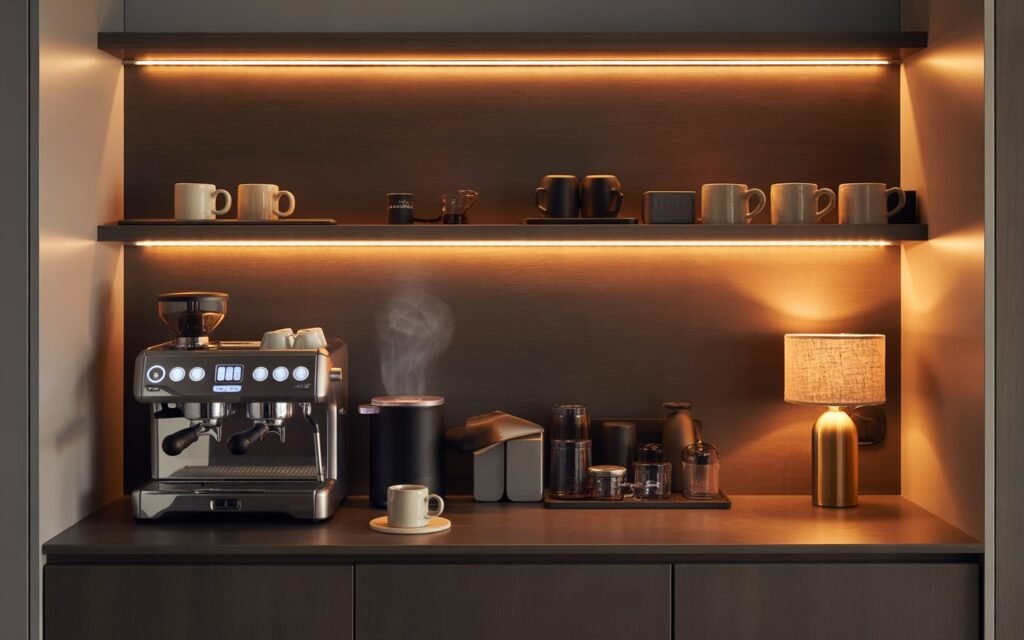
Lighting is often ignored, but it defines the mood. Add:
- Under-shelf lighting for clarity
- A small lamp for warmth
This makes your coffee station usable at any time of day.
8. Display Mugs With Purpose
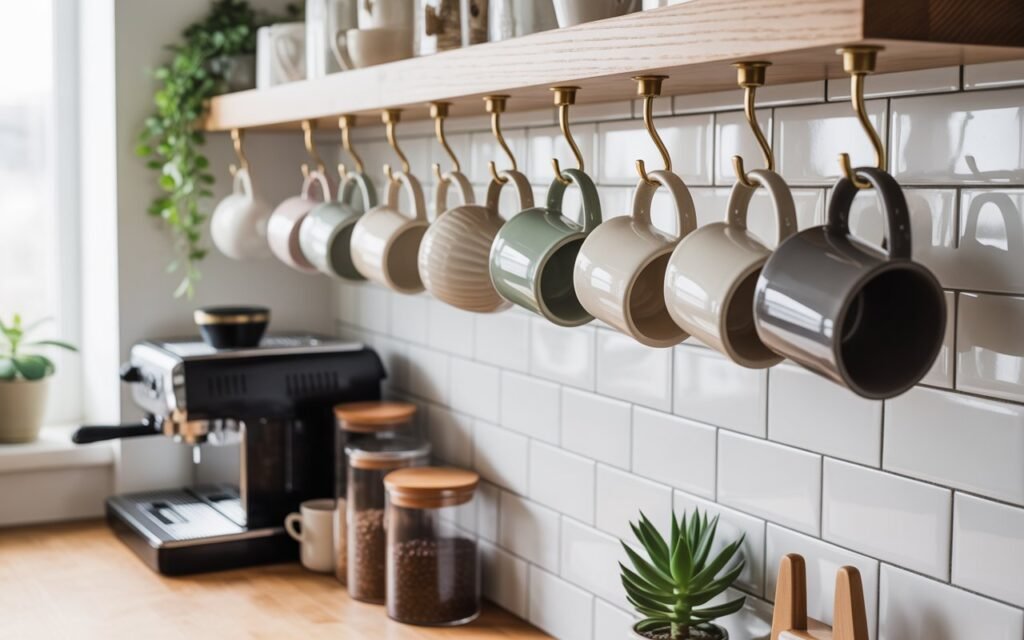
Instead of stacking mugs randomly, display only your best ones. Use hooks or open shelves to keep them accessible and visually appealing.
Rotate occasionally to keep the look fresh.
9. Use Trays to Create Structure
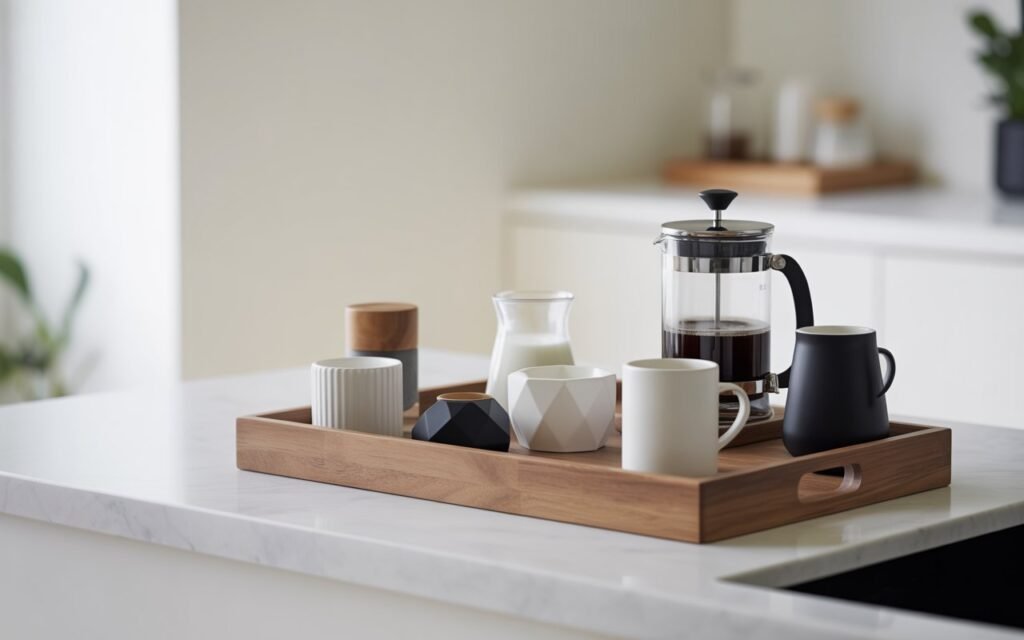
A tray acts as a visual boundary. It groups items together and prevents the setup from looking scattered.
This is especially useful for small spaces.
10. Balance Hard and Soft Elements
Too many hard surfaces can feel cold. Add softness with:
- Small plants
- Linen cloths
- Wooden accents
This creates a more inviting atmosphere.
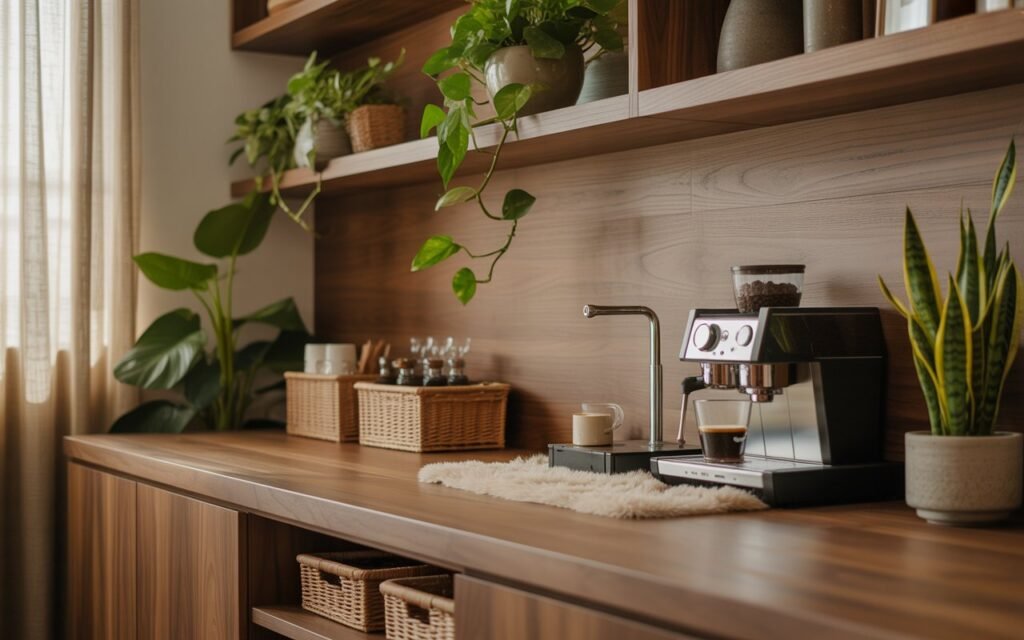
11. Optimize for Small Spaces
If space is limited, focus on essentials:
- Compact machine
- Few mugs
- Minimal decor
Avoid over-designing. Simplicity works best in tight areas.
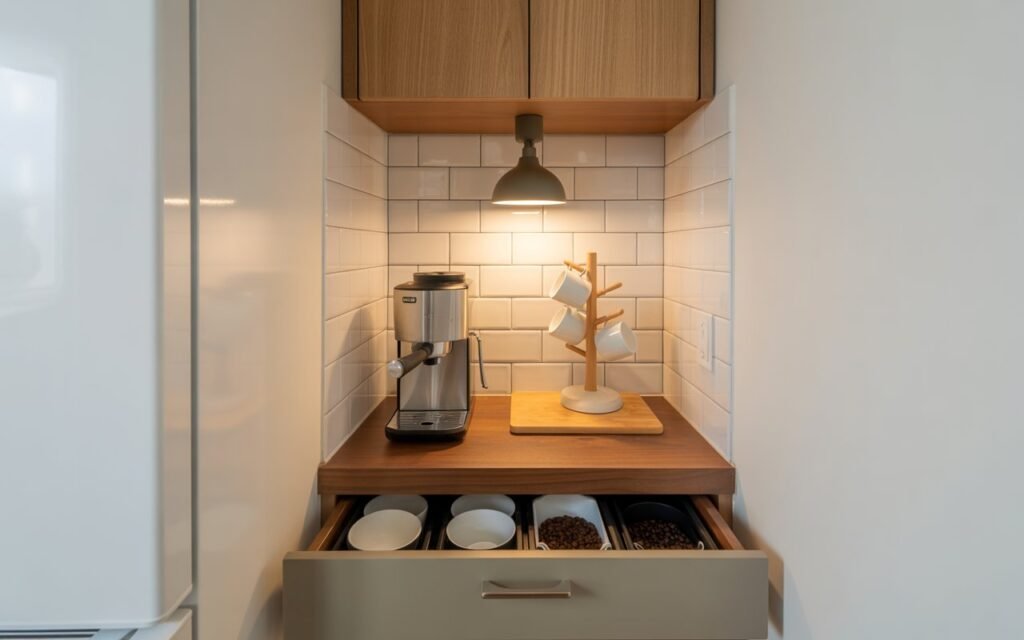
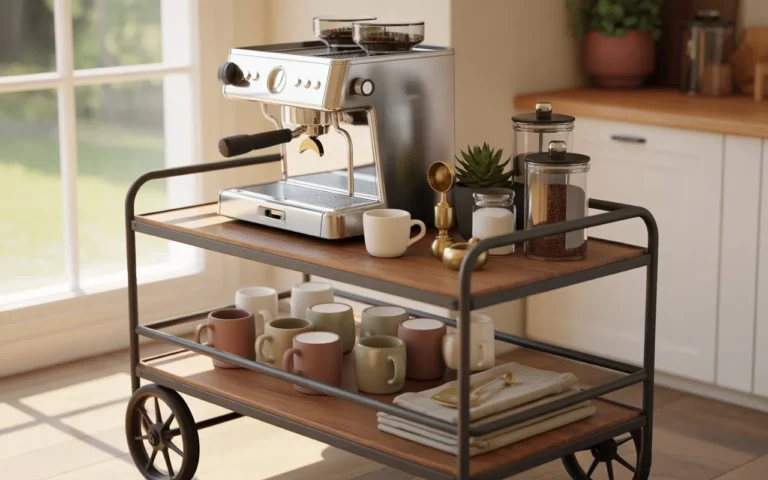
12. Use a Cart for Mobility and Flexibility
A rolling cart allows you to move your coffee station when needed. It’s ideal for renters or small apartments.
Multi-tier carts also help separate items logically.
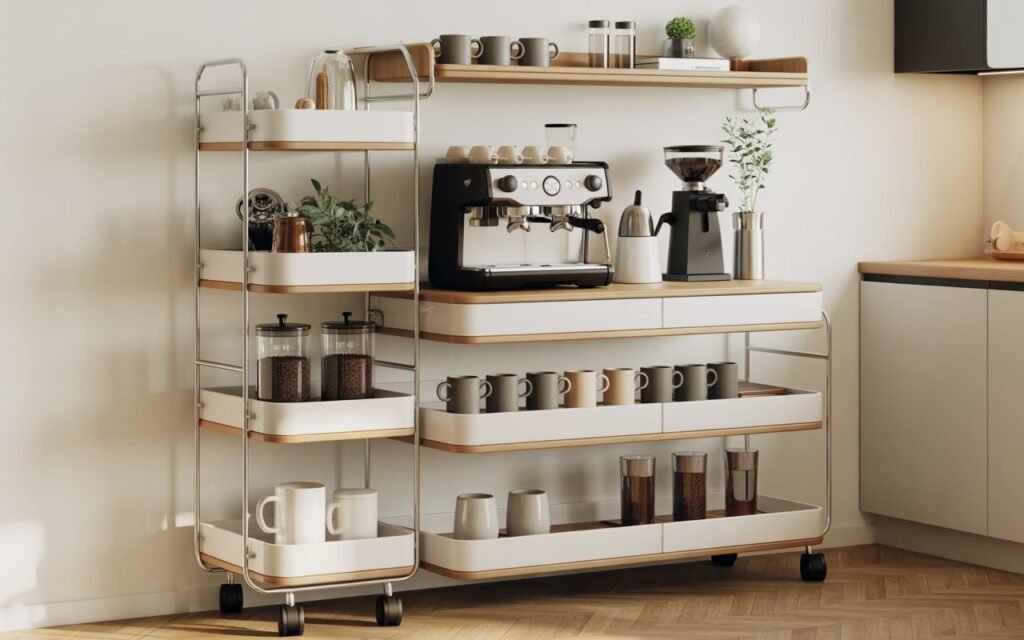
13. Hide Visual Clutter Intelligently
Not everything needs to be visible. Use drawers, baskets, or cabinets for extra supplies.
A clean surface always looks more premium and intentional.
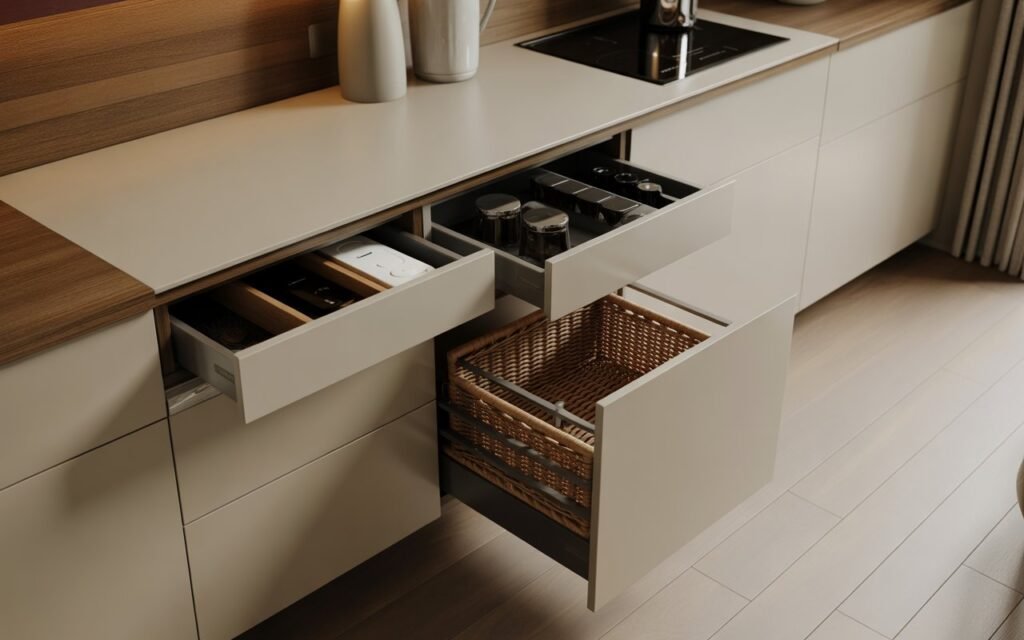
14. Add Subtle Personal Details
Personal touches should be subtle, not overwhelming. A small frame, a quote, or a unique mug is enough.
These details make the space feel lived-in without clutter.
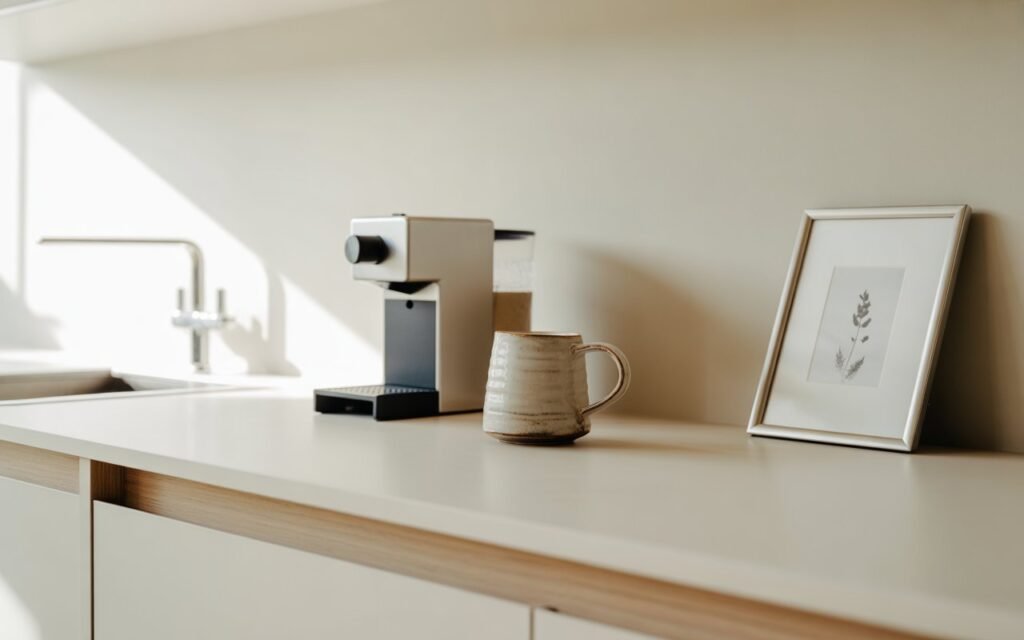
15. Maintain a Controlled Color Palette
Stick to 2–3 main colors. Neutral tones with one accent color work best.
This keeps the setup visually calm and cohesive.
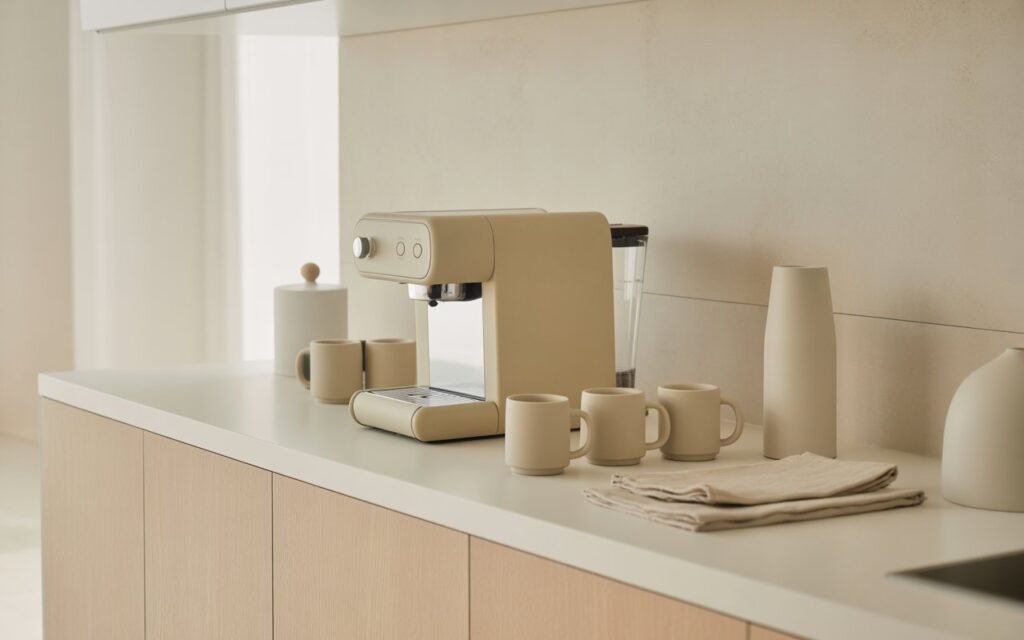
16. Prioritize Everyday Functionality
Always test your setup:
- Can you reach everything easily?
- Is there enough space to work?
If not, adjust. Function should always guide design decisions.
17. Refresh and Edit Regularly
A coffee station evolves over time. Remove unused items, clean regularly, and update small details.
This keeps the space feeling fresh and intentional.
Conclusion
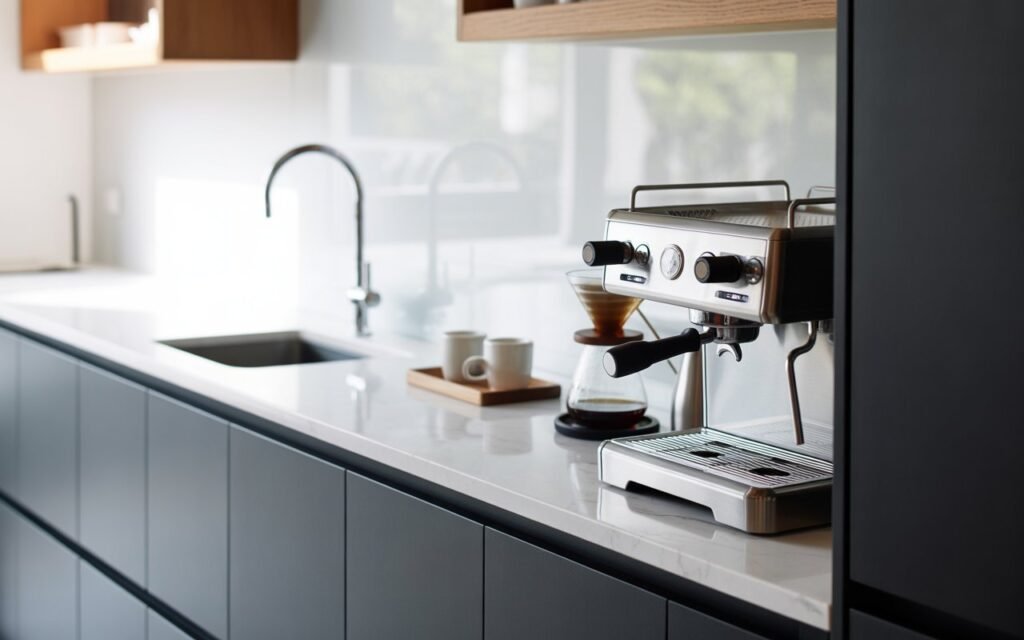
A well-designed home coffee station is not defined by its size or budget, but by how effectively it serves your daily routine. When every element has a purpose and a place, even a small setup can feel refined and effortless. The difference between a cluttered corner and a stylish coffee station lies in thoughtful planning, not expensive decor.
The most successful setups are those that balance structure with personality. Clean layouts, consistent colors, and practical organization create a strong foundation, while small personal details bring warmth and individuality. When these elements work together, your coffee station becomes more than just a functional space—it becomes a daily experience.
Over time, your needs may change, and your setup should adapt with you. Regularly refining, simplifying, and updating your coffee station ensures it continues to serve both your lifestyle and your aesthetic. With the right approach, you can create a space that feels intentional, efficient, and quietly luxurious.