Introduction
Blue kitchen cabinets have evolved from a bold design risk into one of the most versatile and timeless choices in modern interiors. Whether you prefer deep navy tones or soft pastel shades, blue offers a unique balance—it can feel calm and understated or bold and luxurious depending on how it’s styled.
What makes blue cabinets stand out is their ability to adapt across different design styles. In a modern kitchen, they create a sleek and refined atmosphere. In a traditional space, they add depth and character. And in smaller kitchens, lighter shades can make the entire room feel more open and breathable.
However, the difference between a well-designed blue kitchen and one that feels off comes down to shade selection, lighting, material pairing, and balance. This guide takes a deeper approach, helping you understand not just what looks good, but what actually works in real homes.
1. Navy Blue Cabinets With Warm Metallic Accents
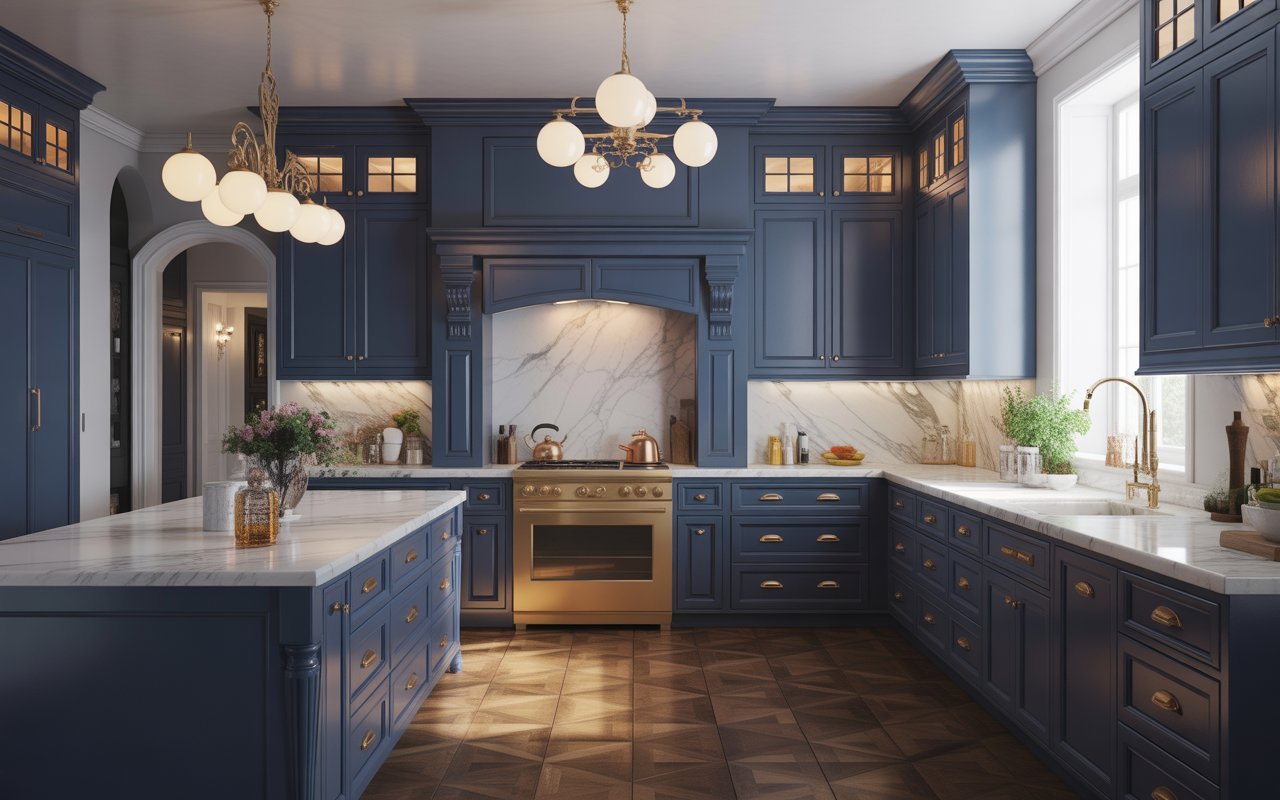
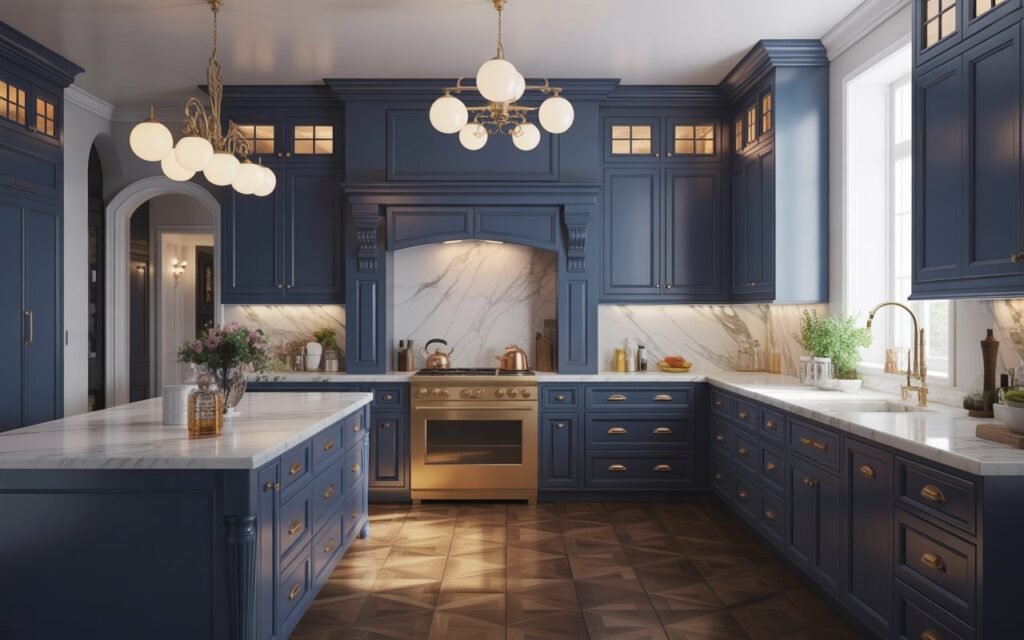
Navy blue remains the most reliable and high-end choice. When paired with brass or gold hardware, it creates a rich contrast that feels both modern and classic.
Best pairings:
- White or marble countertops
- Warm under-cabinet lighting
- Light backsplash
This combination works especially well in medium to large kitchens where darker tones won’t feel overwhelming.
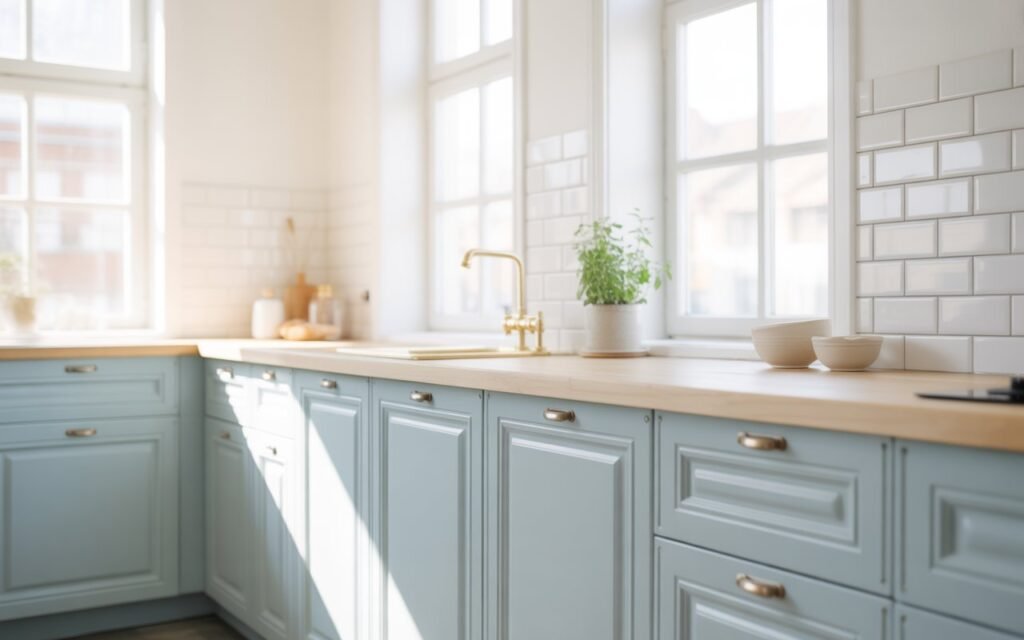
2. Soft Light Blue Cabinets for Open and Airy Spaces
Light blue shades reflect more light, making them perfect for smaller kitchens or spaces with limited natural light.
These tones create a calm, relaxed atmosphere and work beautifully with white walls and subtle textures.
3. Two-Tone Cabinets for Visual Balance
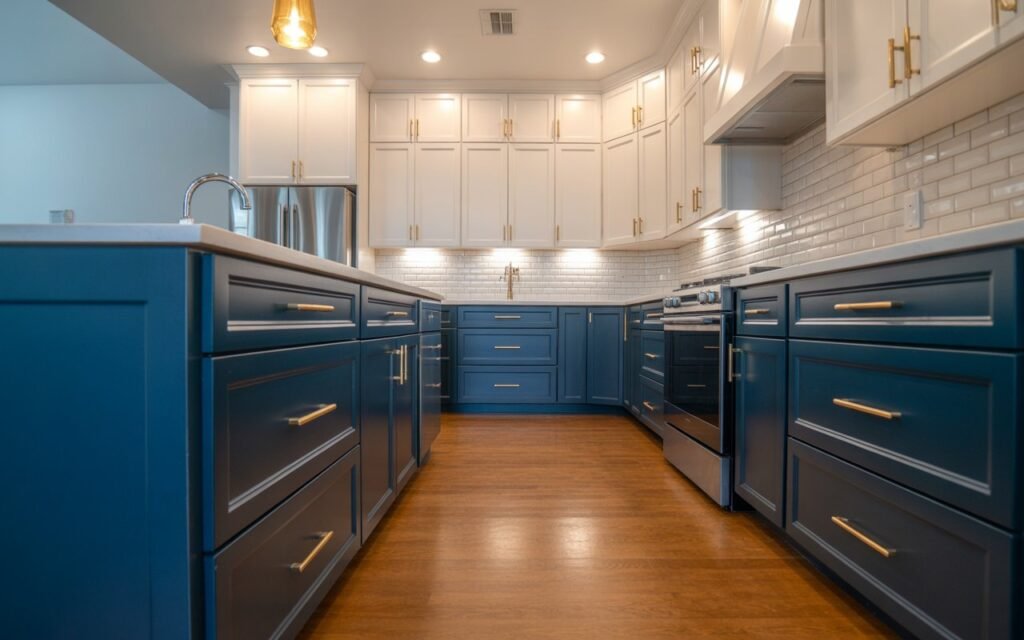
Using blue on lower cabinets and white or neutral tones on upper cabinets prevents visual heaviness.
This approach:
- Keeps the space bright
- Adds depth without clutter
- Works in both small and large kitchens
4. Matte Blue Finishes for a Contemporary Look
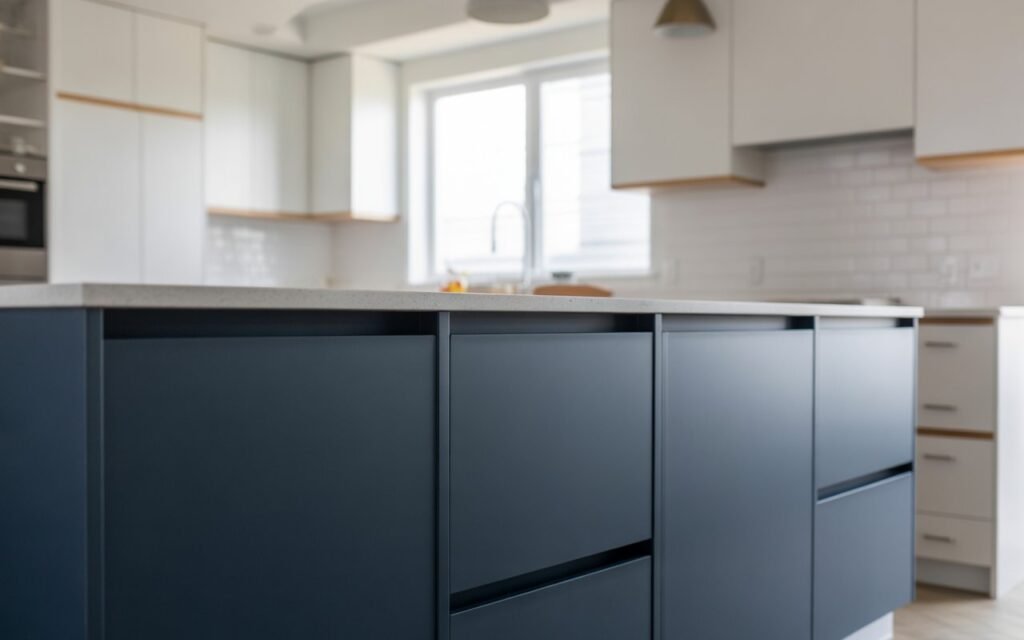
Matte finishes reduce glare and create a softer, more modern feel. They also hide fingerprints better than glossy surfaces.
5. Blue Cabinets With Natural Wood Elements
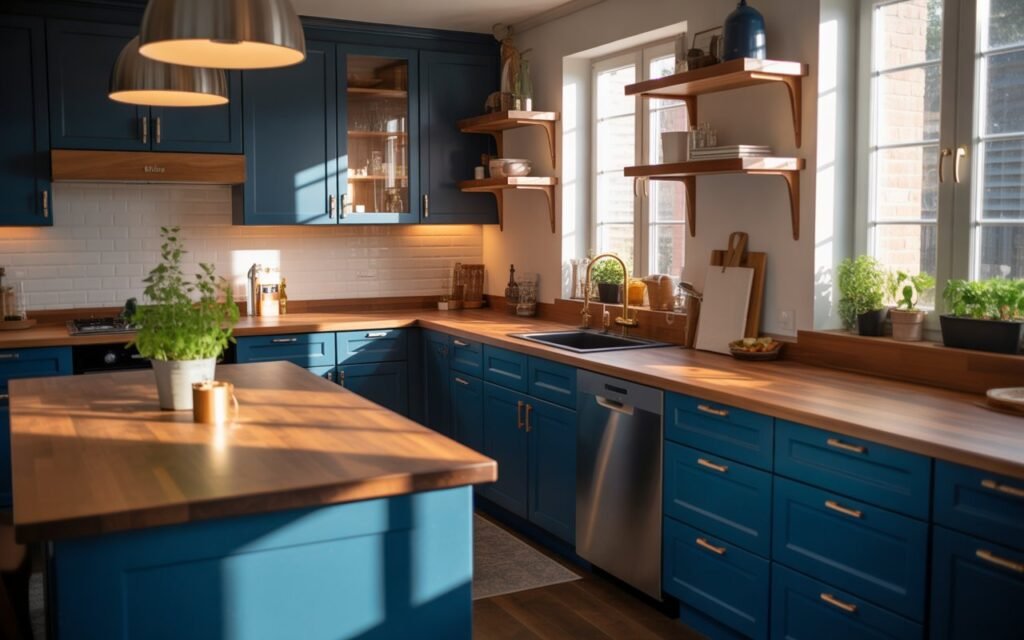
Wood adds warmth and prevents blue from feeling too cold. This pairing creates a balanced, welcoming environment.
Best used in:
- Scandinavian kitchens
- Modern rustic spaces
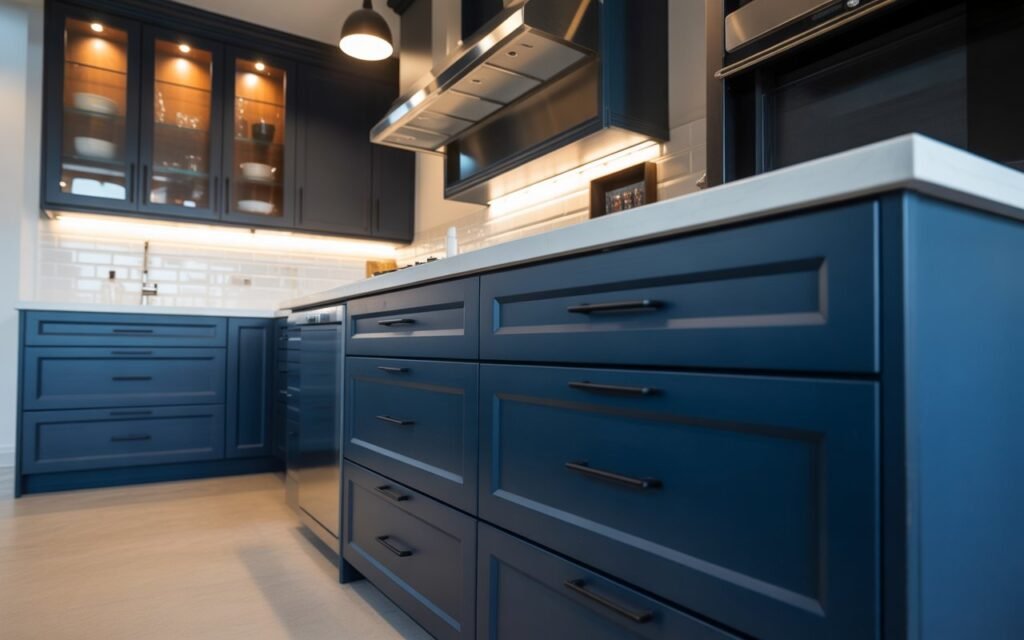
6. Deep Blue Cabinets With Black Details
For a bold and dramatic design, combine deep blue cabinets with black handles, faucets, and lighting.
Keep the rest of the palette minimal to avoid overpowering the space.
7. Coastal-Inspired Soft Blue Kitchen
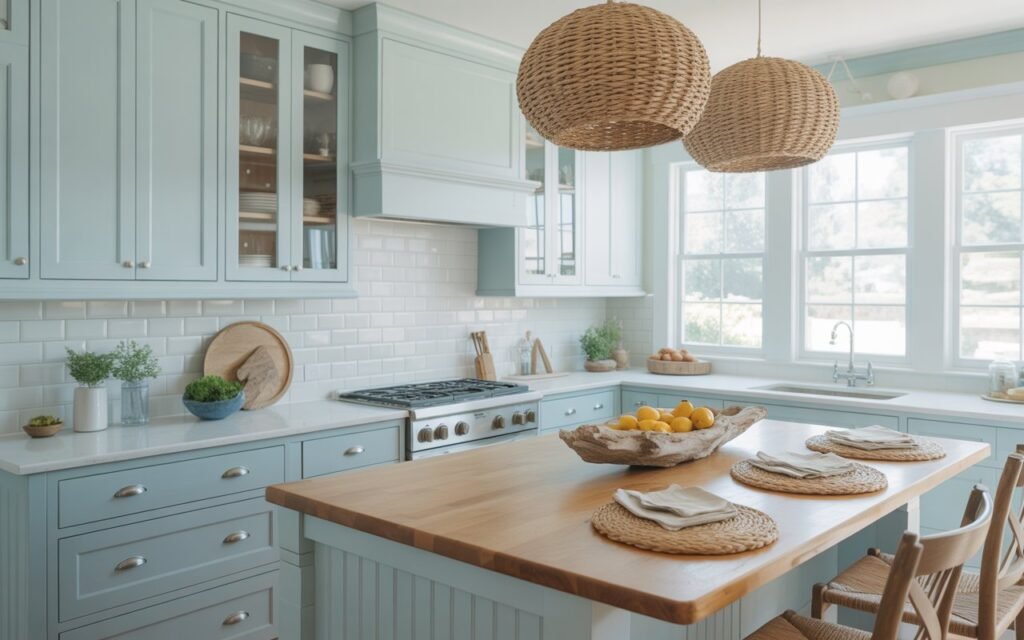
Pale blue tones combined with white and natural textures create a fresh, coastal feel.
Add elements like:
- Light wood
- Linen textures
- Simple decor
8. Blue Cabinets With Marble Surfaces
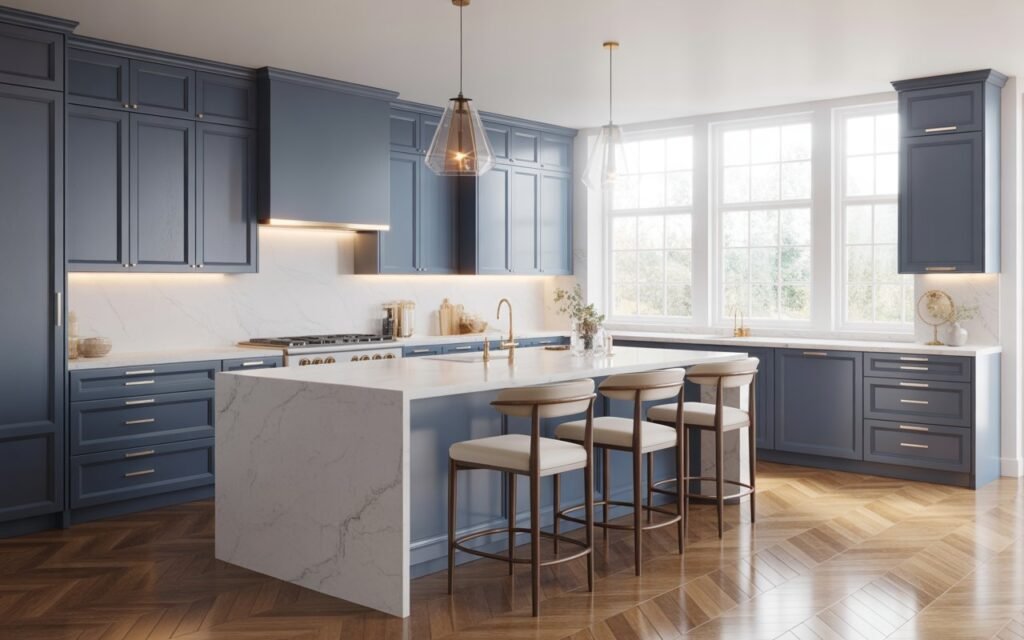
Marble enhances the elegance of blue cabinets while keeping the kitchen bright and refined.
9. Minimalist Blue Kitchen Design
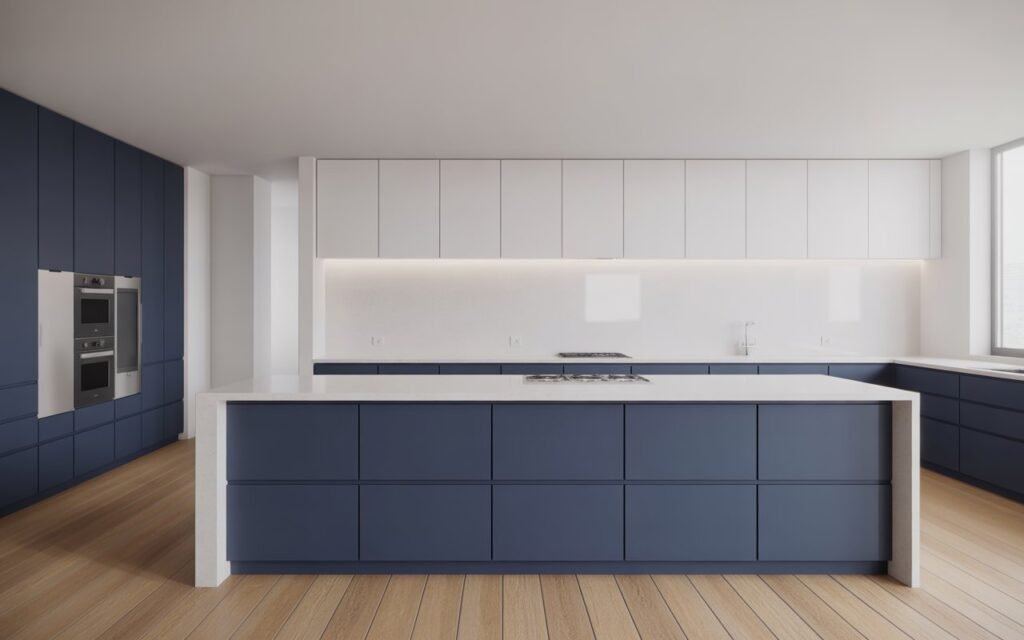
Reduce visual clutter by focusing on clean lines and limited decor. Let the cabinets be the focal point.
10. Blue Cabinets With Open Shelving
Open shelves break the visual weight of cabinets and make the kitchen feel more open.
Use them selectively to avoid clutter.
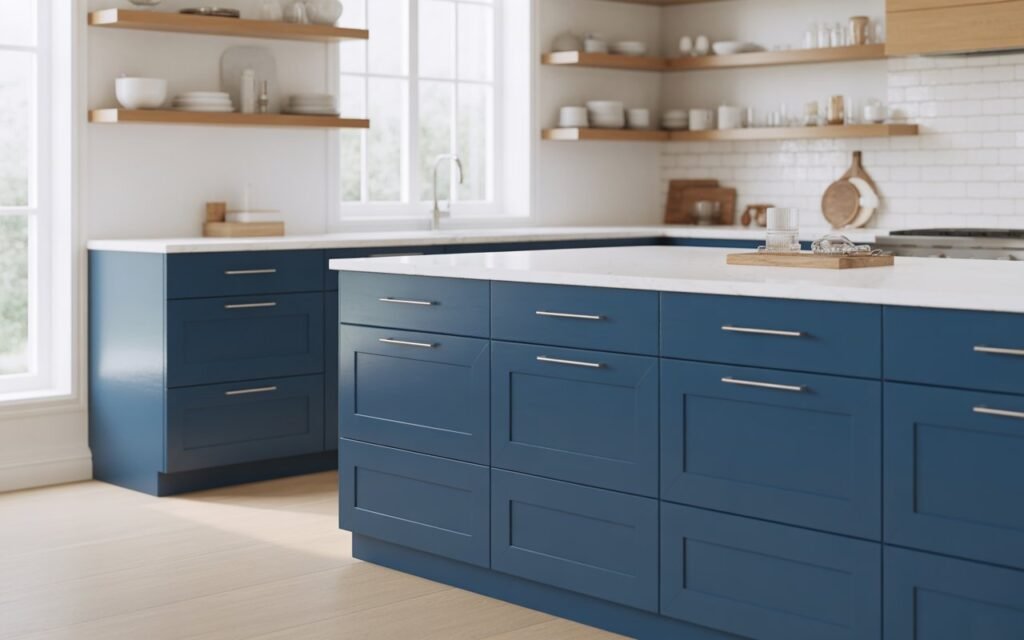
11. Glossy Blue Cabinets for Light Reflection
Glossy finishes reflect light, making them ideal for darker kitchens.
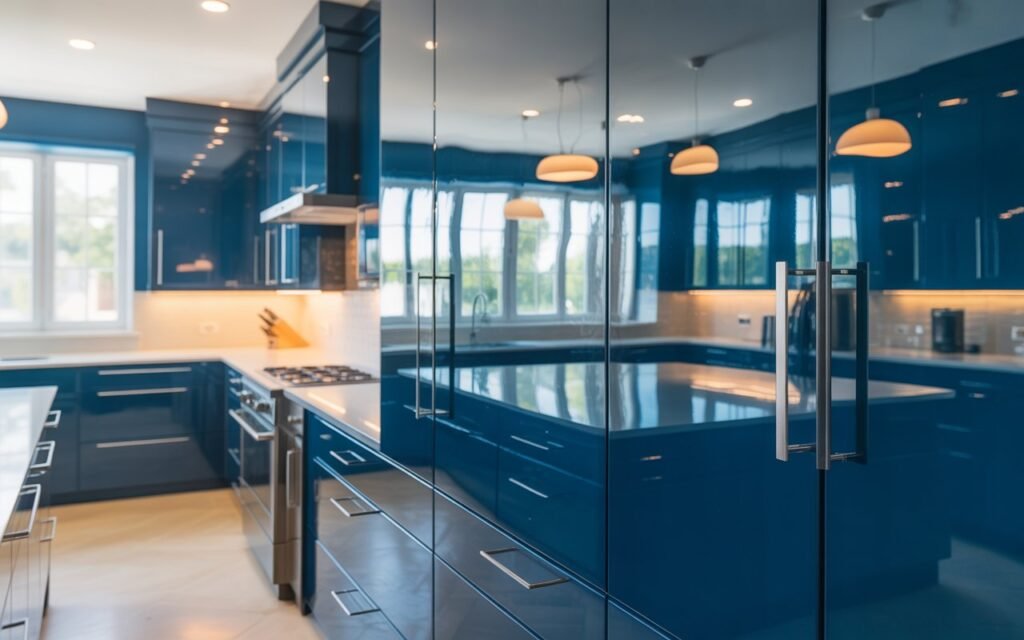
12. Patterned Backsplash for Subtle Interest
A soft patterned backsplash can add texture without overwhelming the design.
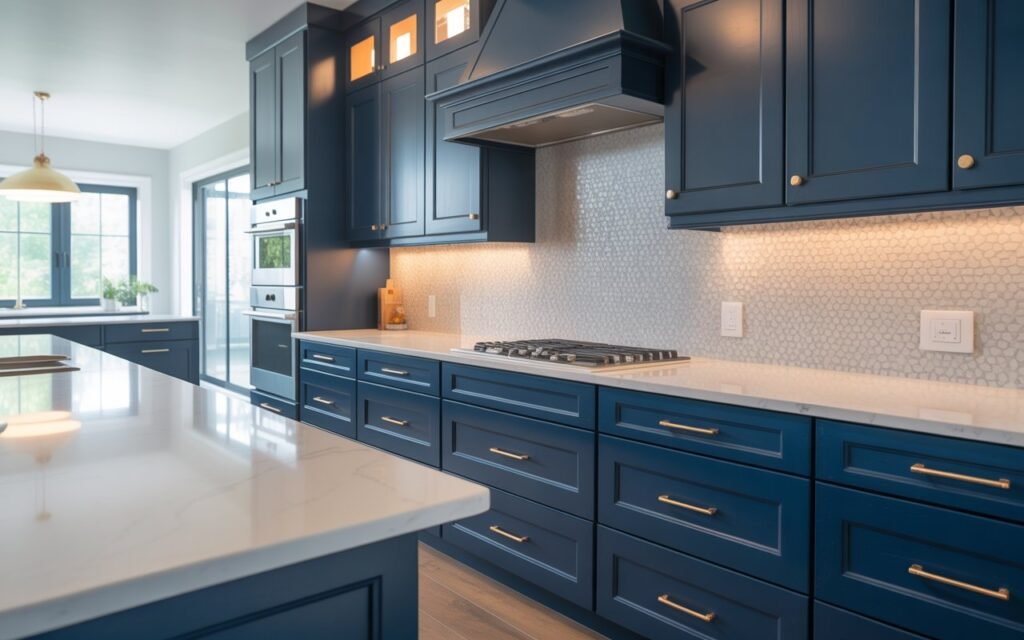
13. Teal Blue Cabinets for Depth and Character
Teal introduces a richer, more unique tone compared to standard blue. It works well in both modern and eclectic designs.
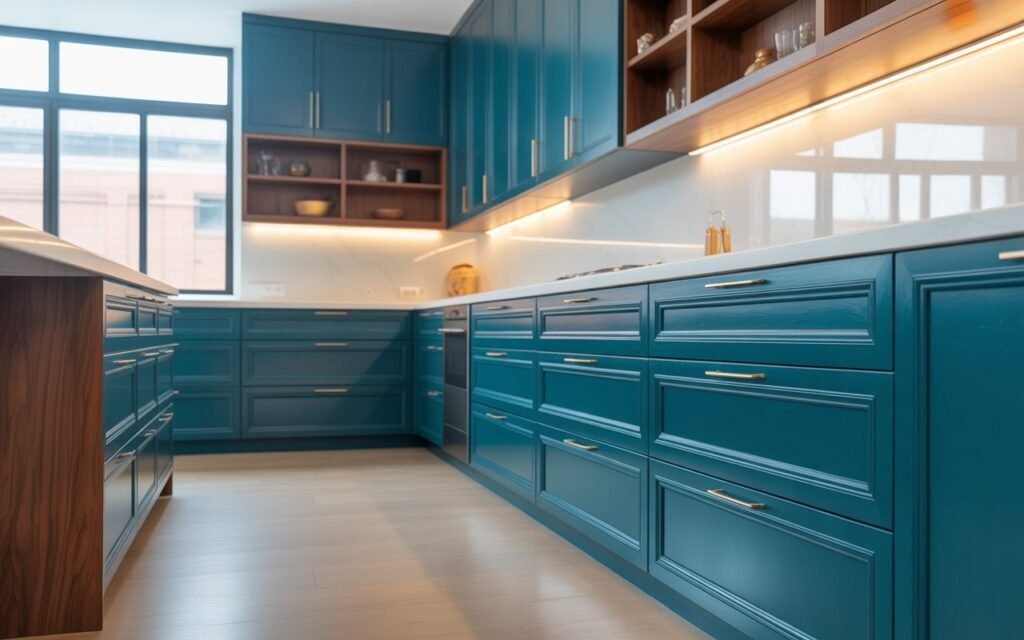
14. Smart Design for Small Kitchens
In compact spaces:
- Use lighter shades
- Keep layout simple
- Avoid heavy hardware
This prevents the kitchen from feeling crowded.
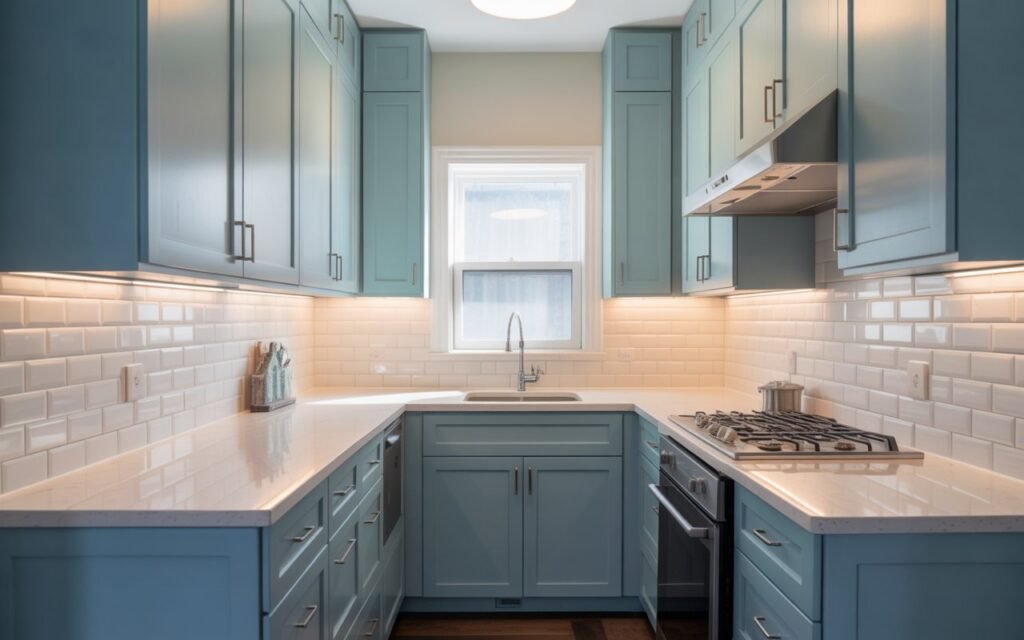
15. Blue Cabinets With Warm Lighting
Lighting can completely change how blue looks. Warm lighting enhances richness, while cool lighting can make it appear flat.
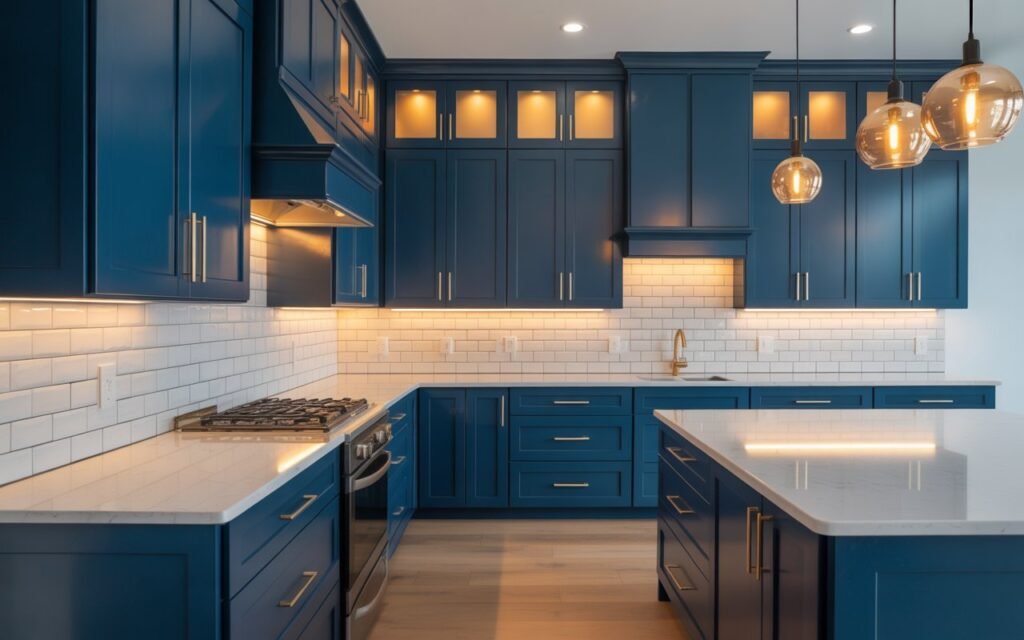
16. Handleless Cabinets for a Clean Finish
Handleless designs create a seamless, modern look and reduce visual clutter.
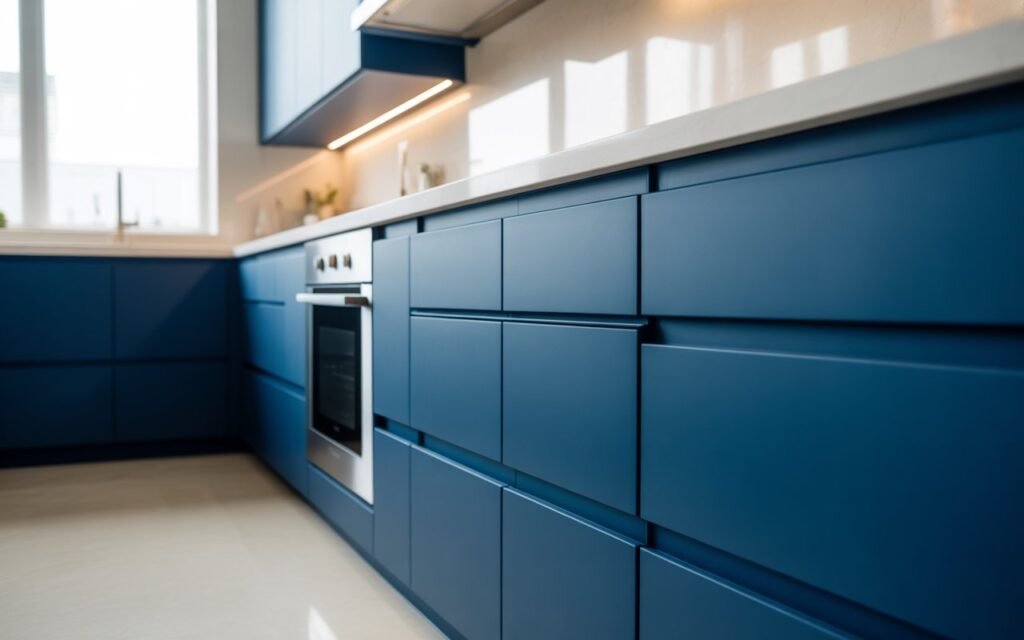
17. Balanced Color Scheme Approach
A successful kitchen follows a clear structure:
- Blue cabinets as the main feature
- Neutral tones for balance
- Subtle accents for contrast
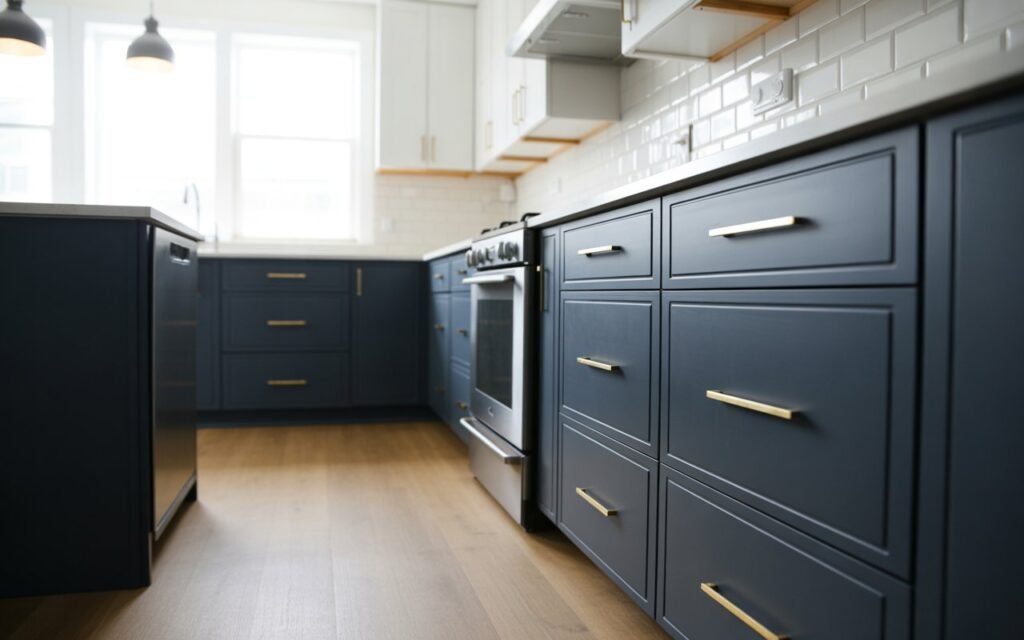
Advanced Styling Tips
- Always test paint samples in different lighting conditions
- Use contrast carefully—too much dark can feel heavy
- Combine textures instead of adding more colors
- Keep hardware consistent across the space
Common Mistakes to Avoid
- Choosing a shade without testing lighting
- Mixing too many finishes
- Ignoring countertop compatibility
- Over-decorating the space
Conclusion
Blue kitchen cabinets continue to stand out as one of the most adaptable and enduring choices in modern interior design. Their strength lies in their flexibility—able to shift from bold and dramatic to soft and calming depending on how they are styled. This versatility allows homeowners to create a kitchen that reflects both personal taste and practical needs.
The most successful designs are those that focus on balance. When blue cabinets are paired thoughtfully with the right materials, lighting, and textures, they create a cohesive environment that feels both intentional and inviting. Every detail, from hardware to backsplash, contributes to the overall harmony of the space.
In the long run, a well-planned blue kitchen is not just visually appealing—it is functional, comfortable, and timeless. By making informed choices and avoiding common mistakes, you can create a kitchen that remains stylish and relevant for years to come.