Introduction
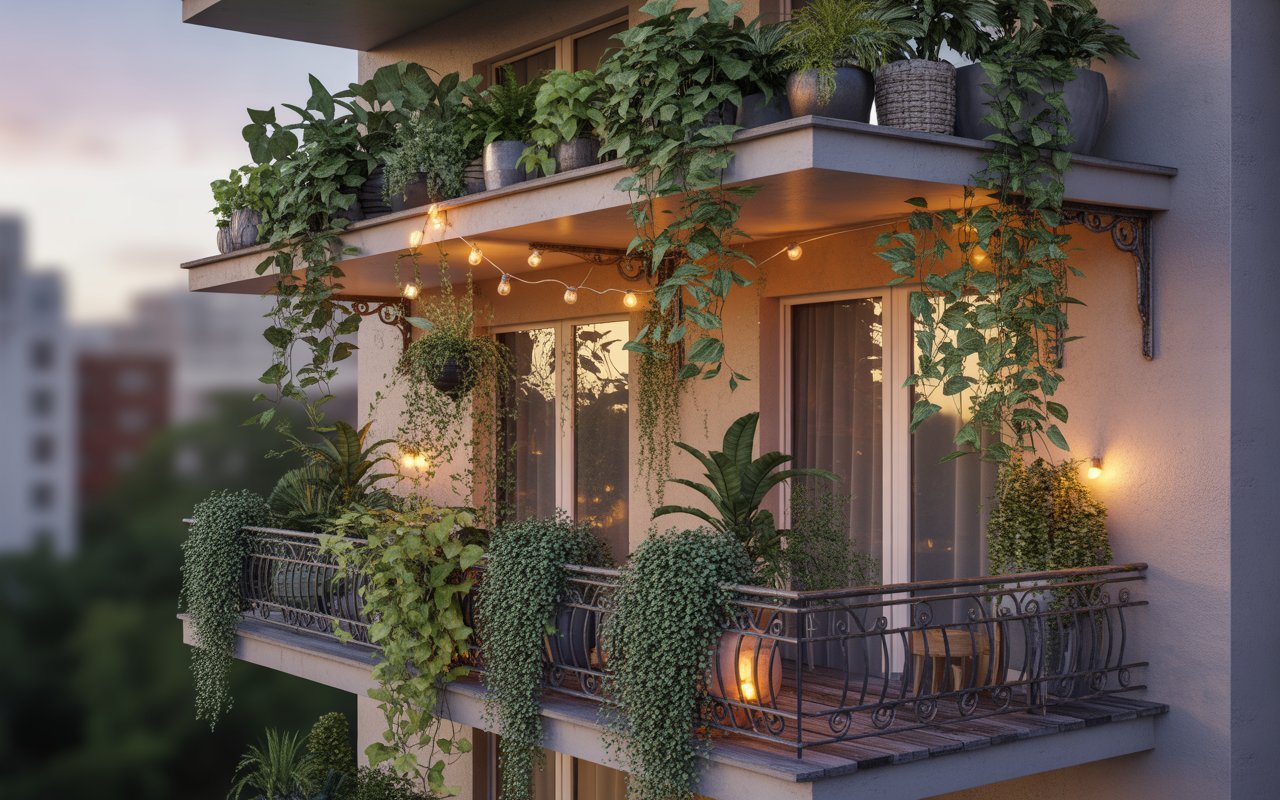
A small balcony or apartment patio is often treated as leftover space—too narrow to decorate and too exposed to feel comfortable. But the limitation is not the size; it is the lack of structure. When a compact outdoor space is designed intentionally, it can function like a private retreat, a morning coffee spot, or even a quiet evening lounge.
A successful small patio idea for an apartment is built on three principles: controlled layout, vertical utilization, and atmosphere. Instead of trying to fit everything, the goal is to define a clear purpose and support it with carefully selected elements. When lighting, seating, and textures are layered correctly, even the smallest balcony can feel complete.
The following ideas go beyond decoration. They focus on spatial efficiency, comfort, and creating a visually calm environment that feels larger than it actually is.
1. Use Foldable Furniture to Maintain Flexibility
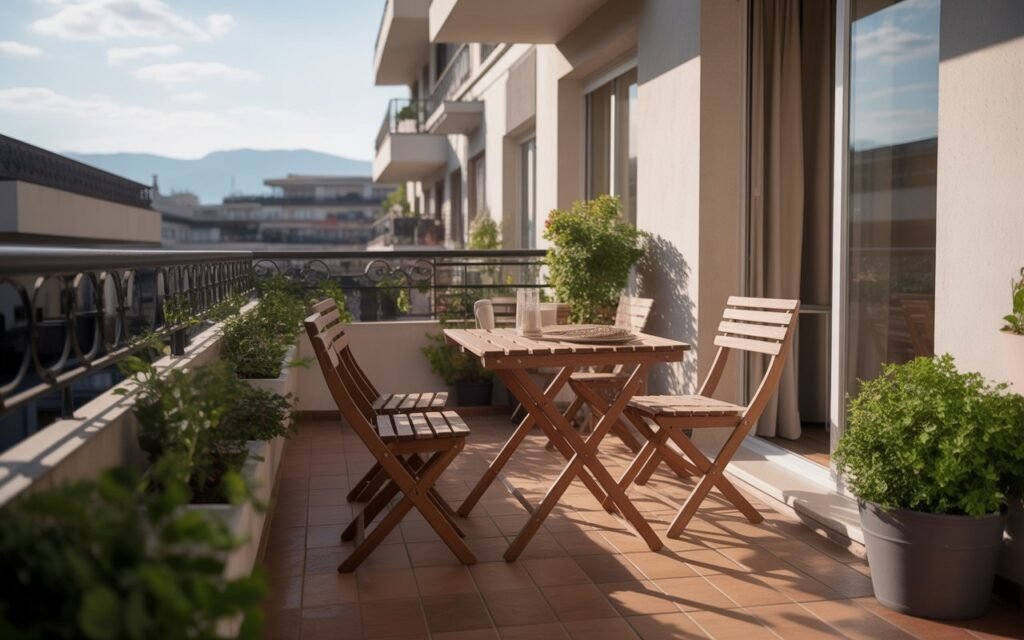
In a tight balcony, permanent furniture can quickly dominate the entire area. Foldable pieces allow the space to adapt throughout the day.
Why it works: It preserves open space when needed.
How to use: Choose slim-profile chairs and a collapsible table that can be stored vertically.
2. Build a Vertical Green Wall Instead of Floor Clutter
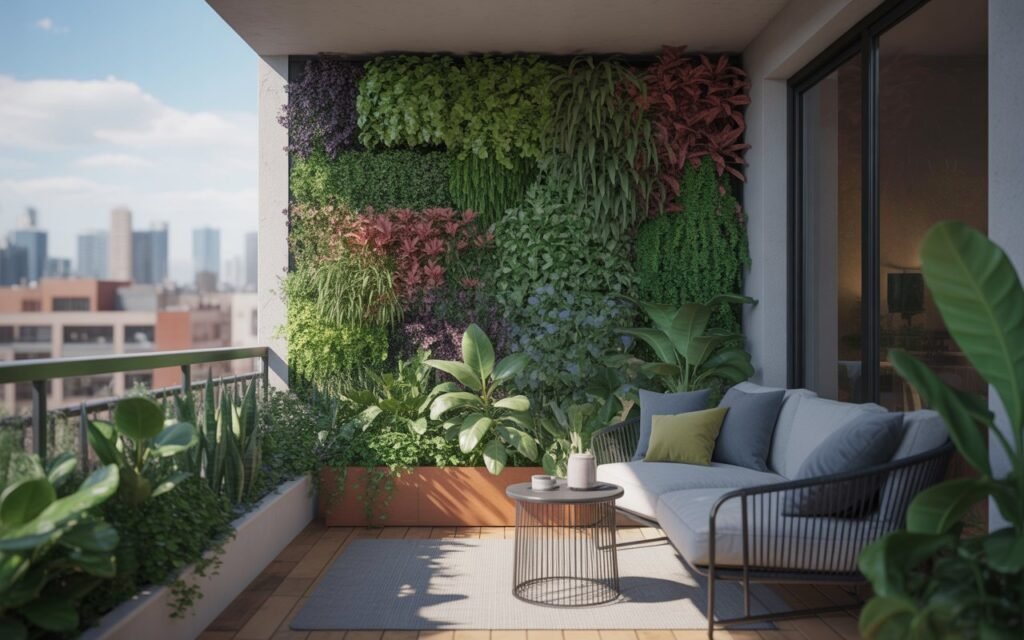
Plants are essential for a cozy balcony, but placing them on the floor reduces usable space.
Why it works: Vertical greenery adds life without sacrificing movement.
How to use: Combine wall-mounted planters, railing pots, and hanging vines to create layers.
3. Create Depth with Layered String Lighting
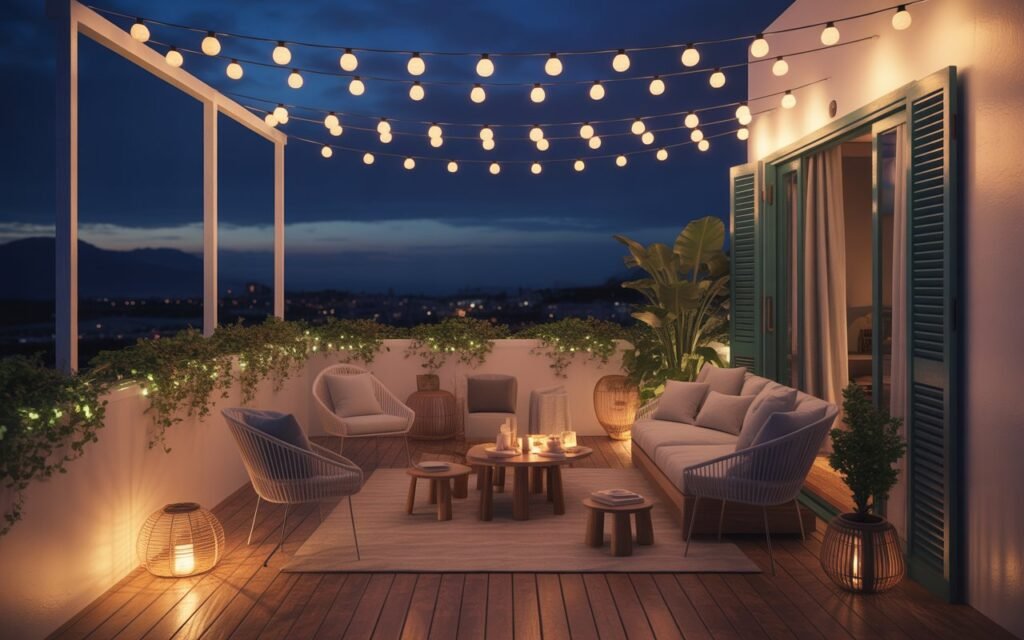
Lighting should not be a single source. Layering soft lights builds atmosphere and visual depth.
Why it works: It transforms the balcony at night into a warm, inviting zone.
How to use: Combine string lights with subtle corner lamps or lanterns.
4. Define a Functional Seating Zone with Compact Furniture
Even the smallest balcony benefits from a clear seating arrangement.
Why it works: It gives purpose to the space instead of making it decorative only.
How to use: Use a small bistro set or a single chair with a side table.
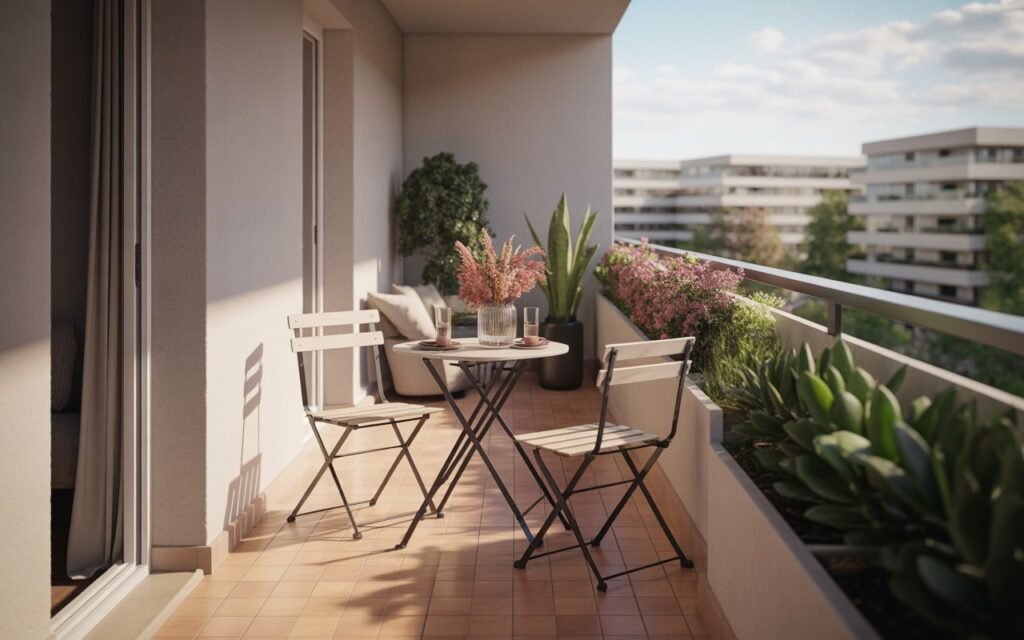
5. Switch to Floor Seating for a Softer, Relaxed Layout
Low seating reduces visual bulk and makes the space feel more open.
Why it works: It lowers the visual horizon, making the balcony feel larger.
How to use: Use layered cushions, throws, and a low platform if possible.
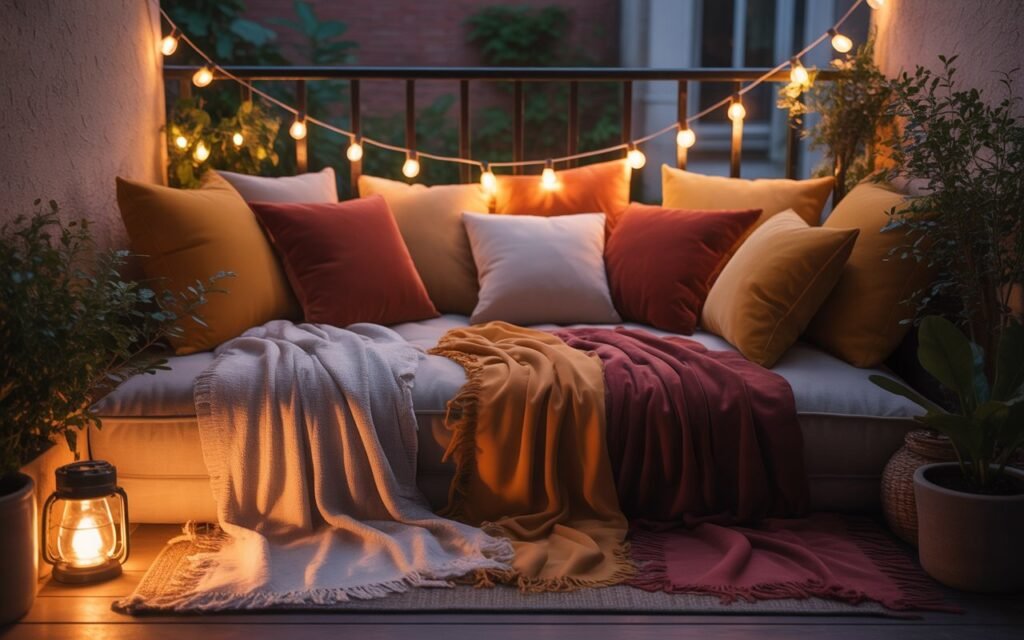
6. Anchor the Space with a Weather-Resistant Rug
A rug visually organizes the balcony and separates it from the surrounding structure.
Why it works: It creates the feeling of an outdoor room.
How to use: Choose neutral tones with subtle texture to avoid visual overload.
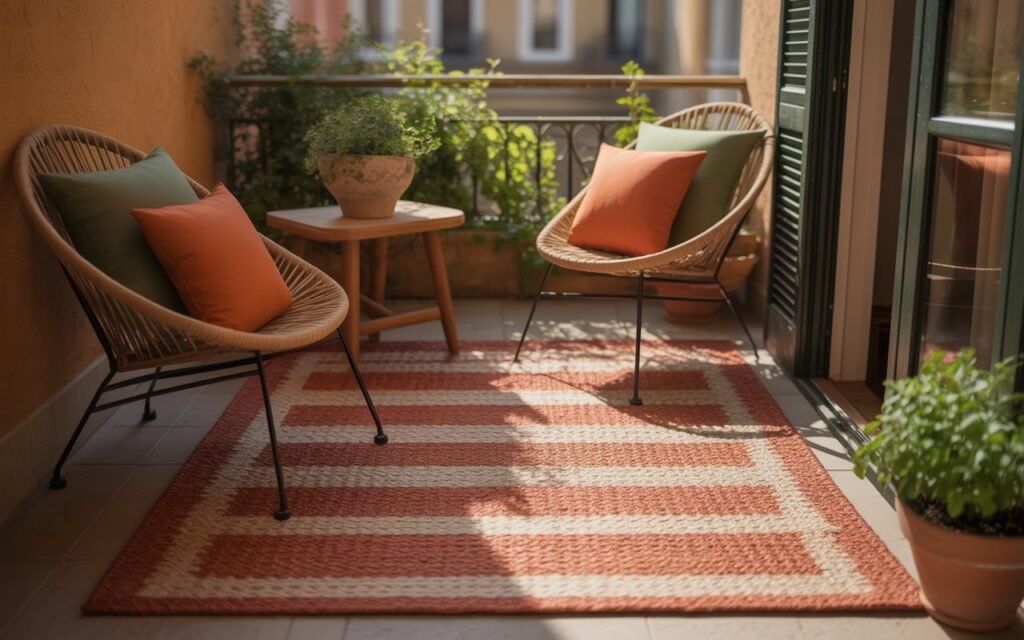
7. Add Privacy Layers Without Blocking Light
Balconies often feel exposed, which reduces comfort.
Why it works: Privacy improves relaxation without needing major structural changes.
How to use: Use bamboo screens, sheer curtains, or tall plants.
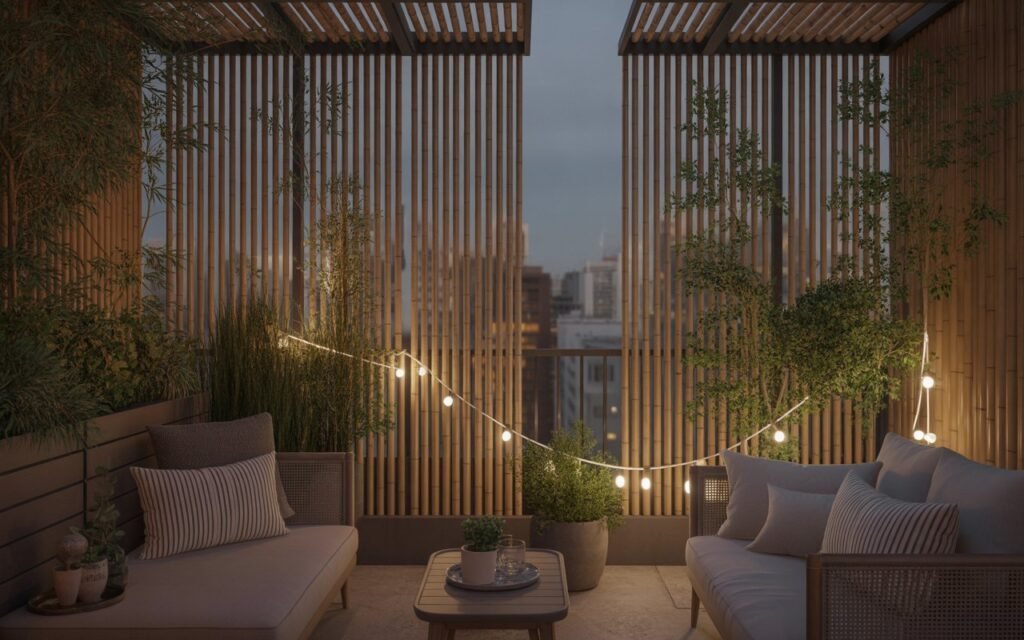
8. Design Around Corners to Maximize Movement
Corners are often underused but highly valuable in small layouts.
Why it works: It frees up the central walking space.
How to use: Place seating or tall plants in corners instead of the middle.
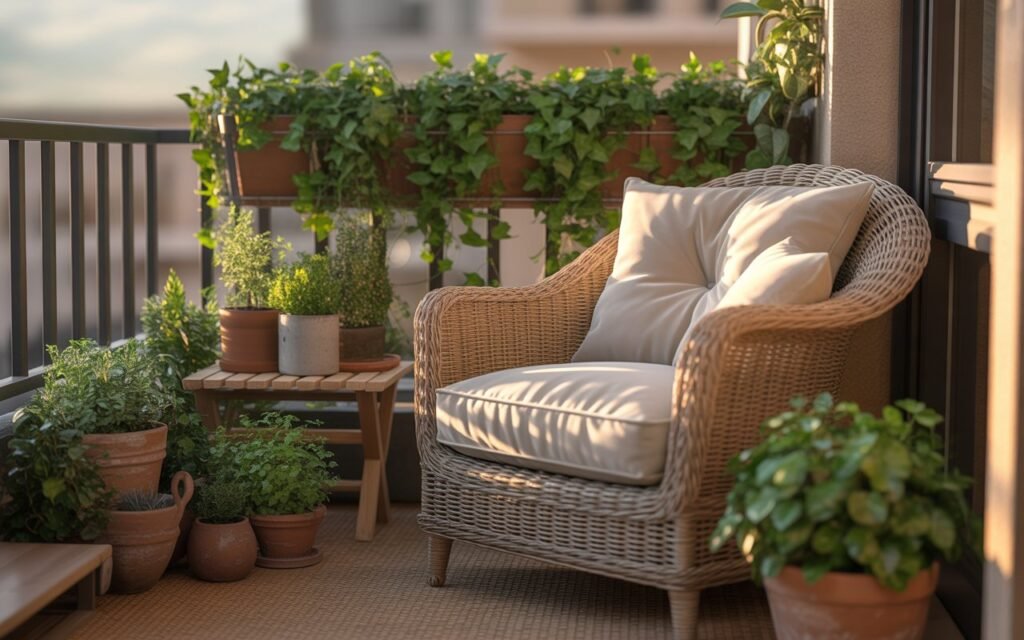
9. Use Multi-Functional Pieces to Reduce Clutter
Every item should justify its presence in a small space.
Why it works: It minimizes the number of objects needed.
How to use: Opt for benches with storage or tables that double as shelves.
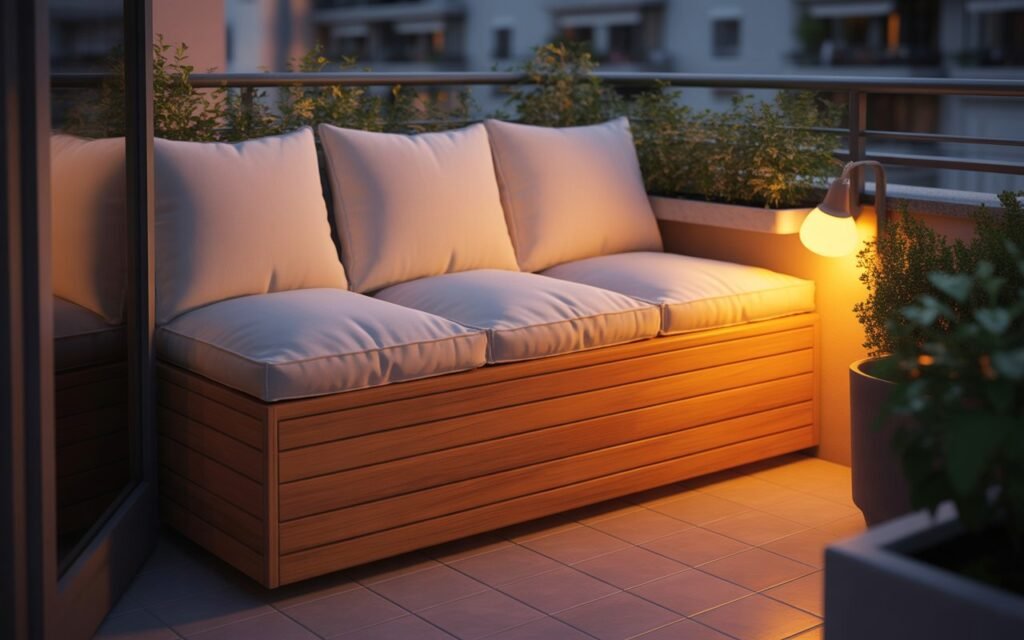
10. Keep the Decor Intentional and Limited
Over-decoration makes small spaces feel chaotic.
Why it works: Simplicity enhances visual calm.
How to use: Focus on a few strong elements instead of many small ones.
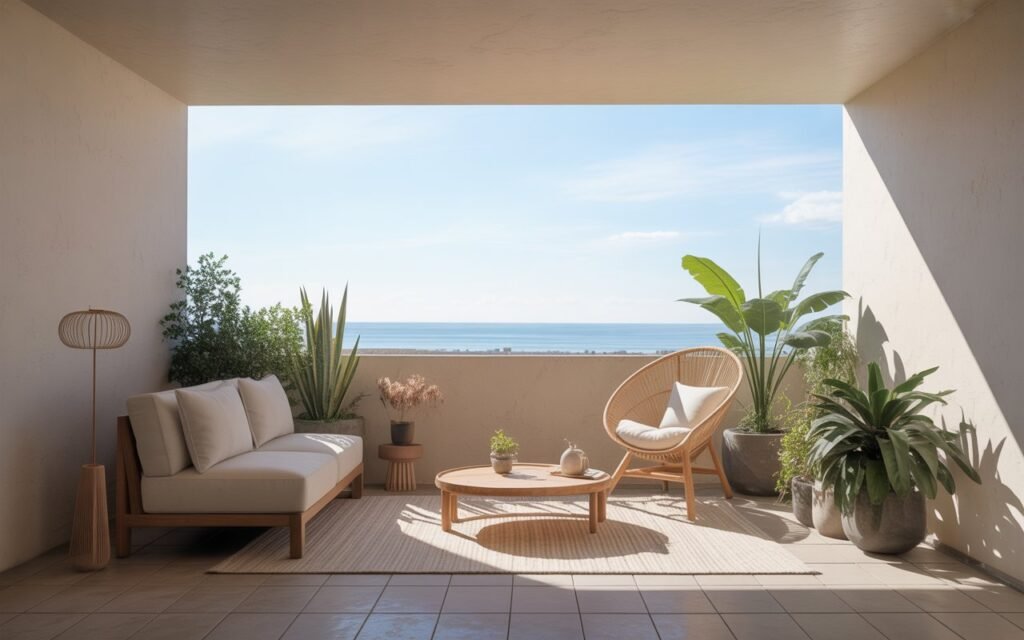
11. Draw the Eye Upward with Hanging Elements
Vertical styling shifts focus away from limited floor space.
Why it works: It creates a sense of height and openness.
How to use: Hang lights, plants, or subtle decor from above.
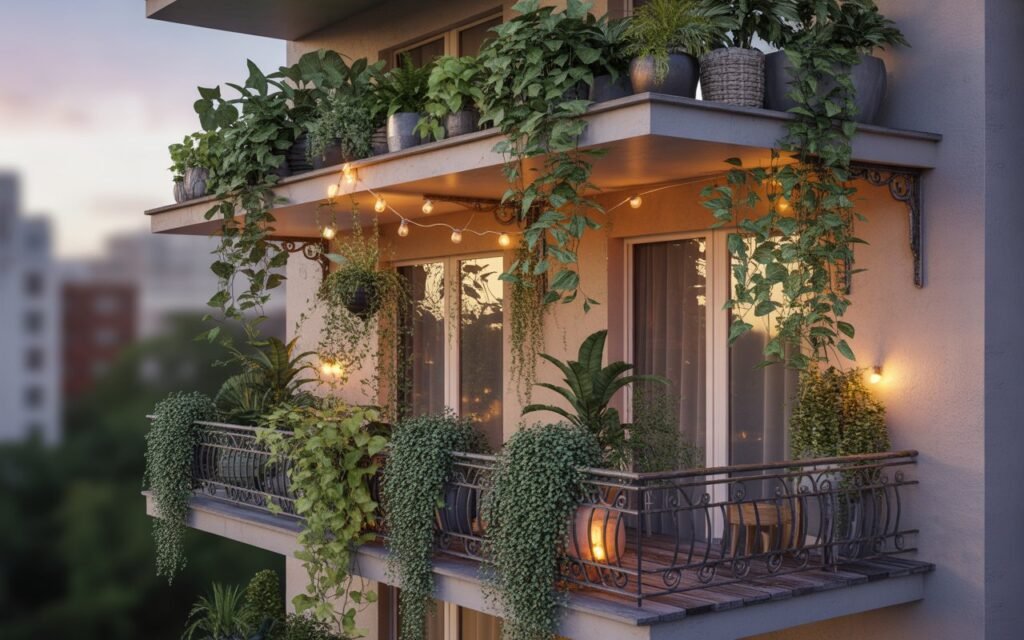
12. Use a Cohesive Neutral Color Palette
Color consistency plays a major role in perceived space.
Why it works: It reduces visual breaks and makes the area feel unified.
How to use: Stick to soft tones like beige, white, and muted greens.
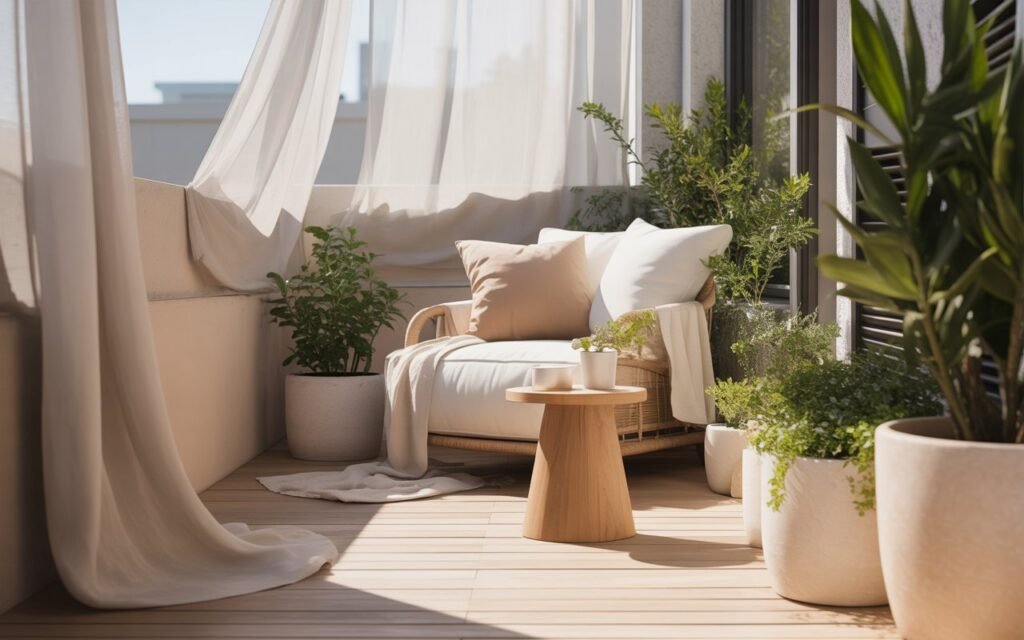
13. Add a Slim Surface for Everyday Use
A small table significantly improves usability.
Why it works: It supports daily activities like coffee or reading.
How to use: Choose narrow or foldable designs.
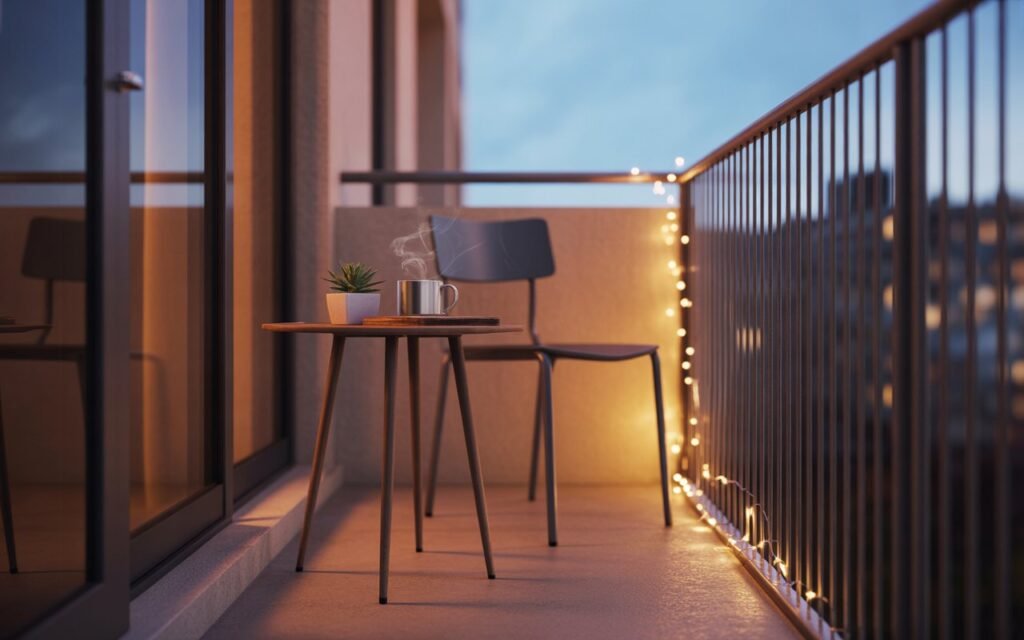
14. Combine Soft Lighting Sources for Evening Comfort
Relying only on overhead or harsh lighting reduces the atmosphere.
Why it works: Layered lighting creates depth and warmth.
How to use: Mix lanterns, candles, and low-intensity bulbs.
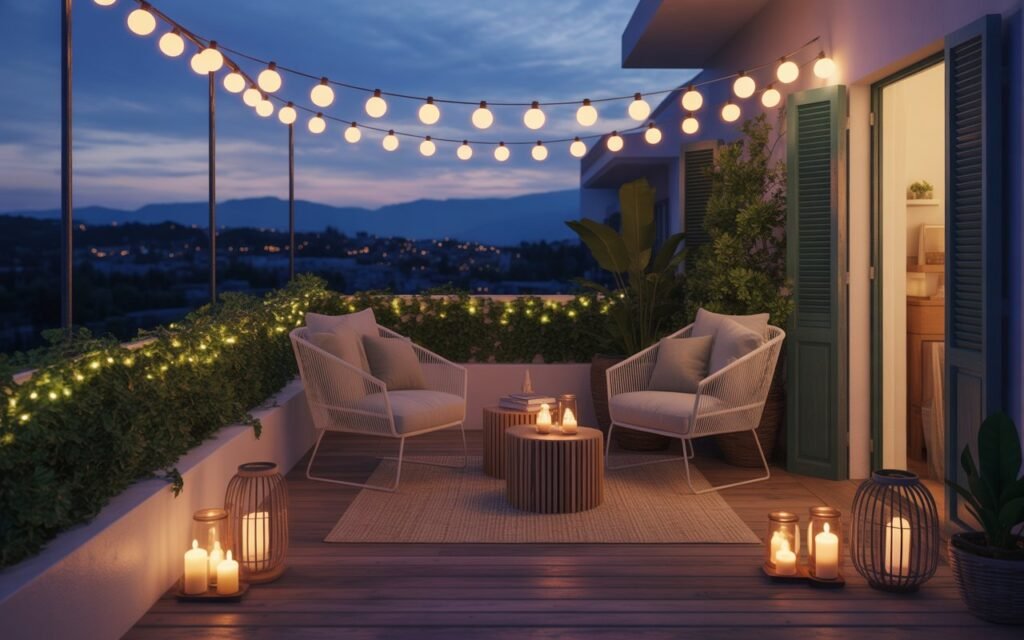
15. Create One Defined Cozy Corner Instead of Filling Everything
A small balcony does not need multiple zones—it needs one strong one.
Why it works: Focus improves both design and usability.
How to use: Combine seating, lighting, and texture into one corner setup.
Conclusion
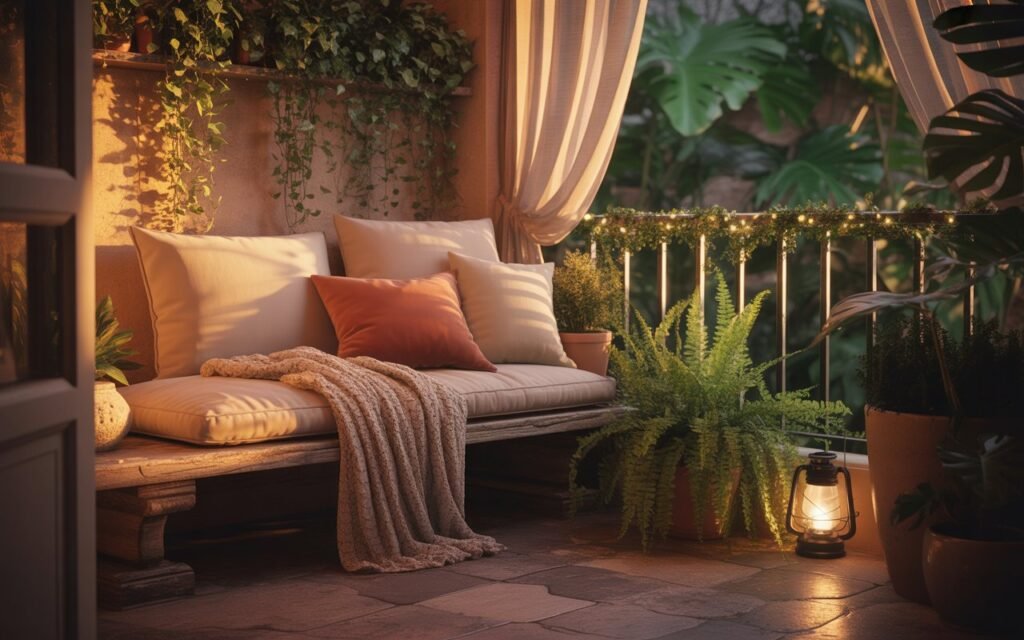
A well-designed small apartment patio or tiny balcony is not about maximizing quantity—it is about refining quality. When each element is selected with intention and placed strategically, even the most compact space can feel balanced and comfortable.
The most effective approach is to define a clear function, reduce unnecessary items, and use vertical space to your advantage. Lighting, in particular, plays a crucial role in transforming the atmosphere, especially during evening hours.
Over time, small adjustments—such as improving layout, upgrading lighting, or simplifying decor—can significantly enhance the experience. A balcony may be small in size, but when designed thoughtfully, it becomes one of the most valuable and enjoyable areas of the home.