Introduction
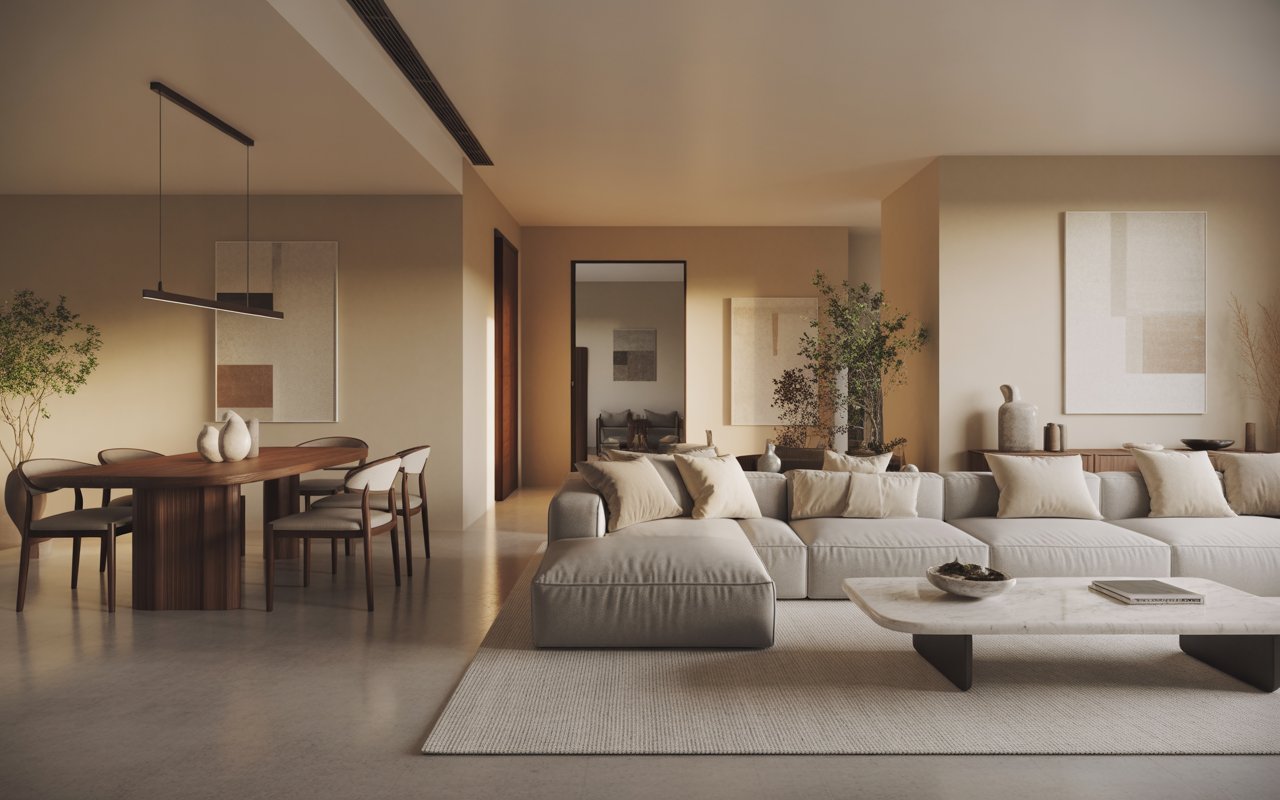
Designing an open layout living room dining room can be both exciting and challenging. While open-concept spaces create a sense of freedom and flow, they also require thoughtful planning to avoid looking cluttered or disconnected.
The key to a successful open layout is balance. You need to define each area clearly while maintaining a cohesive design that ties the entire space together. From furniture placement to lighting, every detail plays a role in shaping how the space feels and functions.
In this guide, you will find practical and design-focused ideas to help you create a space that feels organized, stylish, and perfectly balanced.
1. Define Zones with Area Rugs
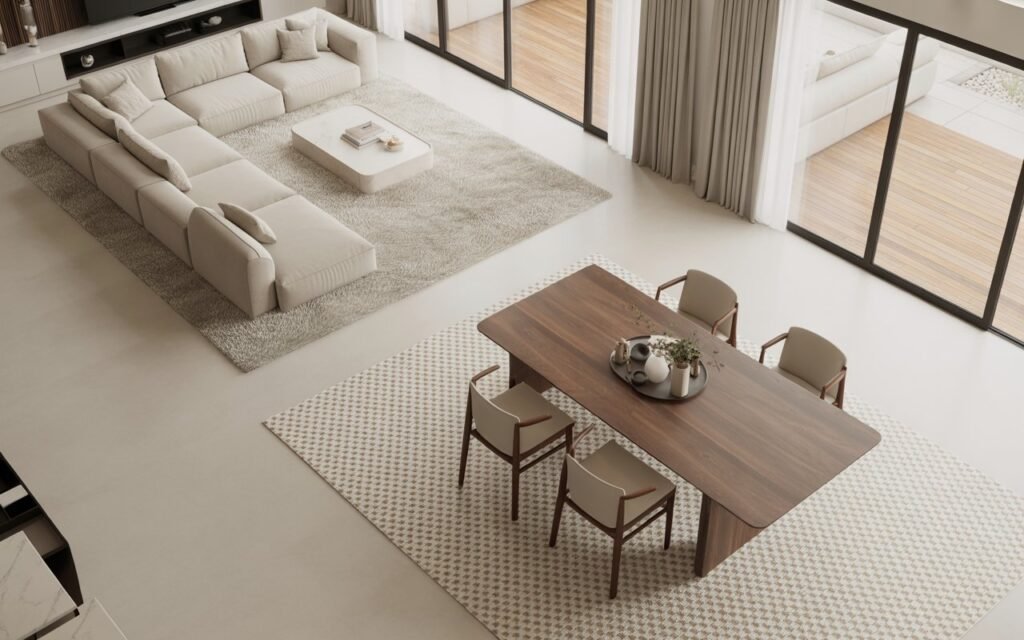
One of the simplest ways to structure an open layout living room dining room is by using rugs. A rug under the sofa defines the living area, while another under the dining table separates the dining space.
This creates visual boundaries without adding walls.
2. Use Consistent Color Palettes
A unified color scheme helps maintain harmony in an open layout. Choose two to three main colors and repeat them across both spaces.
This ensures that the living room and dining room feel connected rather than separate.
3. Arrange Furniture Strategically
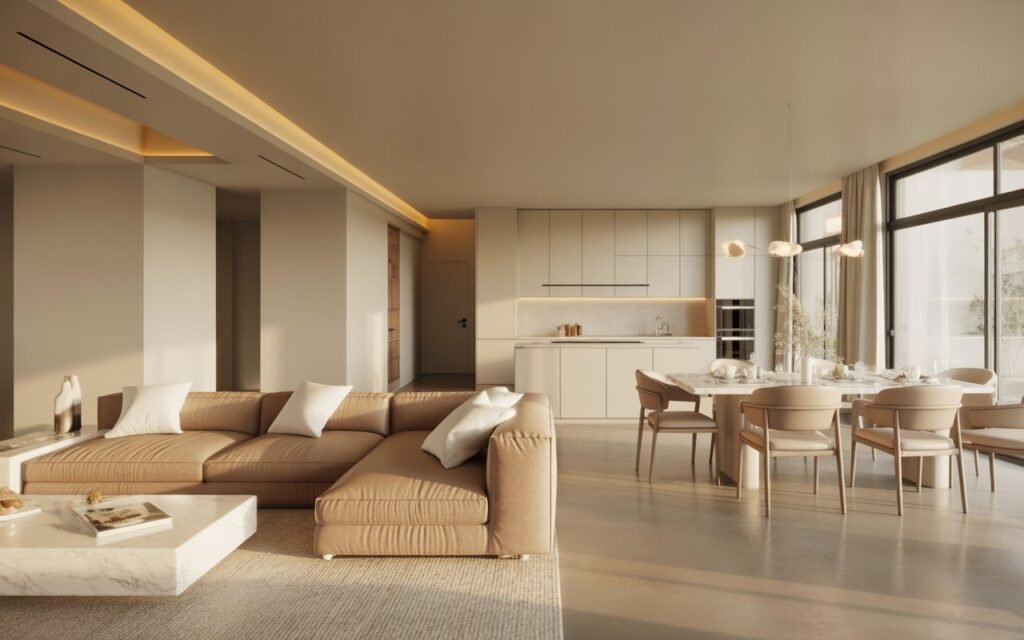
Furniture placement is critical in an open layout. Position sofas and chairs to naturally divide the space while keeping pathways clear.
Avoid pushing all furniture against walls, as this can make the space feel disconnected.
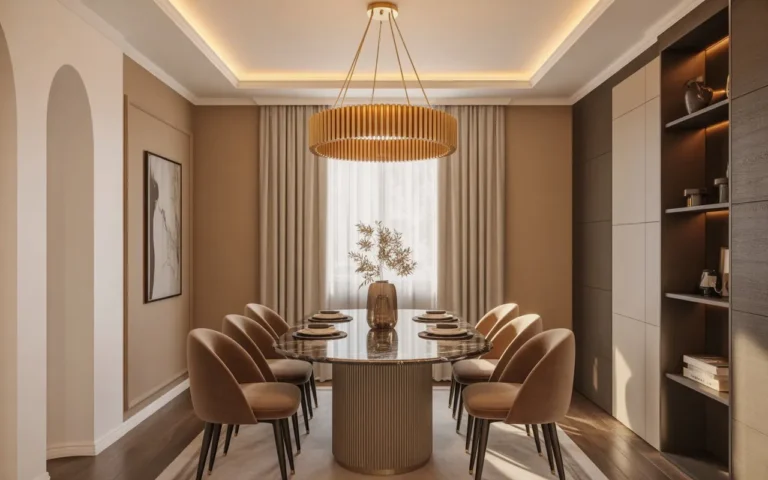
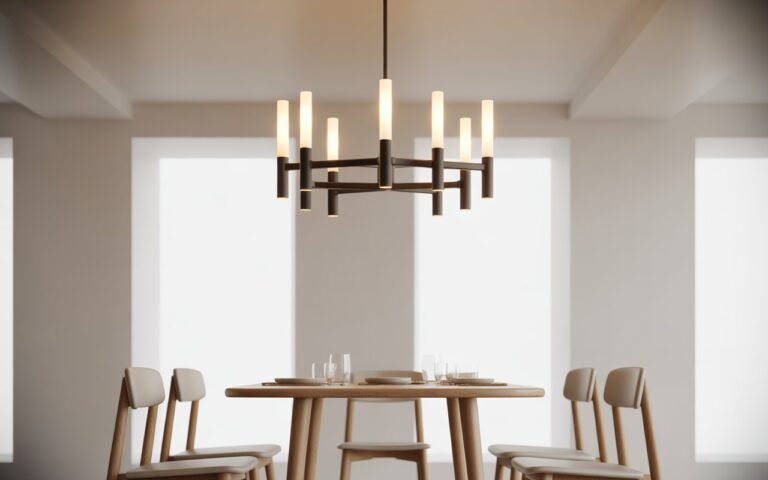
4. Add a Statement Lighting Fixture
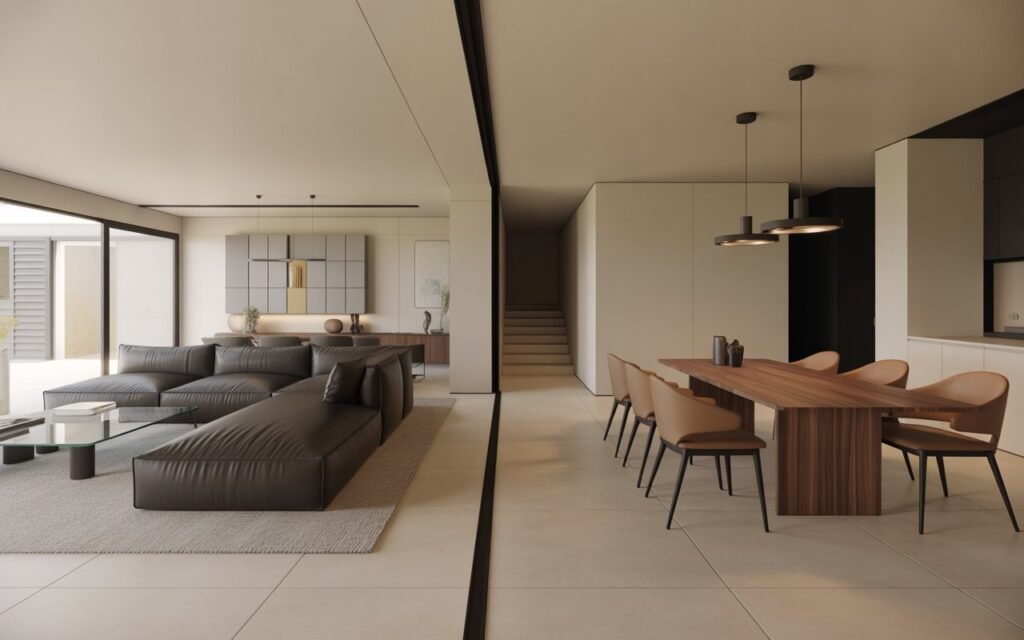
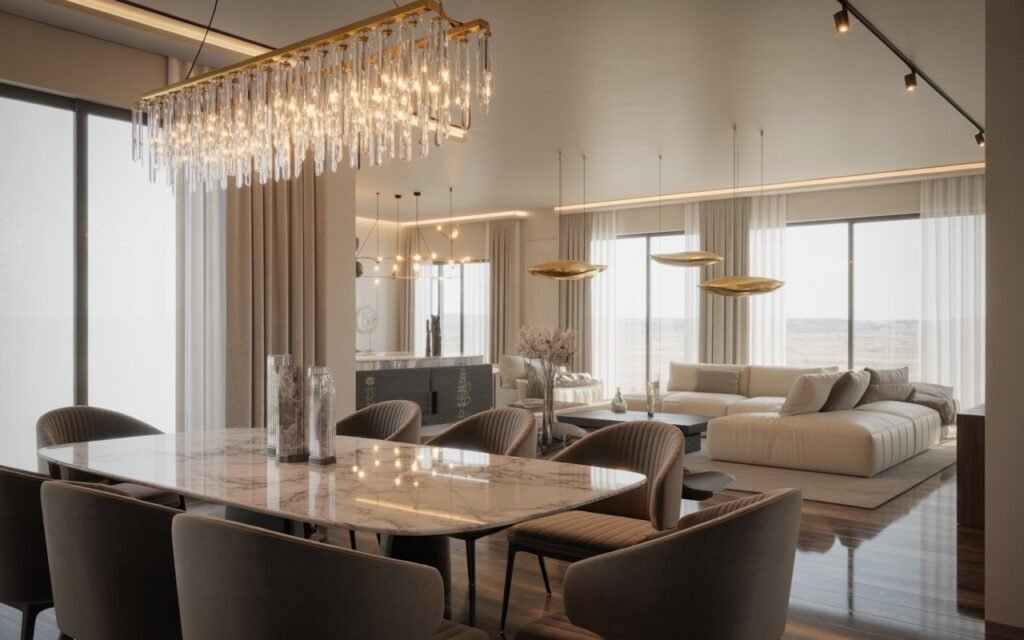
Lighting can act as a visual anchor. Use a chandelier above the dining table and a different fixture in the living area.
This helps define each zone while maintaining an overall cohesive design.
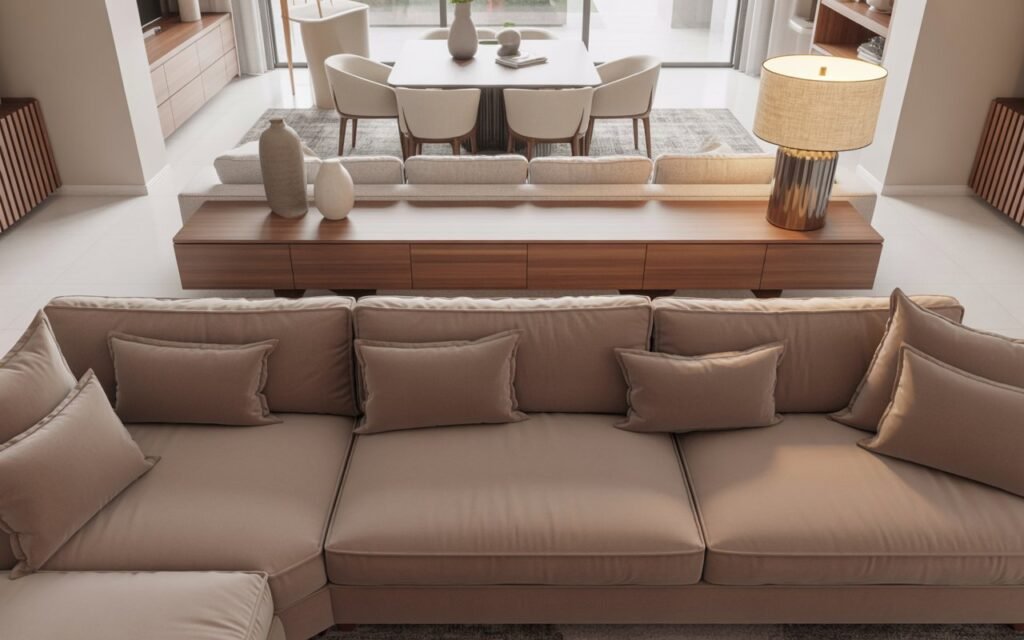
5. Use a Console Table as a Divider
A console table placed behind a sofa can subtly separate the living room from the dining area.
It also adds extra surface space for decor and storage.
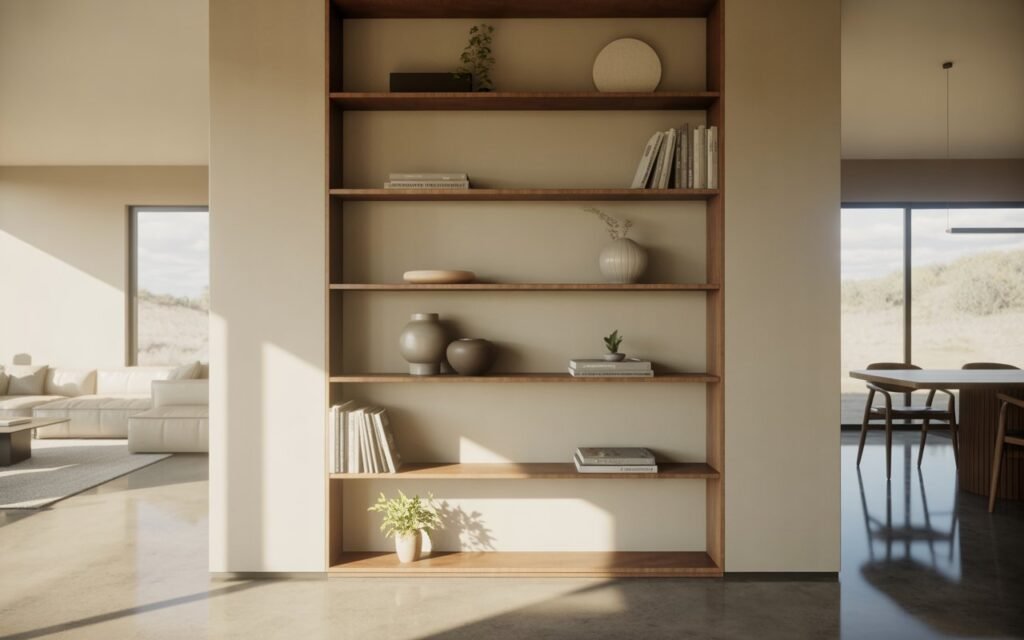
6. Incorporate Open Shelving
Open shelving units can act as partial dividers while still allowing light and visibility.
They also provide storage and display opportunities without making the space feel closed.
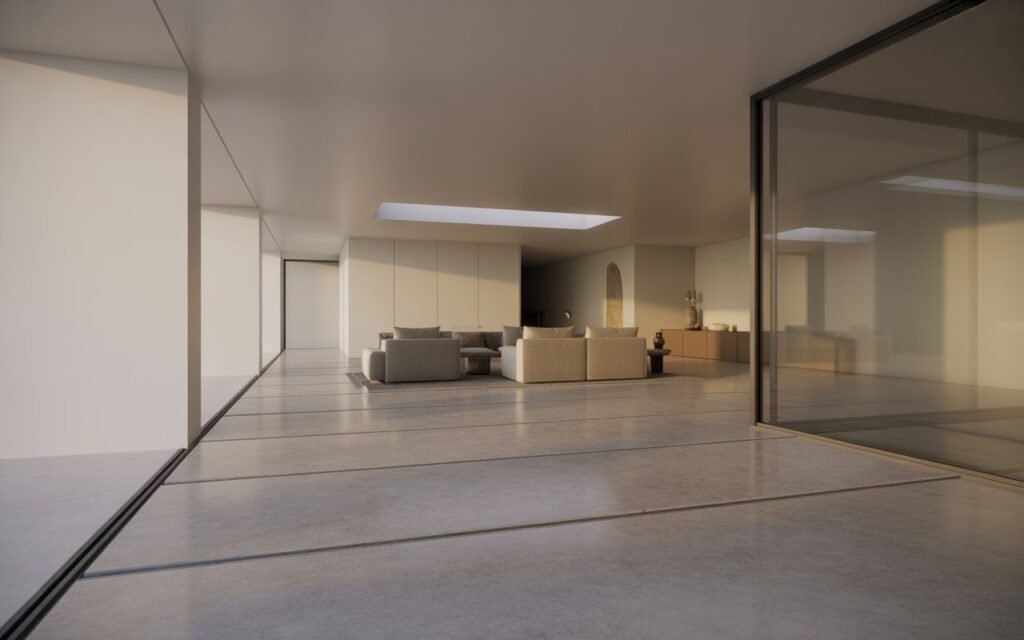
7. Maintain Clear Walkways
Flow is essential in an open layout living room dining room. Ensure there is enough space to move comfortably between areas.
Clear pathways make the space feel larger and more functional.
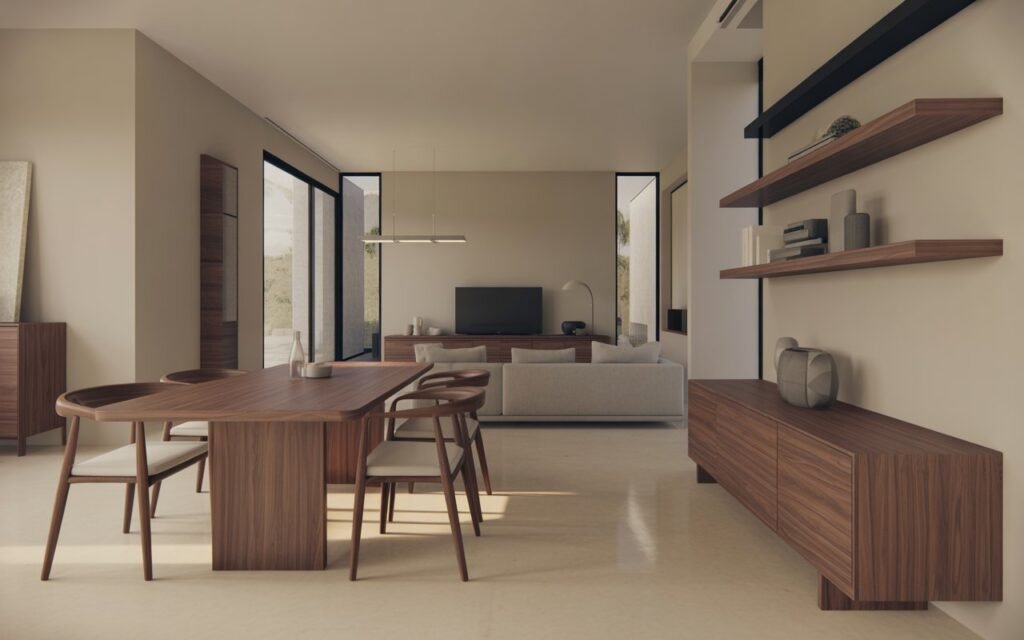
8. Use Matching Materials
Repeating materials like wood, metal, or glass across both areas creates visual continuity.
For example, a wooden dining table paired with a similar wood-tone coffee table ties the space together.
9. Create a Focal Point
Each zone should have its own focal point. In the living area, it could be a sofa or TV wall, while in the dining area, it might be the table or lighting fixture.
This helps organize the visual hierarchy.
10. Use Different Textures
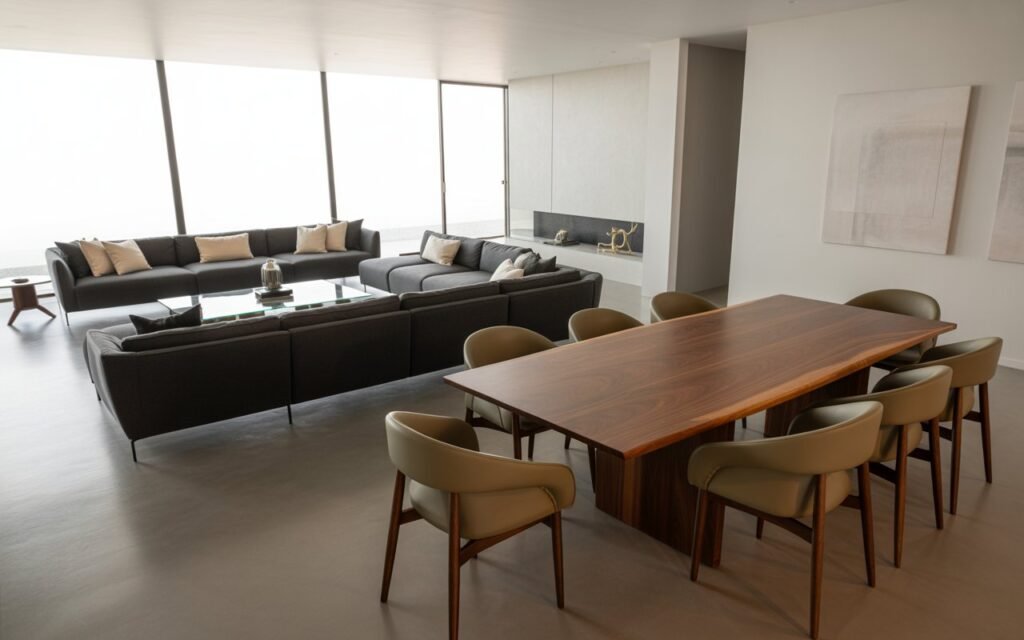
Mixing textures adds depth without overwhelming the space. Combine soft fabrics, natural wood, and smooth surfaces.
This enhances the overall design while maintaining balance.
11. Keep Furniture Proportional
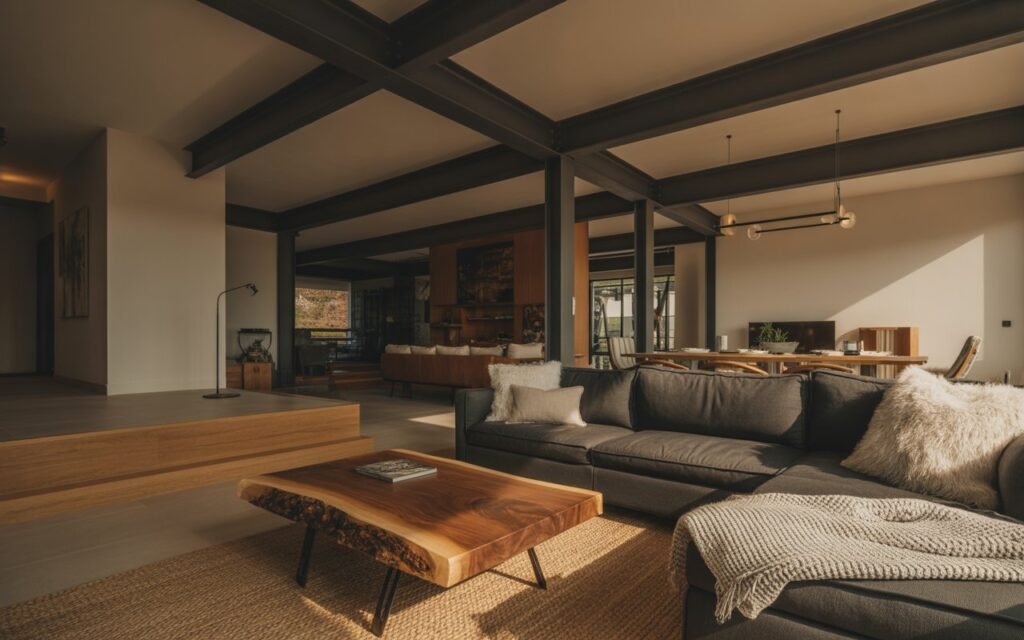
Avoid oversized furniture in small open layouts. Choose pieces that fit the scale of the room.
Balanced proportions prevent the space from feeling cramped.
12. Add Plants for Natural Flow
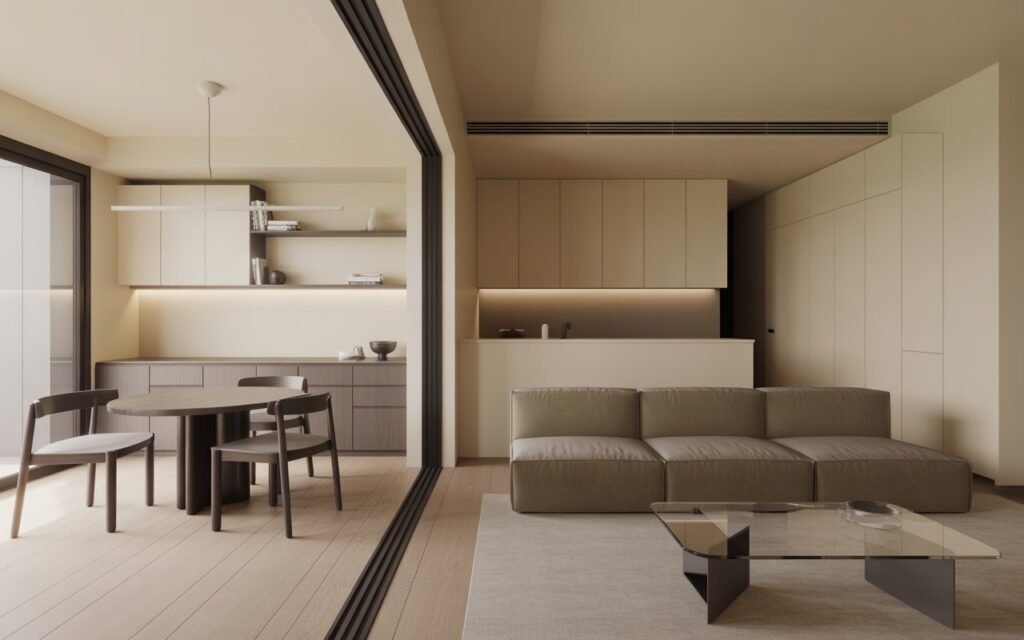
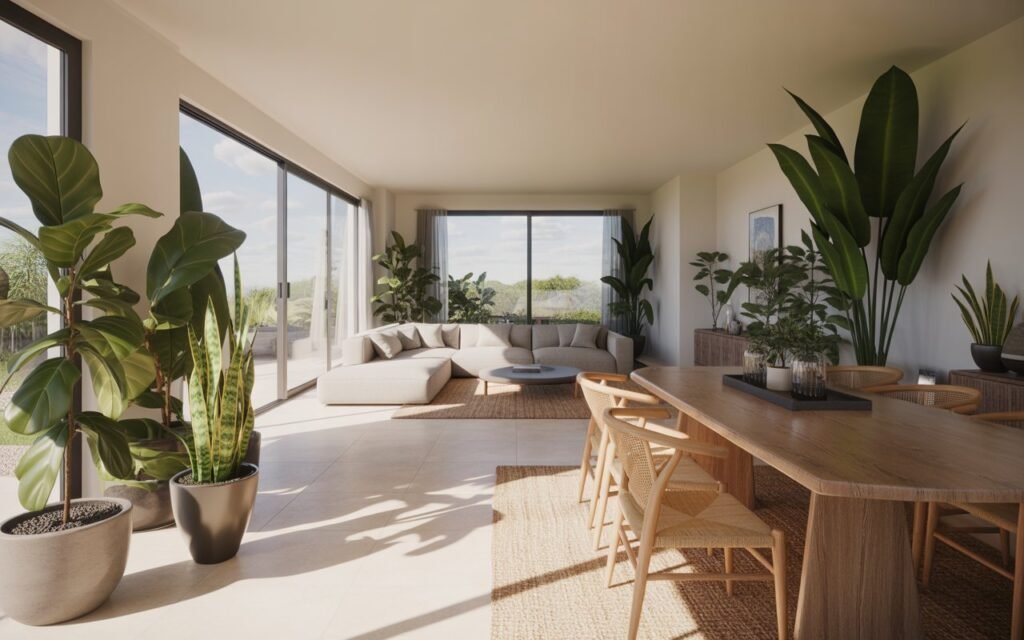
Plants can connect different areas in a subtle way. Place greenery near transitions between spaces to soften boundaries.
This adds freshness and continuity.
13. Use a Half Wall or Divider
A partial divider, such as a half wall or screen, can help define spaces while maintaining openness.
This is especially useful in larger layouts.
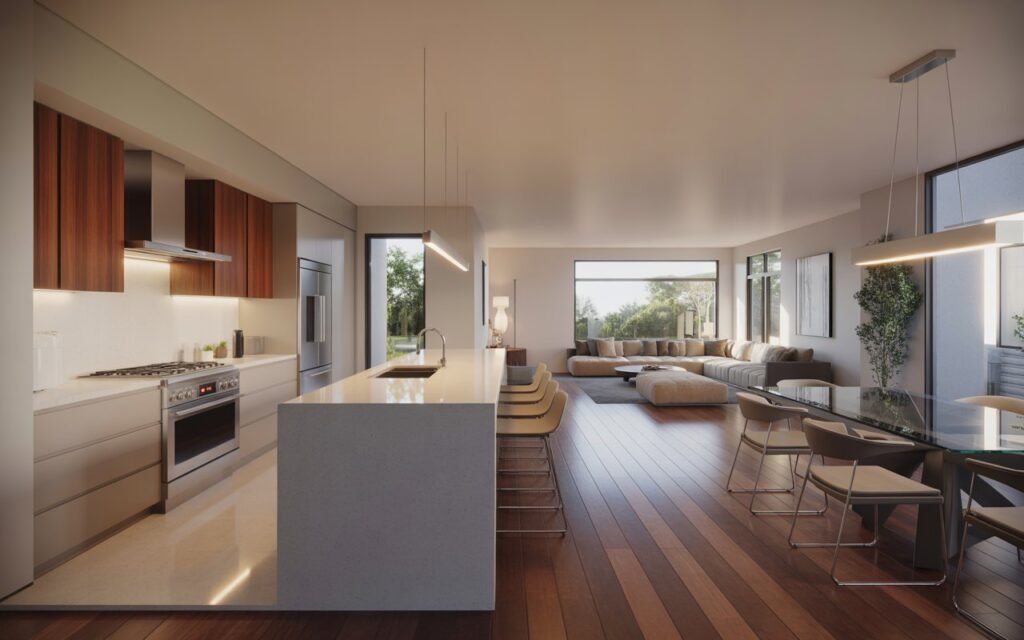
14. Align Furniture with Layout Lines
Arrange furniture in alignment with architectural features like walls, windows, or flooring patterns.
This creates a clean and structured look.
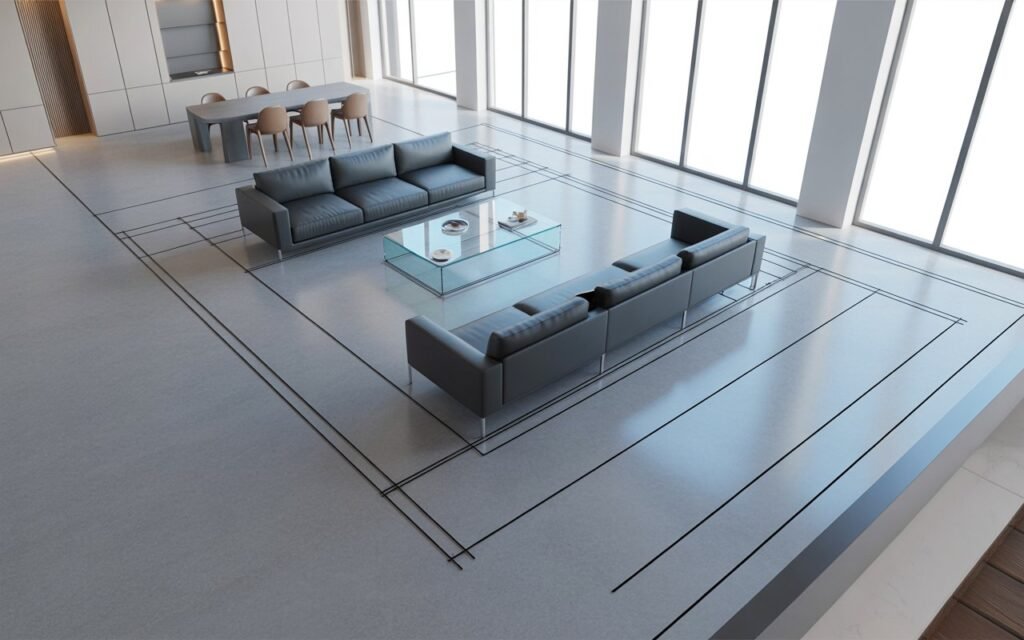
15. Keep Decor Balanced
Distribute decor evenly across both areas. Avoid overcrowding one side while leaving the other empty.
Balanced decor enhances visual harmony.
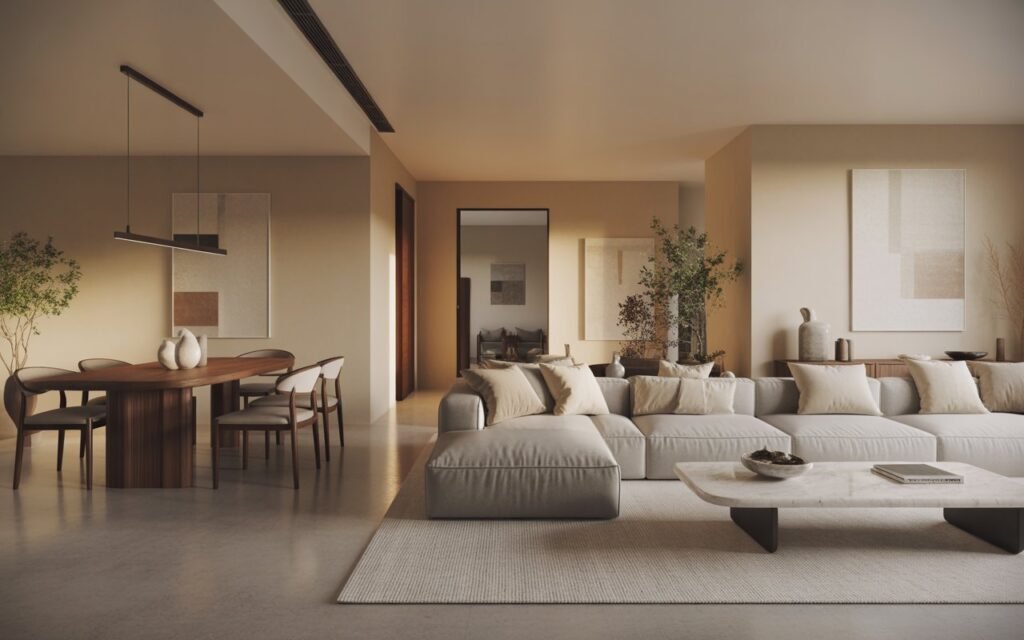
16. Use Multi-Functional Pieces
In open layouts, furniture that serves multiple purposes helps maintain organization.
Examples include storage benches or extendable dining tables.
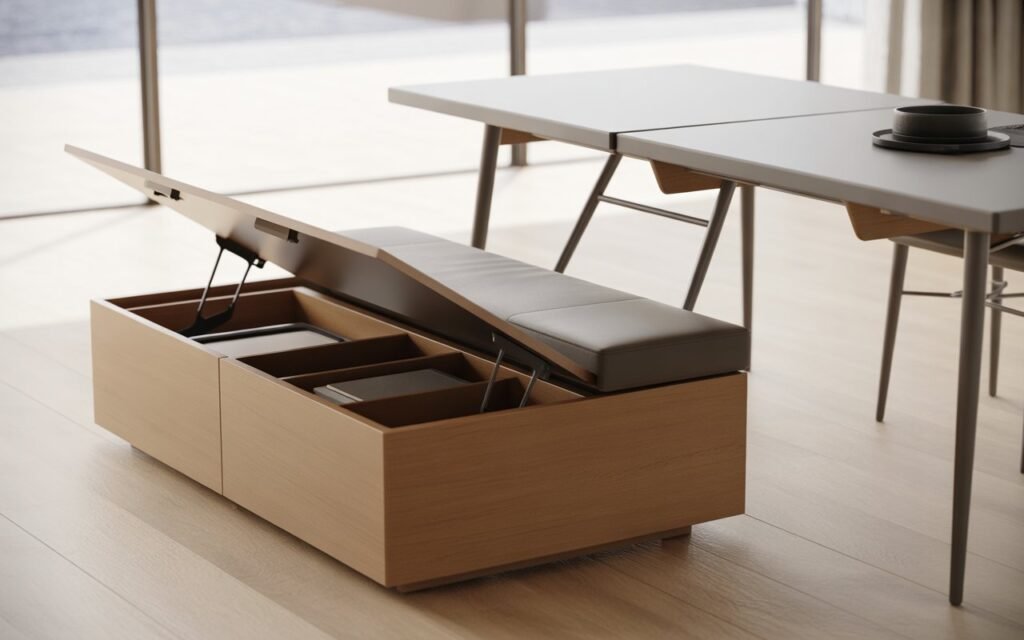
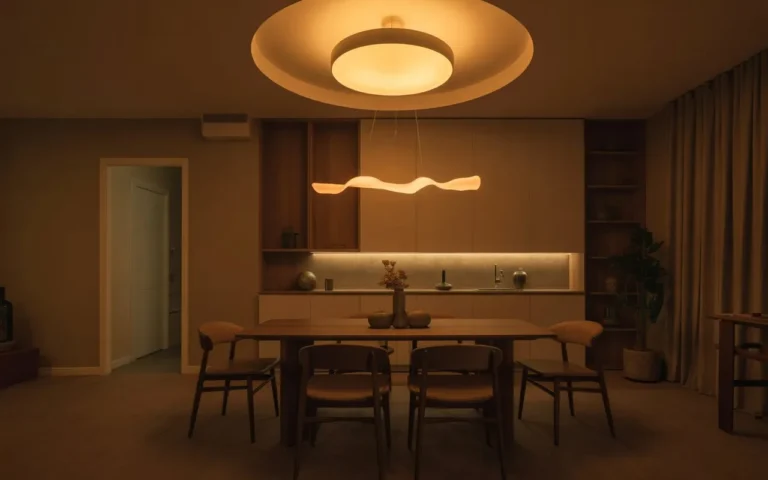
17. Coordinate Lighting Temperature
Ensure that lighting in both areas has a similar warmth or tone.
Consistent lighting prevents the space from feeling disjointed.
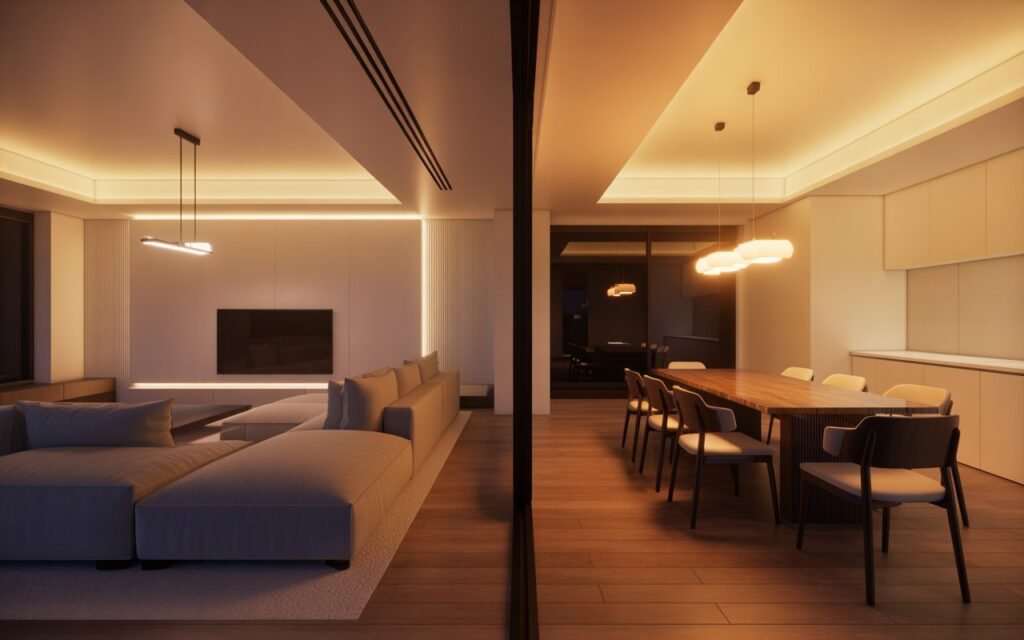
18. Stick to a Cohesive Style
Choose a single design style and apply it throughout the space. Whether modern, minimalist, or cozy, consistency is key.
A unified style makes the entire layout feel intentional and well-designed.
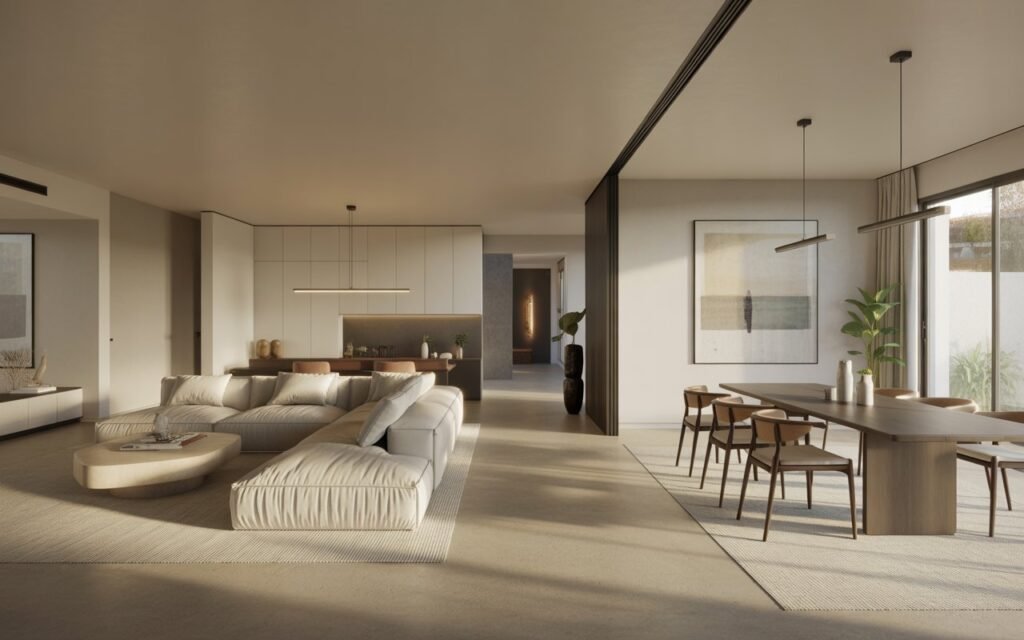
Conclusion
Creating a balanced open layout living room dining room requires thoughtful planning and attention to detail. By defining zones, maintaining visual consistency, and optimizing furniture placement, you can achieve a space that feels both functional and aesthetically pleasing.
The goal is not to separate the areas completely, but to allow them to flow naturally while still serving distinct purposes. With the right approach, your open layout can become one of the most inviting and efficient parts of your home.